

Podcast: Play in new window | Download
Subscribe: Apple Podcasts | Spotify | Amazon Music | Android | iHeartRadio | TuneIn | RSS | More
In this episode, we listen to an attempt at dissuading a person from carrying out their intention, as depicted in Sangam Literary work, Aganaanooru 161, penned by Madurai Pullankannanaar. Set in the ‘Paalai’ or ‘Drylands’ landscape, the verse etches the domain’s elements and the lady’s emotions.

வினைவயிற் பிரிதல் யாவது? ”வணர் சுரி
வடியாப் பித்தை, வன்கண் ஆடவர்
அடி அமை பகழி ஆர வாங்கி;
வம்பலர்ச் செகுத்த அஞ்சுவரு கவலை,
படுமுடை நசைஇய வாழ்க்கைச் செஞ் செவி
எருவைச் சேவல் ஈண்டுகிளை பயிரும்
வெருவரு கானம் நீந்தி, பொருள் புரிந்து
இறப்ப எண்ணினர்” என்பது சிறப்பக்
கேட்டனள்கொல்லோ தானே? தோள் தாழ்பு
சுரும்பு உண ஒலிவரும் இரும் பல் கூந்தல்,
அம் மா மேனி, ஆய் இழை குறுமகள்
சுணங்கு சூழ் ஆகத்து அணங்கு என உருத்த
நல் வரல் இள முலை நனைய
பல் இதழ் உண்கண் பரந்தன பனிஏ.
In this quick trip to the drylands, we glance at a striking bird and hear the confidante say these words to the man, at a time when he intends to part with the lady and leave on a mission to earn wealth:
“How can you part away on your mission? Did she already hear about your intention to leave, desiring wealth, and traverse that formidable jungle, where harsh-eyed men with thick, curly and untameable hair, aiming their sharp-edged arrows, kill wayfarers, who happen upon those fear-evoking paths, and where having a life of desiring reeking flesh, the male of the red-eared vulture beckons its close kin with a resounding call? I say this because that young maiden, wearing well-etched ornaments, having a beautiful, dark complexion, and thick, black tresses, descending down her shoulders, around which bees buzz around, was standing there, drenching her fine and upraised young bosoms, filled with pallor spots, which torment like a divine spirit, with tears that were brimming over from her many petaled, kohl-streaked eyes!”
Time to brave the fear-evoking paths through the scrub jungle! The confidante starts with a pointed question to the man, asking how he thinks he can leave on his mission. Then she goes on to the describe the place he intends to traverse so as to fulfil his mission, namely the formidable drylands path, where harsh-eyed robbers rove with their bows and arrows and have no qualms about ending the lives of wayfarers, and to feast on their flesh, the red-headed vulture beckons its kin. After this description, the confidante asks the man if the lady has already come to know that the man would part away. This is because at the moment when the confidante had gone to inform the lady about the man’s intention and secure her permission, even before she said anything, the lady was standing there, crestfallen, soaking her fine bosoms with tears, brimming over from her flower-like eyes, the confidante concludes.
‘So dangerous is your path and she’s shedding tears already. Do you really have to leave?’, the confidante means to ask the man and prevent him from pursuing his intention of parting away. In the scene of the red-headed vulture feeding on the flesh of the corpse, left behind by highway robbers, the confidante places a metaphor for how the townsfolk would feed on the lady’s health and beauty with their rumours, after the man has felled her with the arrow of his parting!
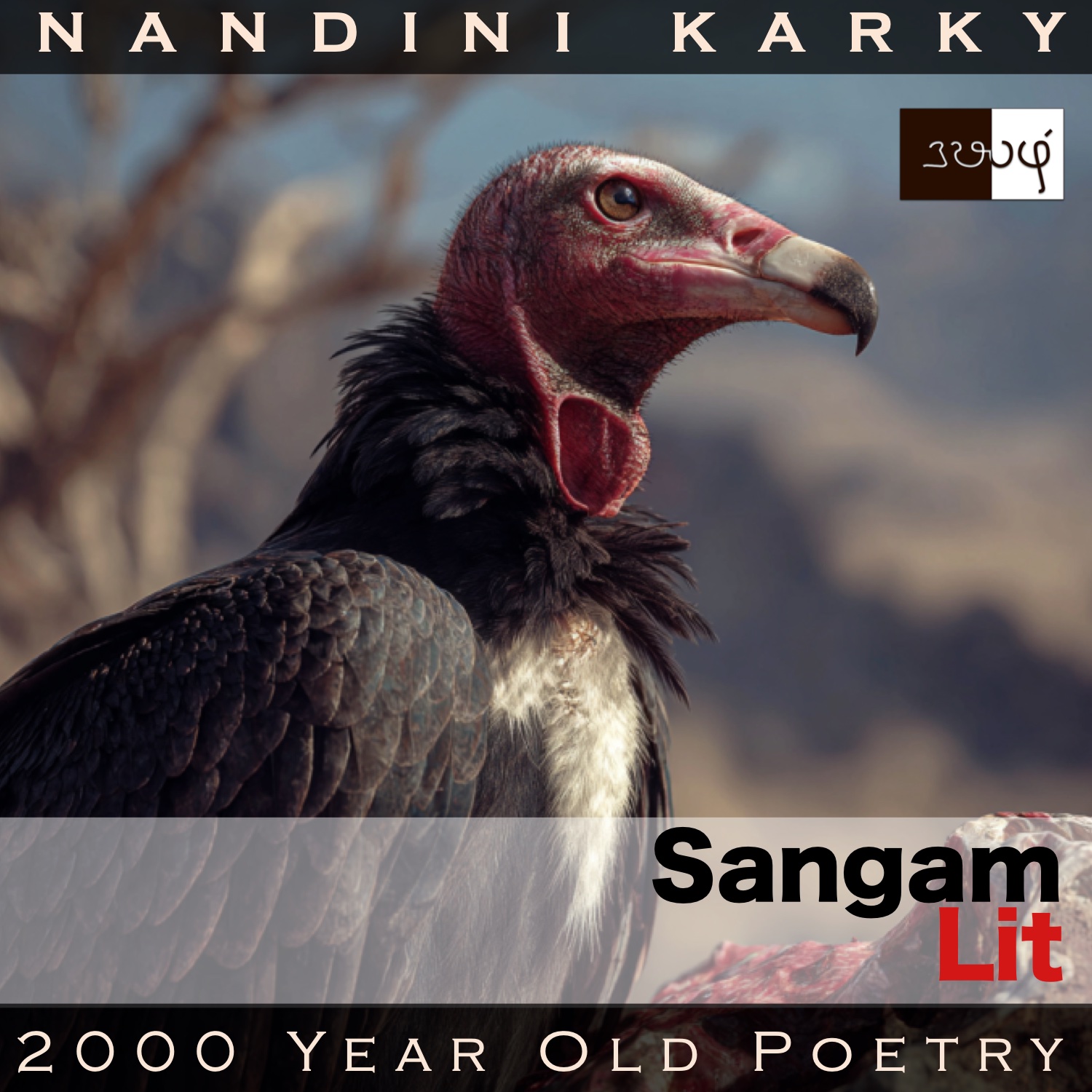
Stepping aside from this frequent theme of the lady’s helplessness at the man’s parting, let’s zoom on to that bird mentioned vividly here. The Tamil description of this bird translates as ‘red-eared vulture’, though the contemporary common name is the ‘red-headed vulture’ or the ‘Pondicherry vulture’. This bird does have distant ear-like flaps on the sides of its head and seemingly the Tamils have focused on this aspect to give the bird its name. The bird apparently does not feed in a large group and just calls one other, possibly its mate, in the carrion sharing. Perhaps that’s what the verse means when it says ‘close kith and kin’. Today, I also learnt how this bird, which seems to have impressed our age-old ancestors, is much threatened by contemporary humans. It has moved into the ‘Endangered category’ mainly because of the use of a drug called ‘diclofenac’, used by vets to treat livestock. One species’ pill is another’s poison! Some remedial steps being taken are to feed diclofenac-free meat to this essential scavenger of the skies. Yet again, truly fascinating how a few lines of ancient poetry about inner life and relationships has led us to reflect on biology, ecology and opened our eyes to the world around!
