

Podcast: Play in new window | Download
Subscribe: Apple Podcasts | Spotify | Amazon Music | Android | iHeartRadio | TuneIn | RSS | More
In this episode, we perceive the arrival of a particular season, as depicted in Sangam Literary work, Aganaanooru 194, penned by Idaikkaadanaar. The verse is situated amidst the millet fields of the ‘Mullai’ or ‘Forest landscape’ and echoes the disappointment in a person’s heart.

பேர் உறை தலைஇய பெரும் புலர் வைகறை,
ஏர் இடம் படுத்த இரு மறுப் பூழிப்
புறம் மாறு பெற்ற பூவல் ஈரத்து,
ஊன் கிழித்தன்ன செஞ் சுவல் நெடுஞ் சால்,
வித்திய மருங்கின் விதை பல நாறி,
இரலை நல் மானினம் பரந்தவைபோல்,
கோடுடைத் தலைக்குடை சூடிய வினைஞர்,
கறங்கு பறைச் சீரின் இரங்க வாங்கி,
களை கால் கழீஇய பெரும் புன வரகின்
கவைக் கதிர் இரும் புறம் கதூஉ உண்ட,
குடுமி நெற்றி, நெடு மாத் தோகை
காமர் கலவம் பரப்பி, ஏமுறக்
கொல்லை உழவர் கூழ் நிழல் ஒழித்த
வல் இலைக் குருந்தின் வாங்குசினை இருந்து,
கிளி கடி மகளிரின் விளி படப் பயிரும்
கார்மன் இதுவால் தோழி! ”போர் மிகக்
கொடுஞ்சி நெடுந் தேர் பூண்ட, கடும் பரி,
விரிஉளை, நல் மான் கடைஇ
வருதும்” என்று அவர் தெளித்த போழ்தே.
We return to the forests and take in images of farming, as we listen to the lady say these words to her confidante, when the man continues to remain parted away, having left her for a mission of war:
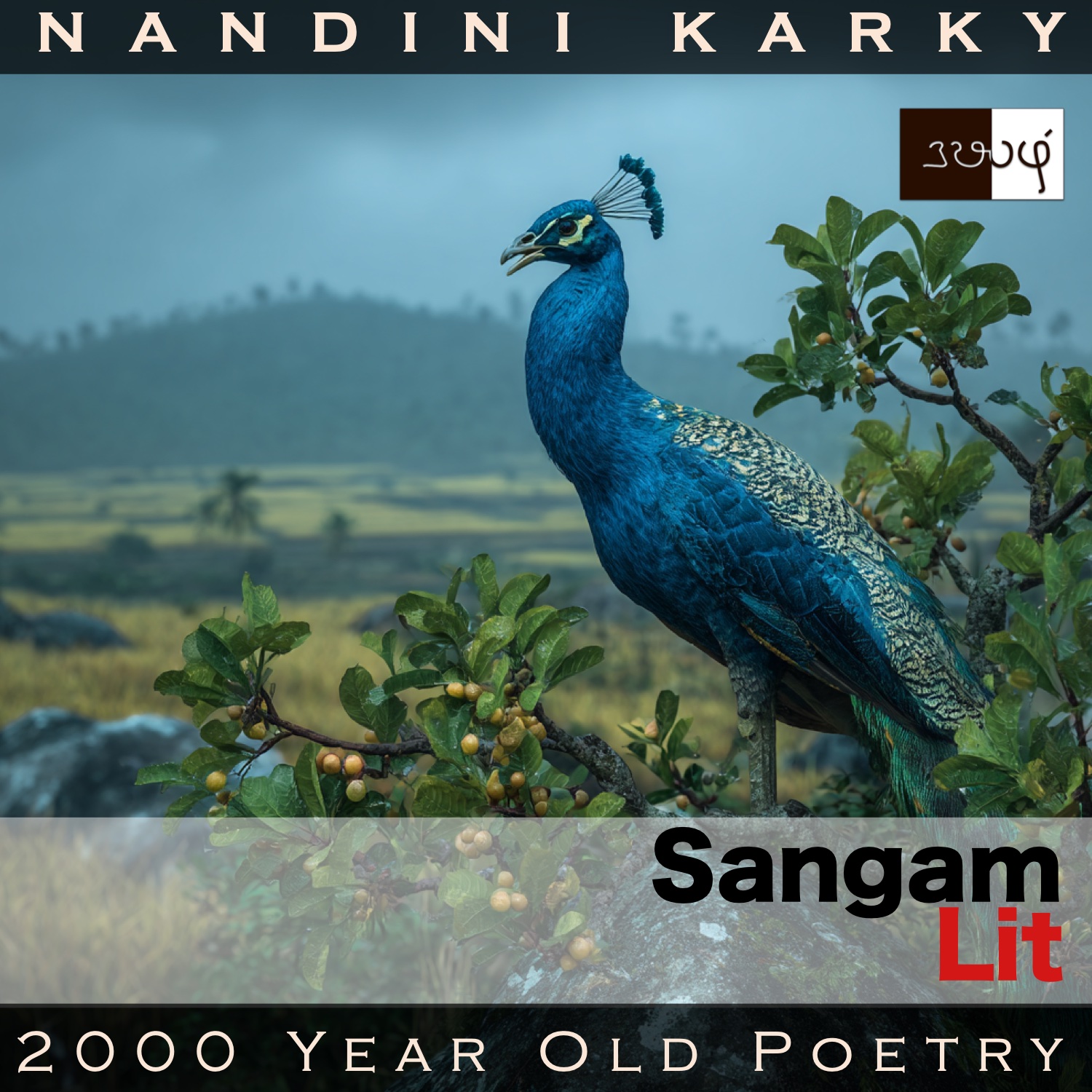
“In this morning hour that has dispelled the deep darkness, when huge raindrops have fallen down, the land which had been split by the imprint of the plough, scattering dust on both sides, where the mud had been turned upside down in the moistened ground, appearing like torn red flesh, the long furrows in the red soil, which had been planted with many seeds, have now bloomed forth. Appearing as if herds of male deer are moving around, farmers wearing hats with pointed antler tips, pull out the weeds, in sync to the beat of resounding drums, amidst the blooming Kodo millet fields. Eating from the dark-backed, flourishing crop ears, a long peacock with a crested forehead, spreads its feathers, and flies to the branch of a solitary wild lemon tree with thick leaves, left uncut by farmers of this forest land, to serve as the shade for their afternoon meal. Sitting there, with the sound, akin to that made by maiden chasing parrots, the peacock calls aloud, in this rainy season. Isn’t this the season, my friend, that he talked about in his words of consolation, when he left to fight in the war saying, ‘I will rush back in the decorated tall chariot, yoked with fast and fine horses with spreading manes, and be here, when that season arrives’?”
Let’s tread on the vibrant red soil of the forests and unearth the beating heart beneath! The lady starts by talking about the time of the day, saying it’s dawn and the rains have just done pouring. She then talks about the red soil, which has been tamed with much difficulty by these forest farmers, using rugged ploughs, and tearing the land, as if cutting open a piece of meat. Then, she talks about how they had planted many seeds in these furrows and all their hard labour had borne fruit and the crops had risen up. However, weeds do abound and these farmers had been hard at work, wearing hats which made them seem like male deer. Wonder why they went for such an elaborate headgear! The other interesting thing about them is that, as they worked, drums were played and they did their hard work, keeping in tune with the beat of those drums, the lady describes. After all this care, the millets would no doubt flourish and it’s not just the farmers who benefit, but a peacock that loads up on the laden crop ears, and then, content, flies to the top of a single wild lime tree, left uncut by those farmers. And why did they spare the tree? Just making sure they had a spot to sit under and eat, in the afternoon soon! This peacock flies to the top of the tree, and seems to make the exact sounds of maiden chasing away parrots in the nearby mountains, the lady details. These vivid images have been presented by the lady to portray how the season of rains had arrived. And why is she worried? Because the man had promised that he would return by this season when he had left to fight his king’s war, but still there was no sign of him.
It’s a simple statement declaring, ‘The rains are here, but he is not!’. However, this core is wrapped up in the striking images of people, animals, birds, land and agriculture, a gift which magically transports us to another time, another space!
