

Podcast: Play in new window | Download
Subscribe: Apple Podcasts | Spotify | Amazon Music | Android | iHeartRadio | TuneIn | RSS | More

In this episode, we relish a precise simile from the natural world that pinpoints to the emotions within, as depicted in Sangam Literary work, Kurunthogai 128, penned by Paranar. Set in the coastal regions of ‘Neythal’, the verse speaks in the voice of the man to his heart, expressing his dejection at being unable to meet his lady at the trysting spot.
குண கடல் திரையது பறை தபு நாரை
திண் தேர்ப் பொறையன் தொண்டி முன்துறை
அயிரை ஆர் இரைக்கு அணவந்தாஅங்குச்
சேயள் அரியோட் படர்தி;
நோயை-நெஞ்சே!-நோய்ப் பாலோயே.
‘An impossible yearning’ sighs at the centre of this verse! The opening words ‘குண கடல்’ refers to ‘the eastern seas’ of ancient Tamilakam. Near this spread of seawater, we find a ‘பறை தபு நாரை’, which means, ‘a flightless seabird’. Why flightless? Perhaps its wings are broken due to injury or old age. Next, we are greeted by a historic character and his city in ‘திண் தேர்ப் பொறையன் தொண்டி’ meaning ‘Thondi, in the domain of ‘Poraiyan’, possessor of powerful chariots’. ‘Poraiyan’ was the title given to Chera kings of the Sangam age and ‘Thondi’ seems to have been a seaport on the Arabian sea, ruled by this king. ‘அயிரை ஆர் இரைக்கு’ talks about ‘a meal of loach fish’, a delicacy for that seabird, no doubt! Ending with the words ‘நோய்ப் பாலோயே’ meaning ‘your destiny is to suffer’, the verse invites us to know more.
A bird that cannot fly and a heart that suffers – What is the tale behind these tribulations? The context reveals that the man and lady had been leading a love relationship and the man had started trysting with the lady. One day, when the man arrives to the agreed meeting spot, he does not find the lady there. After waiting a while, the man turns to his heart and says, “Unable to fly, a seabird is perched on the edge of the waves in the eastern seas. Wishing for a fine meal of loach that it had found near the shores of ‘Thondi’, ruled by ‘Poraiyan’, who wields powerful chariots, the bird raises its head in yearning. Akin to that, you seek the lady, the one who is far away and hard-to-reach! You suffer, O heart, and to suffer, seems to be your fate!” With these words, the man separates himself from his heart and projects his disappointment as the heart’s yearning and consequent suffering.
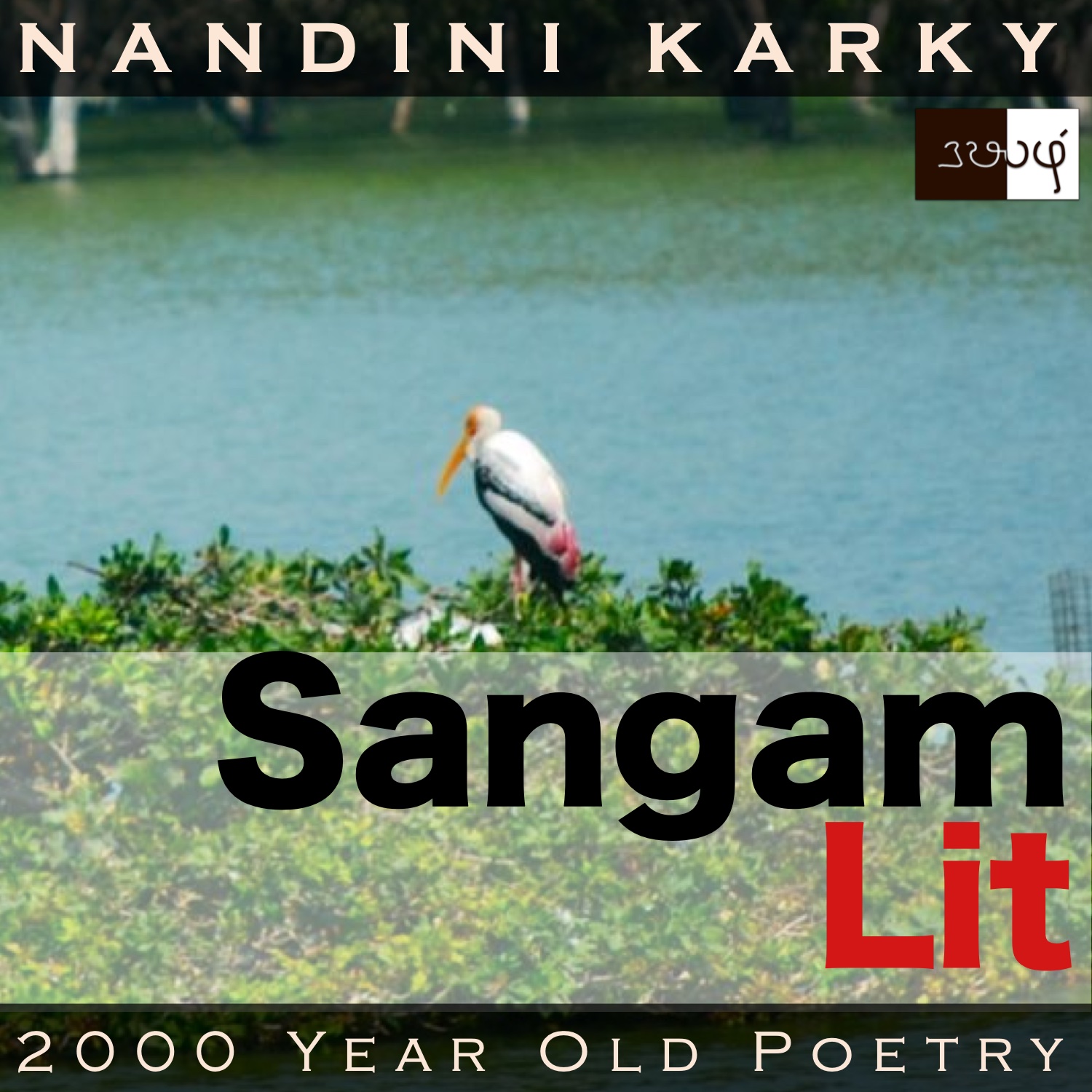
Time to unravel the nuances! As in the case of many Sangam poems, here too, the man starts with an image from the natural world. Moving the scene to the waves on the eastern seas, the man points to a seabird, a heron or a stork, perched on the edge. Looking closer, we see it struggling to fly, as its wings seem to be weakened. From the mere sight of the bird, the man takes us within its mind to show how it’s dreaming about the loach fish that it once relished in the shores of ‘Thondi’, which was the seaport ruled by Chera kings. Now, we need to pause and take a detour to place this idea geographically. This town of ‘Thondi’ is the ancient port of ‘Tyndis’ mentioned in ancient Greek and Roman works, and is situated on the western coastline, in the current-day state of Kerala. So, what we have here is a seabird perched near the eastern seas, that is somewhere on the Bay of Bengal, and wishing for the loach in the western seas, the Arabian sea, that it had once relished. This reference to ‘Thondi’ also presents the understanding that the contemporary state of Kerala that borders the Arabian sea was very much a part of ancient Tamilakam, highlighting the historic bond between the two southernmost states of today’s India.
Returning to the verse, we find the seabird that was dreaming about the loach it relished near ancient ‘Thondi’, raising its head in eager anticipation. The man has mentioned this detailed scene only to say that like that bird, his heart too seemed to be thinking about the happy moments it had shared with the lady and was hankering after her, who was far away and inaccessible just then. He concludes that it seems like it’s the fate of his heart to suffer. As if he doesn’t suffer and yearn for the lady! Still, it is an excellent idea indeed, to put a distance between one’s emotions and oneself, and gain that much needed perspective to keep going in moments of pain.
