

Podcast: Play in new window | Download
Subscribe: Apple Podcasts | Spotify | Amazon Music | Android | iHeartRadio | TuneIn | RSS | More
In this episode, we observe the eagerness of a man to return home, as depicted in Sangam Literary work, Aganaanooru 44, penned by Kudavayil Keeraththanaar. The verse is situated amidst the speeding roads of the ‘Mullai’ or ‘Forest Landscape’ and offers an account of people and places involved in an ancient battle.

வந்து வினை முடித்தனன் வேந்தனும்; பகைவரும்
தம் திறை கொடுத்துத் தமர் ஆயினரே;
முரண் செறிந்திருந்த தானை இரண்டும்
ஒன்று என அறைந்தன பணையே; நின் தேர்
முன் இயங்கு ஊர்தி பின்னிலை ஈயாது,
ஊர்க, பாக! ஒரு வினை, கழிய
நன்னன், ஏற்றை, நறும் பூண் அத்தி,
துன் அருங் கடுந் திறற் கங்கன், கட்டி,
பொன் அணி வல்வில் புன்றுறை, என்று ஆங்கு
அன்று அவர் குழீஇய அளப்பு அருங் கட்டூர்,
பருந்து படப் பண்ணி, பழையன் பட்டென,
கண்டது நோனானாகி, திண் தேர்க்
கணையன் அகப்பட, கழுமலம் தந்த
பிணைஅல்அம் கண்ணிப் பெரும் பூட் சென்னி
அழும்பில் அன்ன அறாஅ யாணர்,
பழம் பல் நெல்லின் பல் குடிப் பரவை,
பொங்கடி படிகயம் மண்டிய பசு மிளை,
தண் குடவாயில் அன்னோள்
பண்புடை ஆகத்து இன் துயில் பெறவே!
It’s a trip to the verdant forests but the action is elsewhere for the most part! Here, the man is saying these words to his charioteer, when returning home, after completing the task he set out to do:
“The king has completed his mission; The foes have paid their tributes and have become kin to him; The drums have proclaimed that the two armies that had been in conflict with each other have now become one; Now that our work is done, wield your chariot that moves ahead speedily so that it doesn’t have to yield and lag behind any other, O charioteer!
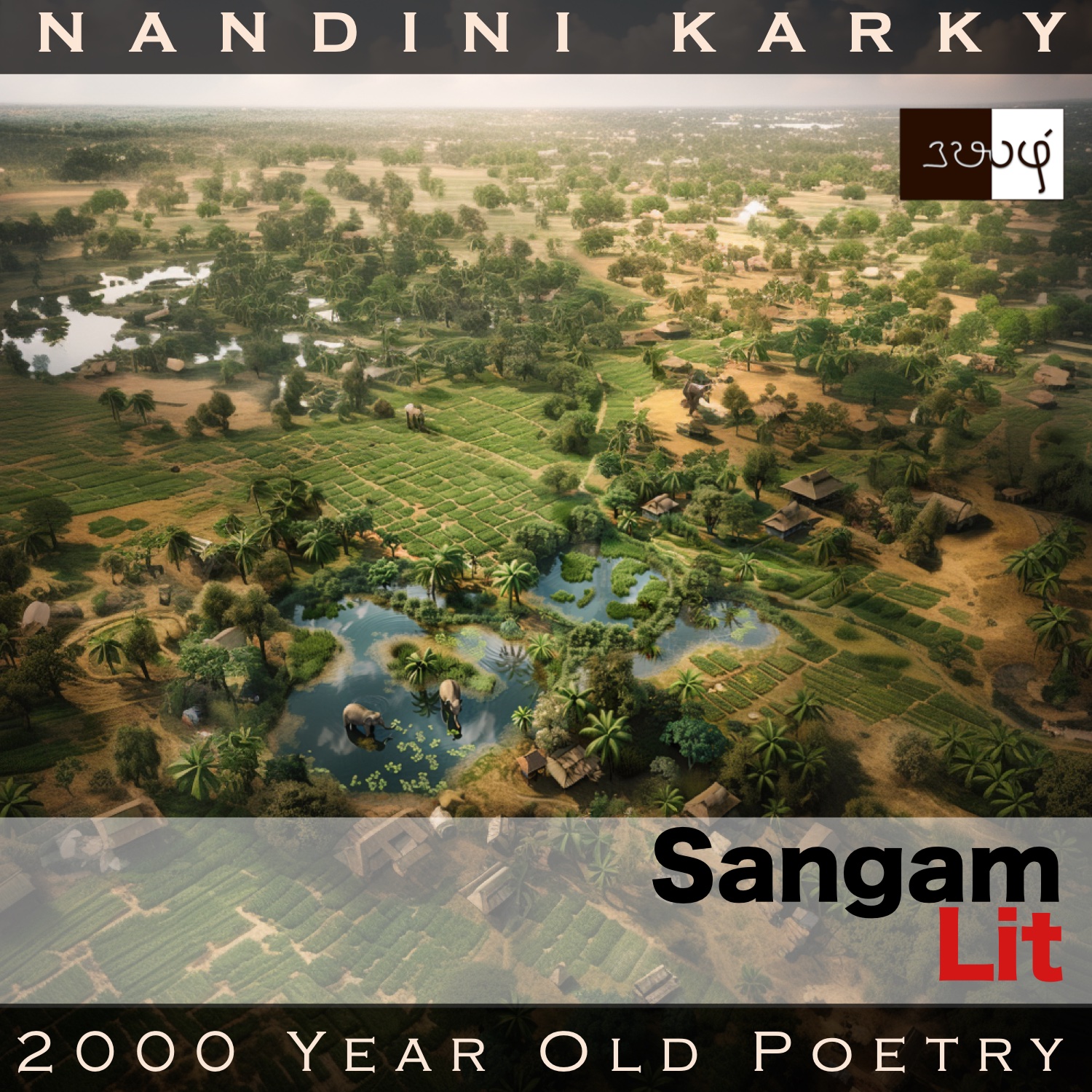
When Nannan, Ettrai, Aththi, wearing fragrant garlands, Kangan, renowned for his strength, whom enemies fear to near, Katti, and Pundrurai, skilful in archery, clad in gold, came together as one then in that boundless battlefield, making vultures soar, Pazhaiyan fought so bravely against them and perished. Unable to bear this loss, capturing Kanaiyan, renowned for his sturdy chariots, the great Chenni, clad in huge ornaments and well-woven garlands, seized the battle at Kazhumalam. Having unceasing prosperity, akin to his town of Alumpil, and also, ancient paddy growing fields, settlements of different groups of people, ponds, where elephants can dip and play, and lush green forests, is the cool town of Kudavaiyil. Ride your chariots with speed, so that I can attain sweet sleep on the chest of that virtuous maiden, akin to the town of Kudavayil!”
Let’s race along with this speeding chariot and capture the essence of emotion here! The man opens by talking about how the work he came to do for his king is now over, now that the enemies have all surrendered and agreed to pay the right tributes to the king, so that they all fall under his protection. A moment to reflect on the usage of the word ‘Thamar’ meaning ‘Relatives’ to talk about how these very people, who were once enemies of the king, were now like his own people. In the usage of this word, I can perceive the subtle hint of a profound truth that even those, who are at war with us, deep within, are our own kith and kin! If the world can see this truth and embrace it, even before the first shot is fired, won’t the curse of war end?
Returning back to that ancient highway, we hear the man telling his charioteer now that the drums have declared that the warring armies stand as a unified whole, he wishes for his charioteer to ride home fast, not letting any other vehicle pass them by. And to explain the why, he launches on a lengthy story of a conflict between a Chera King and a Chozha King. Many chieftains such as Nannan, Ettrai, Aththi, Kangan, Katti and Pundrurai came to the aid of the Chera King, but the brave army general of the Chozha King, Pazhaiyan fought so bravely against them, but perished in that battle. Seeing his prized general fall, maddened with fury, the Chozha King Chenni captured the Chera army general Kanaiyan and decisively won the battle at Kazhumalam, a place in the Chera domain! The man has given this historic account to etch the praise of Chenni and refer to the Chozha king’s capital town of Alumpil, whose prosperity is then linked to another town called Kudavaiyil. About Kudavaiyil, we learn that it’s a town, where agriculture has been ongoing for a long time, it’s an ancient paddy-growing hub, and that people of many different communities had come together and settled in harmony. What an egalitarian metropolis, it sounds like! Not only that, Kudavayil had ponds so huge that elephants frolic and play in them, the man adds, saying such is this town. He concludes by connecting the beauty of this town to that of his beloved and instructs his charioteer to make the chariot fly so that he can find the sweetest of sleep on his good lady’s bosom soon.
At the core it’s a man’s message to his driver to speed up and beat the traffic, but within, we find so many fascinating aspects, such as the who’s who and where’s where of ancient history, and at the top of the list, the inimitable quality of Sangam poets to celebrate the towns of the era, placing them in the same plane as the much adored, flawless beauty of their maiden!
