

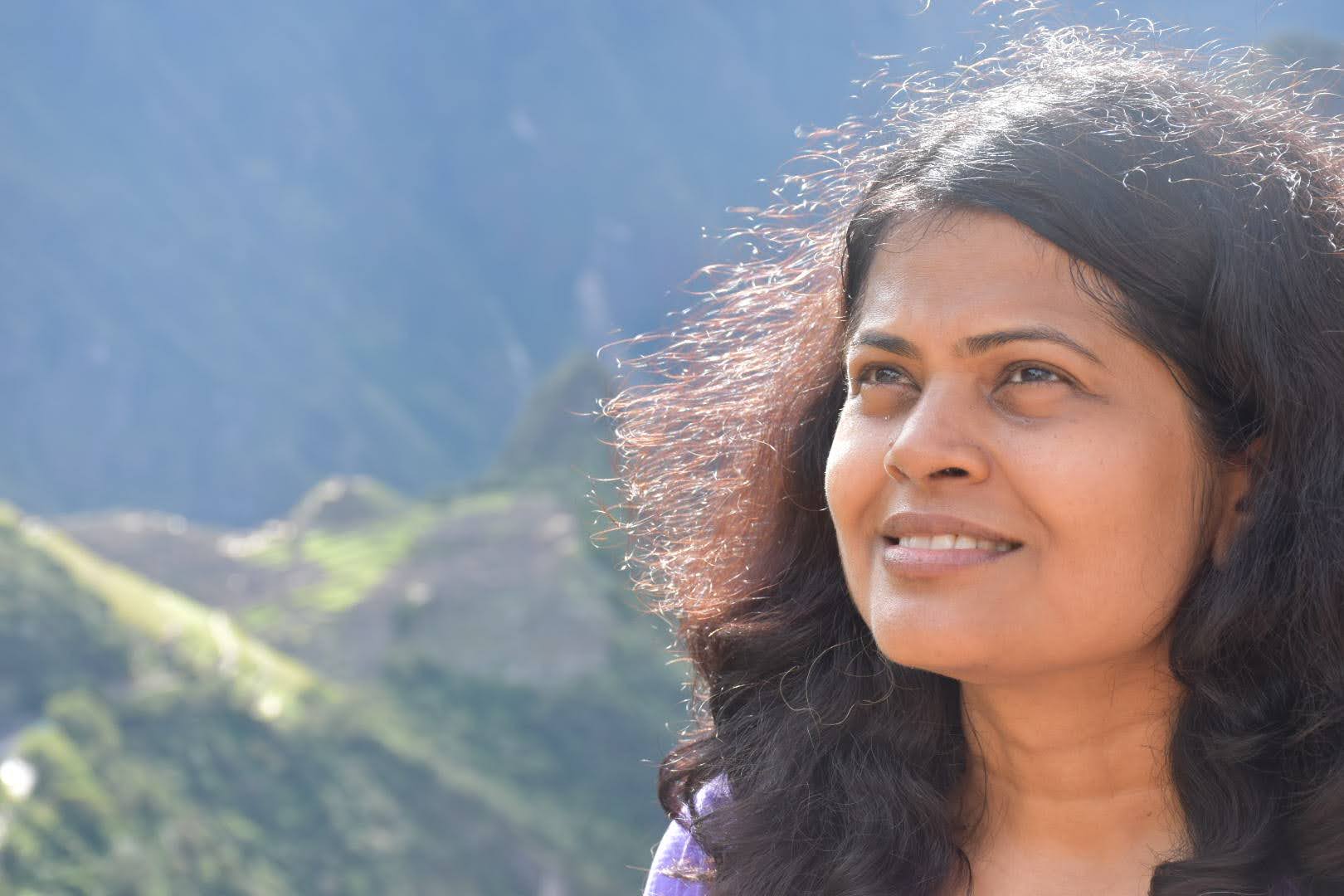
When setting off on a cultural odyssey around the world, it’s impossible for anyone to give Peru a miss! It’s one of the six cradles of civilisation in the ancient world, a place where humanity took the next leap in life independently of any other part of the world. The first thing people think of when Peru is mentioned is of course Machu Picchu, and that’s what reeled me in too. Unlike other trips where we visit many sites of interest as tourists, for this one, we intended to take on the role of trekkers and summit the famous Inca Trail.

Here’s the thing though: Machu Picchu has a cult status among travellers, trekkers and adventurers around the world. And so, it runs out of its strict allowance of permits, many months ahead. Will we get to see Machu Picchu like we want to? This is an obstacle those booking the tour every year have to cross. But this particular year saw new hurdles shoot up. The war in the Middle East was making even the idea of travelling to another country seem like a plan to take off to the moon! The situation was so critical at the time of booking that those efficient airlines of the Middle East were not functioning at all and there was only one possible route to take from Chennai, that being UK, US and Peru. Will this trip happen was a constant question in my mind, and only when we boarded the flight at Chennai and set off on our 36 hour journey to Lima, that I finally allowed myself to believe.
On the streets of Lima
Landed early in the morning at Lima, a quiet capital city. The first thing that I sensed on stepping foot was the sound of the birds, unique and crystal. The country has the distinction of having the world’s second highest bird bio-diversity, next only to Columbia, and these feathered friends were indeed making their presence felt from the word go. It was a foggy morning and apparently the fog blankets the city most of the time, owing to the Pacific’s Humboldt currents. Wishing to wash away the sin of sitting and more sitting in our flights from Chennai, we decided to start the day right away with a walk on the Malecon, a pathway bordering the sea, with stunning views of the majestic Pacific, meandering through different neighbourhoods of Lima.


The sea is an ever-present character in Lima but does not have the playful presence of Chennai. There, we jump into the waves, roll in the sand, laugh and play like children, whatever be our ages, but here in Lima, the land falls into a steep, black cliff and there’s not much sand to speak of. Walking on the Malecon, glimpsing at the black cliffs, plunging into the sea on one side and this ancient city of Lima on the other side, remains like a painting in my mind. Thoughts about the dance of the land and sea, all around the world, and how it renders habitat for all life to be, crossed my mind. The walk was dotted with stunning statues, echoing the creativity of its populace.
The first few minutes of approaching the sea face and the parks around reminded me of another ocean, another place, that of Darwin in Australia. As we were wandering aimlessly, suddenly got an inspiration to book a food tour with ‘Lima Tasty Tours’, a food tour outfit I had read about. This turned out to be one of the best flashes I have received on my travels for it was an absolutely smashing experience that set the tone of our entire trip.

Even though we lingered looking at all the new sights, lapping like waves against our lenses, we made it exactly on time, and there was Jose, waiting with a smile. He took us on a short walk and then we got into what we call as ‘autos’ here, and the Peruvians call as ‘moto taxis’ or ‘tuk tuks’ – colourful painted three-wheelers, and we went to a market with these quaint little wayside shops. Nothing swanky or fancy but so full of the flavours of Peruvian life!


The first stop was a drink place. Drink as in a beverage they have for breakfast, made of quinoa, boiled with clove and cinnamon. Then, there was also another über-healthy flaxseed drink. You know how healthy and tasty tend to be antithesis in most places! Here these are two sides of the same coin. There was no differentiation, just a seamless flow between tastefulness and healthfulness!


I was reminded of a food tour we had taken in Naples and how I had stood by, a spectator, as Madhan and Haiku enjoyed the many treats. Here, I was able to relish along for this was my kind of food tour. After that beverage place, we headed to a small shop, which sold a starter made of potato. Speaking of this ubiquitous vegetable, oh the varieties here – thin, round, tall, stout, coloured, patterned, it was like a potato heaven to us, after having known just the single yellow variety back home, all our lives. It was as if all the potatoes in this country had decided to cosplay at the Comic-Con, with their unique super-hero costumes!

Suddenly Jose showed a potato and said it’s the ‘Potato of Peru’. When we were wondering what special significance this one had in this land of potatoes, he held it in his hand in such a way that it reflected the flag of this country! Later learned its name was ‘Papa Peruanita’. I’m sure we can find one that mirrors the Indian flag too, in this esteemed assembly of ‘Papas’!

Moving on from potatoes, it was time to meet the purple corn, the ‘Maiz Morado’. Though at that time, we did not realise, we were about to fall in love with a culinary delight made from this purple stunner! Another produce we got introduced to, was a pumpkin-like vegetable, which was so rich that it was the equivalent of saffron, and Jose explained how only small slivers of the same were sold.

Onward to the chilli peppers, and specifically the Yellow Chilli Pepper called ‘Aji Amarillo’, a key ingredient of their cooking. If we start boasting about the heat levels in our Indian food, we should humbly tone it down, considering the varieties and intensities of chillies, here in Peru.
How can I forget the fruits? Truly this place is a fruit-lover’s paradise! A giant passionfruit, bold strawberries! There were some round, candle-like thingys, and we learnt there were, ta-da, sugarcanes! Yummy! The best surprise was an unassuming, gourd-like fruit ‘Pacay’ that Jose showed, and when he split it open, within were round white, fibrous fruits, in the shape of carrom coins, something that Jose called ‘Nature’s cotton candy’… No words!


The fruit that we refer to as passion fruit here, Jose called by another name, ‘Granadilla’ and said it was the first thing that children eat in Peru. Towards the end, came the fruit known as Lucuma, or ‘Gold of Peru’, a starchy unique-tasting fruit. Let me not forget the mangoes, and Oh! The sweetness of the mangoes we tasted here in the southern hemisphere, made up for the northern hemisphere’s Chennai ones we were missing just then!


Along the way, we met with a Peruvian, who owned a herbal store, and when talking with him learnt about his fascination with the Indian concepts of reincarnation and Karma. I was amused to think how knowledge has no barriers whatsoever and seems to fly across miles and take refuge in welcoming minds in faraway cultures!

By this time, I was bursting already and Jose said we were only getting started and took us to a soup place, and introduced us to food items, with raw fish and other local ingredients. Remember the purple corn we said hello to, a while ago? It’s in this shop, we tasted the purple corn juice for the first time and fell in love. We learnt it goes by the name of ‘Chicha Morada’, the quintessential drink of the Peruvians, made by boiling purple corn and adding some spices and orange peels. It became such a huge favourite with us that Haiku would order it with every single meal, and at one time, he himself downed two and half glasses of it! I’m still amazed how he didn’t change into the colour purple by the time we made it back home!


To digest this food, we kept wandering through the markets and having more food! There was that delicious appetiser made of potato and herbs. Jose pointed out to medicinal plants, aloe vera and many other herbs. He spoke about how there was a herb for every single ailment, telling us that the herbal medicine handed down by their ancestors was an active system here. Another curious thing about these markets was that there was so much fish and meat produce but not even a little streak of stench. Wonder how they do it!

At a shop decked with every single part of a cow – the feet, the heart, the tongue, and even tail, got a bit of history lesson about Creole cuisine. Jose mentioned about how the Spaniards needed someone to work the Gold and Silver mines here in Peru, after their conquest, and to this end, they brought slaves from Africa. To these slaves, they would give only parts of the animals that they didn’t consume themselves and that’s how those African slaves taught the Peruvians to eat all those parts, forsaken by the invaders. It’s a delicacy cuisine which goes by the name of Creole food, and it is a story of survival amidst discrimination and exploitation. In a way, it’s sublimation of pain that renders pleasure to tongues many today!

Finally, finally, it was time for dessert and Jose bought us one with a very short name – ‘Mazamorra Morada con arroz con leche’, made with so many fruits and so unique. Jose ended the tour with a mention of the agricultural scene in this country, and the reasons for its diverse range of produce, a tiny glimpse of which we got today. Apparently of the world’s 32 climatic zones, 28 are found right here in Peru, and so obviously, you can grow most of the world’s stuff here and sustain the country’s unique produces as well. Later in the trip through the Sacred Valley and other places, I was noticing how in many of the villages near tourist attractions, those white-paper-covered-strawberries growing in fields was a familiar sight, no doubt to cater to foreigners who arrived here, to give them a taste of home away from home!


Food is at the heart of culture and that’s an unshakeable truth when it comes to Peru. That satisfying tour ended and we bid adieu to Jose and did a bit of walking in the Barranco art district and visited the museum of the artist Jade Rivera. Something that struck me in his style was his curious depiction of beaks on human figures. With that, we ended our walk and headed to the hotel. It was only half a day till now but since we had seen so much of Peru through its food and produce, content we dropped on our beds, and with the long flight travel knocking us down, we were up only the next day morning, having slept for more than 14 hours – The perfect pill for jet lag!
Ancient Culture and Modern Food in Lima
Rejuvenated by the sleep, we decided to make the most of our last full day in Lima. Once again, saved by intuition. Earlier the plan was to do the Huaca Pucllana archaeological site in the night, along with the light show. When I read that was a bit of dicey thing to arrange on the same day, we decided to walk to the site, first thing in the morning. Unlike the other wonders, this site did not require that we travel long distances for it was right there, in the heart of Lima, the ancient surrounded by the modern.


At the entrance, there was an interesting idea of an exhibit featuring food items and inviting tourists to write the names of the produce in their language. It made me smile to see the word ‘மரவள்ளி’/’Maravalli’ for ‘Yam’ in Tamil script. In this site, learnt a lot about cultures that lived before the famous Incas, such as Lima Culture, Wari Culture and Ychsma culture. The worship of the sea by Lima culture was replaced by the worship of the sun by Incas, and then worship of God’s son by the Spaniards! Interesting how humans are being defined by the Gods they create and worship! In a way, it’s thanks to all this worship and belief in a higher power, that required sacrifices in lasting artefacts that we know about the cultures that lived in the long gone past.
Being Peru, samples of corn were to be found in all the burials. How the Lima culture used the temple is not entirely clear but later Wari & Ychsma cultures used the structure to bury their dead. One interesting nugget was the burial of the dead by the Waris with their hands shutting out their eyes, for they did not want to see the future, as the future held images of invaders, namely the Incas.
There was mention of handmade bricks, not baked, but hand moulded with the cute name of ‘Adobe’ and the hard manual labour it entailed. It was fascinating to learn about their irrigation engineering, directing rivers from the Andes into canals to supply water to this dry desert region. It made me think how humans have the ingenuity to do fantastical things like taming the desert and making it productive, and then they decide they have succeeded only because of the whim of gods.

Speaking of the whims of goods, beans were used for divining the minds of the higher beings in Wari Culture, which reminded me of ‘Kazhangu’ or ‘Molucca Beans’ used in ancient Tamil cultures for the same purpose. It was here that we had a first glimpse of the famous animals of this country, the Llamas, Alpacas and oh so cute Guinea pigs, called as ‘Cuy’ and eaten with relish by the Peruvians!
In modern day Lima, they have been excavating this site for 45 years and learnt that another 10 years were needed to complete the entire excavation buried under mud. In fact, the people in contemporary times, who lived before the excavation, thought this structure was nothing but a mud hill, and the temple within was only discovered by accident.
After that rich-in-culture start to the day, we decided to turn our attention to nature, and specifically, the cats in Parque Kennedy. Not entirely factual, for some of us were hankering after a famous food ‘Picarones’, known to be sold at this place!


As we walked through the streets, the colourful buildings endowed a unique personality on this city. While it was noon and not yet the right time for that famous snack, the cats offered consolation and Haiku had the best time meeting and greeting the cats. Saw people bringing food for the cats and others offering money to them. It’s an interesting people-watching space, for sure. To overcome the disappointment of the Picarones, we headed to Isolina, a restaurant featured in the world’s top 50 list, to taste authentic Peruvian food. We ordered their famous Ceviche, a dish with raw fish in a sauce, along with Maiz and Lucuma.

Following this, we decided to take public transport, and set off on what turned out to be an adventurous bus ride to Central. Too crowded to the point of bursting! One Peruvian lady, when making conversation, said we were very daring to take the bus. It was like we were ejected from the bus at our stop, and we went on our way to our next destination, the Museo Larco, a stunning museum full of ceramics, gold & silver, celebrating the artistry of the ancient civilisations of Peru, not just the Incas, who ruled only from the 1400s, but all those who came before, going beyond the start of the Common Era, discovered thanks to the work of Rafael Larco. How do we know these cultures came before? Apparently the El Nino effect occurs every twenty years and this does something to the layers of mud and helps in dating these civilisations.


In the museum, seeing those ‘Kettlebell-shaped’ artefacts made me smile, reminding me of my strength training workouts. It’s here I learnt about a unifying theme among the cultures here – the concept of three worlds and their specific animal representations – Bird/Condor for sky, Cat for land and Serpent for underworld, a recurring motif. Later on, when seeing a sculpture of a man carrying a cat on his back, I understood that it was a depiction of the domination of the human over the supernatural, after 1532 AD, with the arrival of the Spaniards.


Saw some stunning geometric patterns on Ceramics, by that renowned Nazca culture. Another unforgettable element were the Moche faces that seemed to me like mug shots in ceramics. Here I learnt that sharing the ‘Chicha Morada’ purple corn drink was a way of socialising between high ranking Inca leaders and the local leaders of previous cultures. Like ‘Chicha Morada’, coca leaves also form an integral part of this culture, as could be sensed from a statue of an ancient Inca official, chewing the same. Some Amazonian cultures practiced elongating skulls and performed operations apparently. To think that people dared to mould the skull and touch the brain, centuries ago, before the advent of modern equipment, is somewhat shocking. Then those Nose and Ear ornaments! Gosh, were they worn to hide the face, so humungous they do appear!


Walking through the many sculptures, found an artefact, which told me the contemporary artist Jade Rivera sure seems to be touched by the culture of his ancestors. The amount of gold on that final figure with the breast plate, golden ear ornaments, and so on, made me stunned to consider the amount of wealth these ancients had at their disposal.

The Gold and Silver were used by the royals to represent the Sun and the Moon, and fool the common people into thinking that they were the representatives of Gods. Stepping into the reserve storage gallery, I was floored by the rows of racks upon racks. It made me wonder how the museum decides what to display and what not to, for there were many more stunning objects unlabelled, beyond what I had seen inside the museum.

After our cultural wanderings, it was back to Parque Kennedy for the Picarones, which we learnt were a sort of sweet ‘vadai’. Haiku played with the cats some more and we walked back to the hotel, chewing the cud on a day full of history, food and more.
Off to Cusco:

With the Quechua greeting of ‘Tupananchikkama’ or ‘Until life lets us meet again’ to Lima, we headed to its famous cousin in the mountains- Cusco! What I loved about the flight ride was the view of the Andes from the skies. Those waves of land, rolling on and on, with deep indents, was pure awe material! The drive to Cusco from the airport made me think, looking at the shackled buildings in the outskirts, ‘This is not a pretty city’. But the moment we entered the real Cusco with its cobblestone pathways, I was astounded. Bustling, yes. More tourists than locals, no doubt, and yet something charming about the place. Perhaps it was a realisation we were standing on many hundreds of years of history.

The Incas called this, not the ‘centre of the earth’ but the ‘centre of the universe’! Pretty important it must have been to deserve the epithet. The steep walkways with cars and people going about, sellers of earrings, photo ops with Llamas, and the stone walls of the Incas, built over with the white walls of the Spaniards – What a crazy place but surely enigmatic!
Having reached the height of 12,000 ft, a certain heaviness tends to hit us in the head. The remedy apparently is to drink tea of coca leaves, like that ancient statue in the Larco Museum. The air is thin but the eyes do seem to shine!
As part of our hotel tour, which is built on the remains of an Inca Temple and Palace, and built over as a mansion of the Spaniards, like so many edifices here, we observed many paintings, and in these, one could sense indigenous influences subtly sneaking in through the Western ideology. For instance, one could see in the painting of ‘Immaculate Mary’, the artists had endowed the essence of ‘Pacha Mama’ or ‘Mother Earth’ by giving Mother Mary the triangular form of a mountain. Here’s an instance of being forced to follow another religion but being true to your own ancient one in subtle ways, yielding the phenomenon of syncretism.

At the end of this tour, there was a delightful musical performance, a sole one by an Inca actor ‘Kuntur’. He filled the space with the unique sounds of so many different instruments, a Peruvian ‘Singara Velan’ that Tamil movie fans would identify with! In the end, he finished with a message of love for the whole world, asking us to fill ourselves with the energy of Mother Earth and feel connected as one.
Sacred Valley Tour
Time to let you in on what happened about the Trek booking. I had chosen ‘Alpaca Expeditions’ to be our trek operator, because I liked their style of offering many alternatives, instead of simply saying, ‘Sorry. The Classic 4 Day Inca Trail is sold out!’. I liked their mention of ‘Lares Trek’, and later learnt that it was the apt one for cultural travellers, for it would take us into remote villages and communities of Peru, on our way to Machu Picchu. That sounded ideal for us, getting to meet with the people of the land, and interacting with them. So, I went ahead and booked this Lares Trek along with the 2-Day Short Inca Trail, to get a taste of both the treks. After meeting with this operator in Cusco, decided to book the Sacred Valley Tour too, as it would be a teaser to our final trek to Machu Picchu.

The morning started with a group tour with Walter, our Alpaca Expeditions guide. One thing I’ve noticed is that those speaking Spanish seem to have the ability to talk non-stop, without even pausing for breath, and Walter was no exception. My body’s adjustment strategy when moving in high altitudes and steep mountain paths has always been to doze off. Walter’s voice was like a cue that set me sleeping, every time the van started. So, it’s a miracle that learnt what I did during the trip!
First stop was at an Alpaca farm and here we got to see so many types of Llamas, Alpacas and learnt about the ways they differed. Llamas are used not only for their wool but have many other uses, and apparently, every part of their body is put to some use or the other, for even the bones and hooves that cannot be fed upon, are turned into musical instruments, some of which I remember ‘Kuntur’ playing back in the hotel.
Baby Alpaca wool is said to be softer than all others but it was nothing compared to the wool of one animal that was kept in a cage, unlike the other photo-friendly ones we could feed and click with, and as daredevil Haiku would have it, even touch and stroke, like a dog or cat! For me, that panel on the comic book ‘Prisoners of the Sun’, where Captain Haddock gets bit by a Llama, came to mind, and his ‘Ten thousand thundering typhoons’ kept echoing over and over again.


Coming to that animal in the cage, it turned out to be a Vicunia. It’s still a wild animal and attacks when humans get close. So much ferocity in this animal that looks as delicate as a deer. Then, we saw a huge bird, the representative of the spiritual world, a Condor, which Walter mentioned as ‘monogamous’, going to the extent of saying that it would stop living if its partner died. Reminded me of the ‘Andril’ bird beliefs of the exact same nature in ancient Tamil Sangam literature.

Later, we could observe some native women, dressed in colourful clothes, weaving intricate designs by hand. It was here Walter showed us something stunning. He brought a bowl and pointing to two small bugs, said these were two ‘parasites’ from the Cactus plant and I was like ‘Eew! Why is he bringing it this close?’. Then he went on to crush those two and Lo! there was a rich red liquid. Turns out it’s a natural dye and when he squeezed a few drops of lemon, that changed to a different colour of red, and when he added yet another ingredient, there was yet another shade, and this is how the native weavers had come up with a plethora of colours for their weaves, Walter connected.

After this, we descended down to the Pisaq Ruins of the Incas. Walter decoded the reason for the name, saying it was supposed to represent the bird ‘Pisaqa’, which was a partridge, and viewed from above, those giant terraces were very much like the image of this bird. Here, in the site, Walter explained the terraces were not just for farming. It was for irrigation, with their carefully planned slopes; for defence, because it was impossible to climb up those terraces in a hurry. Even if such a feat was attempted by armies, slingshots would be aimed at them and the enemy would end up neutralised. It was also an effective means of arresting earthquakes by the principle of using interlocking rocks. Truly man’s attempt to tame the untameable mountains!

I kept asking, ‘Why, why take all this trouble?’ Even walking up to the houses left me breathless, and I wondered how all these people came together and did such impossible work, moving these giant rocks and making giant terraces. Why and How? Considering how the Incas were really short-statured people, from where they found the strength and skill to reach so high? Speaking of strength, apparently the Incas ingeniously dried their potatoes, and because of that, it became light-weight and they could carry it across vast distances and heights, the secret of their sustenance. There were brick-built houses, ceremonial temples and palaces on high, and at the very top, the view was a masterstroke, a true ‘King’s view’ of his land.

Near the Pisaq Ruins, there were muddy caves on the mountain face, which was said to be used to bury ancestors, signifying the return of the living to the womb of ‘Pacha Mama’ or Mother Earth. A scene that brought to mind similar structures we saw at Delphi in Greece near the Temple of Apollo. The presence of these structures illustrate that the earliest form of worship was a feminine mother earth worship across cultures!
Later it was lunch at a town called Urubamba, which also happens to be the name of the river, which the Incas believed represented the ‘Milky Way’, much like the Egyptians thought of their ‘Nile’.

Next stop was the ruins of Ollantaytambo. Like how the Pisaq Ruins were supposed to represent the partridge-like bird, these ruins were said to be in the shape of a Llama, when viewed from the skies. Made me think that these ancients were painting the land as an offering to the stars and the skies, the spiritual realm above. The first towering sight of this place just knocks you down. Layers and layers of terraces. Walter pointed to peaks further out and said there was a giant carved face of a man, and it was placed such that the sun would touch it at a particular point in the year – June 21, the winter solstice, to be exact. We began our steep and breathless climb up the terraces and experienced the acoustic point where voices resounded.


Returning back to Cusco, we visited QoriKoncha, a Temple to the Sun, a complex piece of architecture by the Incans, with their radiating windows. This was later taken over by Spanish Catholics, who converted the structure into a church. In one section, caught a glimpse of the Incan idea of this building, which was a temple at the centre of the universe, and from here, radiated the many rays, dotted with temples all the way, all around Peru and the neighbouring South American countries. That complex astronomical calculations were part of this design was very much evident.

After wowing at the knowledge and expertise of the Incas, went up the floors and right to the topmost level, to view giant bells, which was the crowning glory of an invading population, intent on resounding their message, and changing the tone of the land around. I wondered about whether AI will build its temple to technology atop these structures, in the future, for the mark of every invading advanced civilisation seems to be temples to their gods, atop those of the old gods!
Setting off on the Lares Trek

After the Sacred Valley tour, we went about organising stuff for the Lares Trek. The altitude was hitting us and sleep wasn’t that great. Warning bells galore! I seemed to keep losing my things on this day. First I had left my pouch in the lunch place and then forgot my sunglasses at the money exchange place. All the walking up and down had left me severely breathless in that altitude and then it got late for the briefing. When I was rushing, I felt my heart struggling and I was absolutely out of breath. Reached the office of Alpaca Expeditions and met Werner, our guide. His English was broken but his smile was kind. He was explaining the plan and it became really late. We got back to the hotel only at 7.30 and went on packing and packing that it became 11.30. All the overthinking made sleep difficult to come by. It was a huge challenge even to wake up after those few hours and begin what would turn out to be one of the most challenging days of my life!
Only in the discussion the previous evening, we had learnt that we were going to camp at altitudes much higher than Cusco, which by itself had been challenging for us. There we had learnt that two UK Nationals, Claudia and Emma, and another US person named Reuben would be joining us on the trek. The US person was supposed to land in Cusco only later in the night and would jump into the trek right away. No acclimatisation nothing, straight deep dive, wow, I thought to myself! Emma and Claudia seemed like people who would be great companions on the trek and I was delighted about having some feminine energy in a group that otherwise looked like most organisations in our world, dominated by men, with the token female.
After having a bit of breakfast, we got ready. Yes, let’s get this done calmly, I thought. Werner came to pick us up and just then, we met Reuben, the US person, who had landed in Cusco, a few hours ago. When we were going to pick Emma and Claudia, we learnt that one of them had got food poisoning the previous night and they were dropping out. I felt genuinely bad for them, and for myself, for missing their company. The trek hadn’t even begun and already the score was ‘two down’. So, it was just Reuben, us three and Werner on the trek, with the porters and chef for company. So, off we started in the car to Calca, where we were supposed to shop for the families we would be visiting at the second camping site.


Before that, on the drive from Calca to Lares Spring, our first stop, the sights were spectacular, as I later found out from Madhan’s camera, for I was knocked out, for most of the ride. At one point, Madhan woke me up and I opened my eyes to lush green hills all around, flowing cascades, Llamas and Alpacas grazing with abandon on the slopes, and hardly any humans.
Onward, we went to Lares Springs, our first stop. Madhan took a dip while I waited with Haiku, people-watching. After the dip, the chef had our breakfast ready. Spread of eggs, native bread and fruits. Filled up and onward we drove to the starting point of our trek at Pampa Corral, which was at an elevation of 11,390 ft. Loved the way Werner would address us every time, by starting with the word ‘Family…’.

First stretch was a 2 hour trek but I took my time and walked slowly. A lot of wild flowers were waving and cheering me on. I noticed that the mountains were terraced and wondered if these were natural occurrences or remnants of Inca agriculture from the past. Along the way I noticed round stone enclosures and later learned these were pens for alpacas. Walking on, I could hear the sound of the Andean breeze and feel its gentle coolness enveloping me. There were lichens and white mushrooms, a snake-like plant, supposedly important for agriculture, horses standing in the wild, as if contemplating something deep, colourful Peruvian women, walking with bundles on their back and full of energy, a unicorn doll in a balcony, red-streamer like flowers, giant turkeys and hens.


Moving at snail pace, stopping to chat here and there, me at the very end, it took quite a while to reach our lunch spot, at the Quiswarani community. We got a taste of the culture that this trek promised as we met Peruvian children, heard their words in Quechua, gave them our gifts, and Madhan taught them to click pictures. The lunch in a tent was absolute heaven. Trout, bread and other delicacies… This tour company sure knows how to cook!


After that energy boost, we started our ascent to our campsite for the first night, located at 12,795 ft. The sights to be seen were spectacular, the best of the best. Mountains all around, gurgling streams and there was a point faraway, where we could see seven different cascades stepping down so elegantly like divas. At the footsteps of one of these cascades, there were white flowers growing, as if offering a tribute to the mountain deity.


It was too much beauty all around but my spirit was breaking down. The uphill climb with the lack of sleep was taking a toll, at this altitude. At a point, I broke into tears. ‘Madhan, there’s so much beauty all around but I’m not able to relish anything because my body is refusing to cooperate. I don’t want to go on’, I said to him, and then I went to Werner and said that I’m not able to take it. ‘Can we go back down? I don’t think I can continue further higher’. Werner reached his company on the satellite phone but said at that point of time, no cars would come there. So, decided to push myself and go to the campsite, and later take a decision about the next day.

Arriving at the campsite, slipped into warmer thermals and then came for dinner. I seem to feel a lot better, but by the end of dinner, my shivering started. Thought this would disappear if I went inside my sleeping bag. But got absolutely no sleep, tossing and turning. The sleeping bag was too big, no doubt, made for giant Americans. Around my petite figure, there were huge pockets of cold air, intent on waging war with me. Haiku was dozing off, next to me, without even getting inside his sleeping bag. No matter how much I tried, I couldn’t control the shivering, and at one point, my teeth were chattering, tears were pouring down, and my body was shaking as if I was having a seizure.
Even in the middle of all this, my brain flashed a note I had read about hypothermia and realised if I continued to suffer this way, things may get fatal. I had the sense to wake up Haiku and ask him to go wake up Madhan and Werner. When Werner arrived, he immediately realised I was going into a cold shock and knew enough to bundle me up in a blanket and then pulled the sleeping bag over the right way. with Madhan’s help. Even that was not enough, for the shivering wouldn’t stop. Then he went and got the ‘hot babies’ as he called them, and placed four hot water bottles, one on my feet, one on my stomach, one on the side and one under the head. He kindly brought another blanket for Madhan, who was suffering with a bout of severe headache due to the altitude. Even after all these aids, the shivering took a long while to stop and then I caught some sleep.
Around 4 in the morning, I woke up and made the crystal clear decision that another night of this, we cannot take! Madhan had a splitting headache and I had the trauma of hypothermia. I was sure we both were not equipped for another day of climbing to an even higher altitude of 14,250 ft at Condor Pass and climbing down to the second campsite at Cancha Cancha at the same elevation as our first night. A clear plan was there in my head to go to Ollantaytambo, the place we were supposed to go to, at the end of Day 3. There we would spend an extra night and if things got back to normal, we would join the 2-Day Short Inca Trail. For now, the only thing I could think of, was to get to lower, warmer ground.

Through all this, I was moved to see the strength and adaptability of Haiku. From days of carrying him around as a dependant infant and toddler, who would fall sick many a time, to this point, where he was in a position to lead the way and lend support to his struggling parents, life has indeed come one big circle, around the globe that too!
During breakfast, sat with Werner and convinced him that we had to get back to Ollantaytambo. He said he would send one porter to carry our duffel bags and that we can catch a local taxi at the village we had lunch the previous day and then go to Calca. From Calca, we could go to Ollantaytambo, like we wanted to, he said. A wave of relief washed over me in those mountains! We offered our appreciation to the team. Learnt that Reuben was continuing the trek, and we were amused that the solo trekker, who didn’t even attend the briefing, was the one who would most probably finish this trek. Thanked Werner for all that he did, in a way for saving my life, and began our trek down. Living in this perennially hot place of Chennai, people like me do not value how essential heat is for our survival. I felt extra respectful and loving towards that warm coastal city I call home.

On the way down, I felt a profound sense of peace, finally felt right within and returned with an invaluable lesson of knowing when to turn back. No point in pushing forward just to finish something if it means losing everything! It may be a battle lost, a moment of giving up, but I see it as acknowledging our limits and trusting ourselves to say ‘no’ to more of pain. Felt serene, as I took in the beauty of the waterfalls now and extended my thanks for this transforming experience.
Came down and our porter arranged the car to Calca, and we proceeded in the same to Ollantaytambo. Arrived at the hotel, surrounded by mountains, which now seemed to be not the threatening monster of the previous night, but a comforting mother, enveloping me all around. Bid bye to kind Amadeo, who had accompanied us all the way here, with our duffel bags. We settled down, washing away all the exhaustion with rest and food. Another long night of sleep and I felt refreshed. As night fell and I had gotten over the trauma of the previous night, I said a silent word of thanks for that glimpse of the crystal clear sky with countless stars, so precise, something I had never before seen in my life. I reflected that the Incas, who lived in even earlier times, must have celebrated these stars and constructed these marvels in honour of these celestial delights. When I shared this with Madhan, he remarked, ‘To the Incas, these stars must have been like the actors we see and celebrate on screen today. They must have been curious about what story these heavenly celebrities were telling just on that day, and they how changed over time!’. A profound parallel between now and then!
Machu Picchu Trek


Felt fully recovered after being at the comforting altitude of Ollantaytambo and the relaxing stay for two days and decided to tackle the Inca Trek, which was thankfully at a lower altitude of about 9,000 ft at its maximum. It was good to sense the energy of Elix, our guide for this trek, when he spoke on the phone.
The trek started with breakfast at a hotel, where we met two Greeks, Heracles and Paulina, who now live in the Netherlands. Liked the fact that we were a small group, and onward, we went to the train station at Ollantaytambo. From there, we were to get down at KM 106, where we were to begin our Inca Trail trek to Machu Picchu. Rolling through majestic mountains, the train stopped at a point, seemingly in the middle of nowhere. We walked through a dense jungle and trod upon a bridge over an energetic river, confirmed our identities and started on.


The first brief stop was at the Choquesuysuy Ruins, in which Elix gave a short intro about the ruins and onward we went. It was hot and sweaty, the total opposite of the Lares trek, every step of the way, but in the end, all sorts of perfect! Took many, many breaks and slowly climbed up what seemed like endless steps, walking in the path of people, who came 500 years before. Haiku would hurry ahead of us, take a seat and start on his rock-balancing gravity meditation. He made friends with many of the trekkers from other groups, who were climbing along with us. Apparently, they asked him how old he was and when he responded, they would say, ‘This is not fair. Go run down the mountain and come up’!


Finally, lunch place! We had some delicious food and with that energy, explored the Winay Wayna Ruins, which is incidentally named after an orchid meaning ‘Forever young’. A beautiful site hidden and discovered much later than Machu Picchu! Same deep terraces, living spaces and worship area. Madhan and Haiku took a bit of time exploring. But then we caught up and our pace was brisk on the way to the Sun Gate.


As we were walking, the ‘Urubamba’ could be seen meandering and curving far beneath, an integral character of this story of the trail through the mountains. There was a point where we had to take a series of steep steps which Elix termed as ‘monkey steps’ and asked us to leap with four limbs like our agile cousins.


As we did that and soon enough, there it was, the entrance to the Sun Gate and the first view of Machu Picchu. Breathtaking in every sense of the word! It endowed a feeling of accomplishment. All that effort of nearly 25,000 steps and 75 floors was totally worth it. Magnificent and Timeless! Saw an altar with three steps and Elix told us of how the natives would worship by placing exactly three coca leaves. Three does seem to be the favourite number of these ancients, and the three of us felt the warm caress of the universe in our ultimate arrival to this ancient symbol of spirituality, surmounting challenges on the way!

We retired to the campsite, at an even lower altitude, which was equipped with a hot shower too! The gushing sound of the ‘Urubamba’ river nearby was a soothing lullaby through the night. All was well in this place and the next morning, we took a really long walk to the town of Aguas Calientes to take the bus to Machu Picchu one last time. Long, long queues in this town.
At the site, Elix spoke about the story of the last Incas and how they cut bridges to the Sacred Valley when they escaped to a coast city and that’s why this place was undiscovered for a long time. We walked through the living quarters, differentiated between the three styles of stone assembly – rustic, not-so-perfect & perfectly finished, reserved only for temples. Saw the temple for Mother Earth on a huge rock, left natural, and the temple of the sun with windows above. On the day of the winter solstice, three lines would perfectly extend from one set of windows to another set of three, across the huge lawn of festivities. We saw the industrial complex, the military complex of two levels as well as the Temple of the Condor. This is the truly spiritual centre of the site, representing the quest of humans to fly to the higher world, to embrace the world of spirituality, leaving behind the everyday concerns of living in this materialistic world.


Coming to the Inca trail itself, learnt that this was not the path of the royals but that of messengers called ‘chasquis’, who would take messages from one part of the country to the other. And, in what form would that message be? Not as the written word, but as woven threads! Some knots represented something and others other things. Their language was not through speech and sound but through touch! A unique, unique way of communicating, distinct from most of the world. These ancient speakers of Quechua were so comfortable with this system of communicating that they never tried to put their words in the written form.
Recollected the mention of how a porter completed the 45 km rugged trail in 3 hours and 47 minutes. Something which takes unaccustomed humans 4 or 5 days was completed in a matter of hours. That’s the phenomenal strength of the porters, without whom our trips would not be possible. They are surely descended from those noble ‘chasquis’ of the past!
Like a river reaches its end or starts a new beginning, when it reaches the ocean, our journey too was winding down, I reflected as I was marvelling at the Urubamba, turning and twisting by the side, on the train ride back from Aguas Callientes to Ollantaytambo. Back in Cusco, I spent some time researching on the Inca Trail and learnt that it was part of a much larger network of roads that extended 30,000 km across Chile, Bolivia, Ecuador and Argentina. Like the Roman roads across Europe, these were the ones across South America, built by the Incas, for administrative purposes and for transportation and communication. Of this, the Inca trail in Peru is unique, in that it’s more of a pilgrimage trail, connecting many sites of spiritual importance.

I read about the Inti Raymi, the famous Peruvian ‘Festival of the Sun’ on June 24, the same winter solstice day we kept meeting in our journey above. This reminded me of our ancient Tamil harvest festival for the sun – Pongal, on Jan 14. Heartwarming to feel these threads of connection in cultures so far away!
What is Machu Picchu? A healing sanctuary, a spiritual citadel, a military fortress or the place where a Tamil superstar danced in one of his songs? Why do millions take the trouble of climbing at great odds to this site for a glimpse? Forget us, the newcomers, how did the ancients view this place?

One thing is for sure, it’s a structure built to worship the mountains. A theory believes this citadel was built to quench the wrath of the towering Salkantay mountain and appease other mountain gods, designed by that famous Inca conqueror Pachacuti with the concept of ‘Sacred Geography’ at its heart. The terraces were also ancient contributions to science, being laboratories of agriculture, playing with the micro-climates and its influence. Also, it was the Incas way of showing their power to the surrounding Indigenous communities by taming and appeasing the untameable mountains. In that, the way those people must have come together as one organism to fulfil this impossible task of building these sites in such difficult circumstances hints at the only path for humans to take giant leaps into the future.
After all these experiences, though many questions about the sites we saw still remain, I think I was finally able to answer the question of why did we take all the trouble to go to a faraway country, face all these challenges, and reach a destination at great odds? Certainly, to feel a part of history and sense the oneness of the human race!

The image of the perfection of these stones sitting on top of one another, Lego-style, interlocked, set in a manner that nothing can topple them, bearing all the shocks and tremors of this tumultuous region keeps lingering on. And, I want to end by asking the question, ‘Isn’t this a lesson for families and nations to find ways to fit into each other and co-exist with love, so that nothing that happens in the outer world can shake us?’

Oh…! My God! Rarely i found this blog by searching randomly. It goes like a painting — full of colors, culture, and emotions.