

Podcast: Play in new window | Download
Subscribe: Apple Podcasts | Spotify | Amazon Music | Android | iHeartRadio | TuneIn | RSS | More
In this episode, we perceive an impactful attempt at changing a person’s course of action, as depicted in Sangam Literary work, Aganaanooru 271, penned by Kaaviripoompattinathu Chenkannanaar. Set in the ‘Paalai’ or ‘Drylands landscape’, the verse mentions intriguing aspects about the flora and fauna in this domain.

பொறி வரிப் புறவின் செங் காற் சேவல்
சிறு புன் பெடையொடு சேண் புலம் போகி,
அரி மணல் இயவில் பரல் தேர்ந்து உண்டு,
வரி மரல் வாடிய வான் நீங்கு நனந்தலைக்
குறும்பொறை மருங்கின் கோட் சுரம் நீந்தி,
நெடுஞ் சேண் வந்த நீர் நசை வம்பலர்
செல் உயிர் நிறுத்த சுவைக் காய் நெல்லிப்
பல் காய் அம் சினை அகவும் அத்தம்
சென்று, நீர் அவணிர் ஆகி, நின்று தரு
நிலை அரும் பொருட் பிணி நினைந்தனிர்எனினே,
வல்வதாக, நும் செய் வினை! இவட்கே,
களி மலி கள்ளின் நல் தேர் அவியன்
ஆடு இயல் இள மழை சூடித் தோன்றும்
பழம் தூங்கு விடரகத்து எழுந்த காம்பின்
கண் இடை புரையும் நெடு மென் பணைத் தோள்,
திருந்து கோல் ஆய் தொடி ஞெகிழின்,
மருந்தும் உண்டோ, பிரிந்து உறை நாட்டே?
In yet another trip to this searing region, we get to see dynamic scenes, as we listen to the confidante say these words to the man, when he proposes a plan to leave in search of wealth, wishing to prepare the lady for his parting:
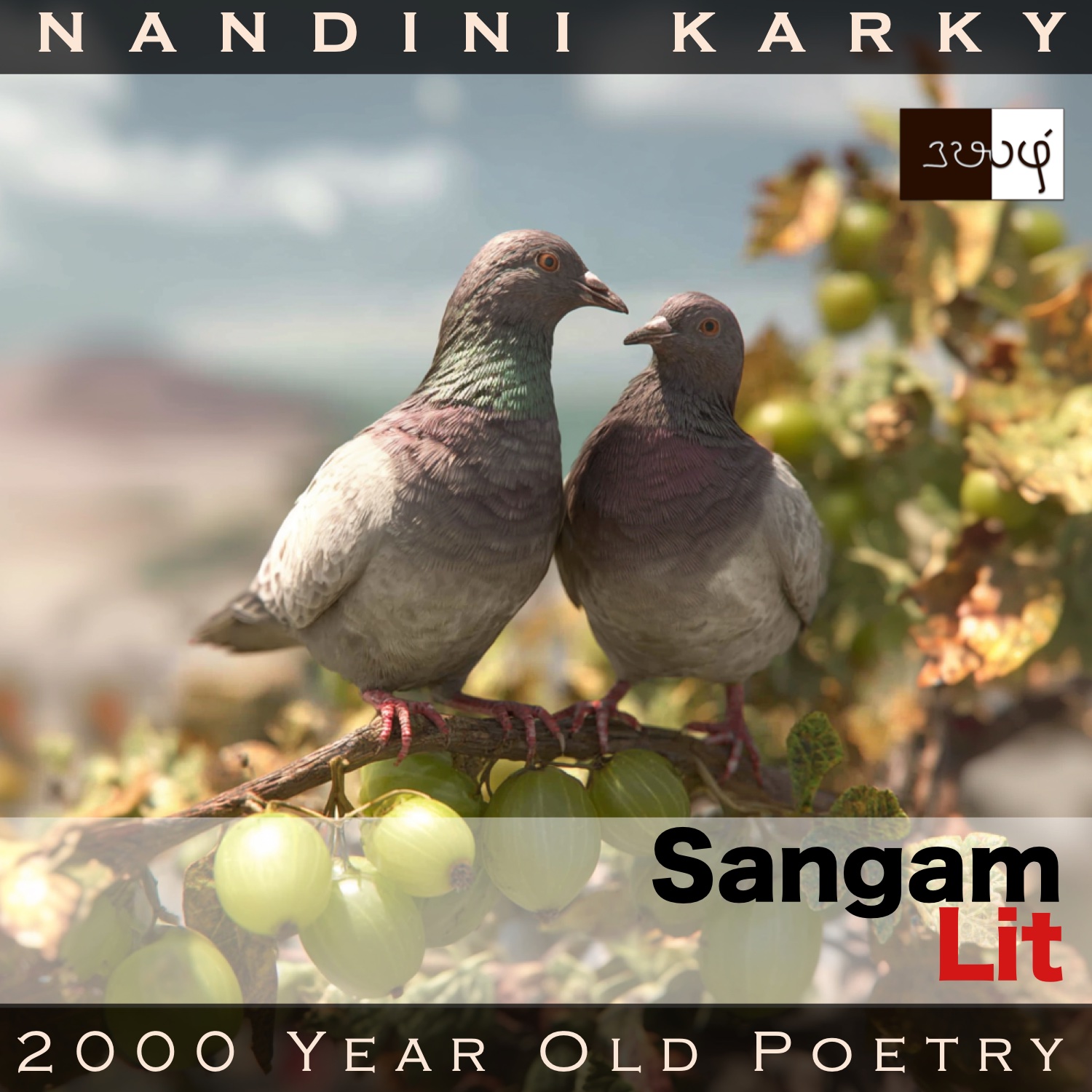
“The red-legged male of the pigeon with specks and lines, along with its gentle little mate flies afar, and after landing on the spreading rough, river sand, chooses pebbles and eats them. Then, it sings, sitting atop the beautiful branch of a gooseberry tree, bearing many fruits, which have the power of bringing back the parting life of those wayfarers, who arrive with a searing thirst, from a faraway country, traversing vast spaces in the formidable drylands, by the side of small hills, bereft of clouds, where even the lined hemp withers. If you intend to leave to this place, pushed by that ever-changing affliction of seeking wealth, may those efforts of yours bear fruit! As for her, her soft arms are akin to the tall bamboos, with flawless nodes, that shoot up in the mountain ranges, filled with hanging fruits, around which young rain clouds dance around in the joyous town of ‘Kallil’, ruled by Aviyan, who wields chariots many! So, tell me, in that land that you intend to part away to, could there be any cure to remedy the slipping away of well-etched, fine bangles from those arms of hers?”
Let’s tread on those scorching spaces and learn more! The confidante starts by sketching the drylands region, and to do that, she seeks the help of a pigeon couple. First, she talks about the red-legged male pigeon and then its delicate, little mate. Note the use of the word ‘Siru’ meaning ‘small’ to describe the female pigeon. When I checked whether this was factual or the Sangam poets’ way of projecting human notions on the birds, turns out indeed the females are smaller than the males, though they may have more body mass. What a nuance captured!
Returning, the confidante tells us that these two birds take off and fly for quite distance and then they land on a place with coarse, dried-up river sand. Now she mentions something that made me ask, “Really? No way. There must be some mistake!” The thing the confidante says about these pigeons is that they can be seen eating pebbles from that river sand. Now you know why I was so surprised. I was telling myself that the interpreters had got this wrong and the word ‘Paral’ should mean something else. Like some grain or some seed! Then, when I went and asked the seemingly ridiculous question, ‘Do pigeons eat pebbles?’, the internet blew my mind saying, ‘Indeed, it does!’ Apparently, pigeons do not have teeth but they need to digest the grains and seeds they eat. So, to this end, they gobble those pebbles and these stones in their stomach acts like a grinder and extracts the nutrients from their diet. The marvels of nature indeed! At the same time, I think we should also celebrate the Sangam poets for their powers of observation to note this intricate behaviour of these birds and the creativity to blend it in a song on relationships!
Moving on from our pigeon tales, now the confidante tells us that the pigeons, after swallowing those pebbles, fly to the branch of a gooseberry tree and sing their songs perched there. Then turning her attention from the birds to the fruits hanging in this tree, the confidante details how these fruits have the power of bringing back the lives of those who are dying of thirst in that harsh drylands region, where even the sturdiest of plants, the hemp takes to withering away in the sweltering sun. Once again, these verses glorify the gooseberry as an elixir of life! Then, the confidante connects by telling the man if he intends to leave to such a place in search of wealth, may his endeavour succeed. And then she goes on to compares the arms of the lady to the bamboos growing in a mountain town called ‘Kallil’ ruled by Aviyan, and concludes by asking the man if he knew some medicine that could cure the slipping away of fine bangles from the lady’s arms!
With these words, the confidante intends to tell the man that the lady would lose her health and beauty in his absence and ask him to give up his idea of parting from the lady. While it’s the same ‘Don’t go, she’ll pine!’ at the core, those fascinating facts about pigeons eating pebbles and gooseberries bringing back dying lives presents to us the medicine of awe about our natural world, something that can revive and rejuvenate us, as we traverse the drylands of our day-to-day life!
