

Podcast: Play in new window | Download
Subscribe: Apple Podcasts | Spotify | Amazon Music | Android | iHeartRadio | TuneIn | RSS | More
In this episode, we perceive the angst-ridden words of a maiden, as depicted in Sangam Literary work, Aganaanooru 277, penned by Karuvoor Nanmarban. Set in the ‘Paalai’ or ‘Drylands Landscape’, the verse sketches dynamic similes involving birds and animals to etch the situation at hand.

தண் கதிர் மண்டிலம் அவிர் அறச் சாஅய்ப்
பகல் அழி தோற்றம் போல, பையென
நுதல் ஒளி கரப்பவும், ஆள்வினை தருமார்,
தவல் இல் உள்ளமொடு எஃகு துணை ஆக,
கடையல்அம் குரல வாள் வரி உழுவை
பேழ் வாய்ப் பிணவின் விழுப் பசி நோனாது,
இரும் பனஞ் செறும்பின் அன்ன பரூஉ மயிர்,
சிறு கண் பன்றி வரு திறம் பார்க்கும்
அத்தம் ஆர் அழுவத்து ஆங்கண் நனந்தலை,
பொத்துடை மரத்த புகர் படு நீழல்,
ஆறு செல் வம்பலர் அசையுநர் இருக்கும்,
ஈரம் இல் வெஞ் சுரம் இறந்தோர் நம்வயின்
வாரா அளவை ஆயிழை! கூர் வாய்
அழல் அகைந்தன்ன காமர் துதை மயிர்
மனை உறை கோழி மறனுடைச் சேவல்
போர் புரி எருத்தம் போலக் கஞலிய
பொங்கு அழல் முருக்கின் ஒண் குரல் மாந்தி,
சிதர் சிதர்ந்து உகுத்த செவ்வி வேனில்
வந்தன்று அம்ம, தானே
வாரார் தோழி! நம் காதலோரே.
In this trip to the familiar landscape, we get to see striking sights, as we listen to the lady say these words to her confidante, when the man continues to remain parted away:
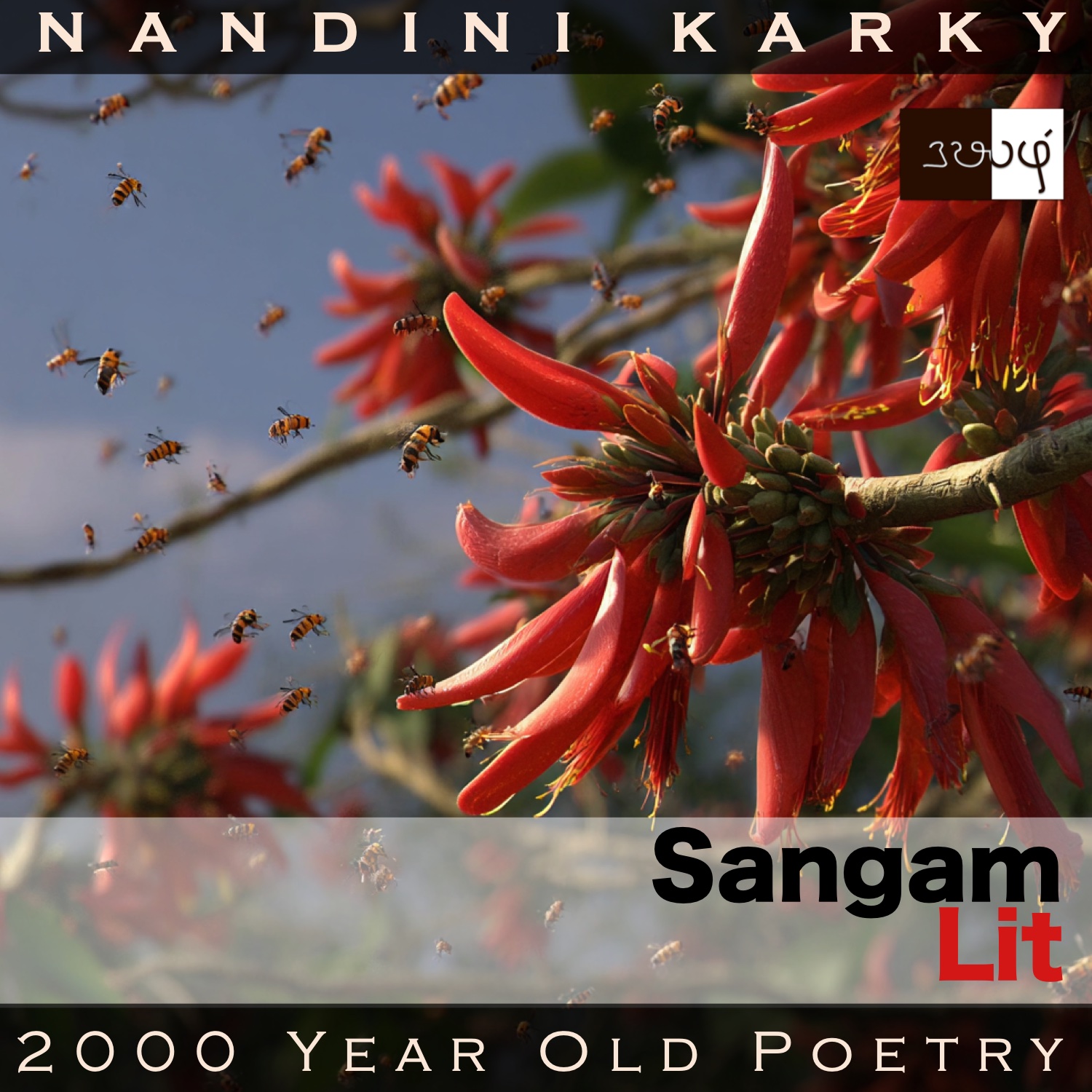
“Akin to how the moon with cool rays, appears during the day, with its glow ruined, making the light of my forehead wane slowly day by day, so as to gain wealth, with a relentless heart, and a spear for company, he has parted away to the drylands, where a tiger with sword-like stripes and having a voice akin to the churning of curd, unable to bear the deep hunger of its huge-mouthed mate, lies in wait for a small-eyed boar, with hair on its neck like the splinters on a palm tree, in those arid and wide open scrub jungles, where in the spotted shade of trees with hollows, wayfarers treading those paths, find a spot to rest. He, who has left to such a scorching drylands, bereft of moisture, still does not return to me, O maiden wearing well-etched jewels! Having feathers, akin to a swaying, sharp-tipped flame, is the hen that lives in a home. Akin to the bristling hair on the cape of its mate, a courageous rooster, in the middle of a fight, blooms the radiant, fire-like coral tree’s flowers, upon whose bright buds, bees swarm around and scatter nectar, announcing the arrival of this season of spring, and still that lover of mine returns not, my dear friend!”
Let’s brave the sweltering heat and walk on through this domain! The lady observes how the shine of her forehead is fading just like how the moon loses its glow during the day. The reason for that is the absence of her beloved, who has left in search of wealth with much determination in his heart and a spear in his hand, she says, and goes on to describe where he’s at. To do that, she paints an image of a roving tiger, which wanting to end the hunger of its mate, roams the paths, waiting to snatch a boar, whose rough hair is likened to the splinters of a palmyra tree. The lady further describes how these spaces have hardly any trees, and people walking those paths sit down with relief even in the broken shade of small tree. She goes on to then talk about how the season of spring had arrived at their doorstep, knocking with the sight of bees buzzing around coral tree flowers, whose shape is so exquisitely placed in parallel to the bristling fur around the neck of a rooster in the middle of a fight. The lady concludes by crying that though this beautiful season, meant for togetherness had arrived, her man hadn’t!
A case of lamenting for the man, who’s missing even after the promised season of return. In the reference to the male tiger wanting to appease the hunger of its mate, and the bees swarming around the coral-tree flowers with much passion and desire, the lady seems to say, ‘The whole world around is buzzing with expressions of love, whereas my man shows not this to me!’. This curiously reminded me of the concept of ‘social media envy’ and how seeing the idealised posts and reels of others can point to the lack in one’s own life. Two thousand years ago, the natural world was the place of action wheres now the scene has shifted to the world of 1s and 0s. What remains the same is the human nature of comparison of one’s own state to the world around, and perhaps the cure for this timeless crisis is to just feel gratitude for the things that we do have, regardless of what we don’t and what others may have!
