

Podcast: Play in new window | Download
Subscribe: Apple Podcasts | Spotify | Amazon Music | Android | iHeartRadio | TuneIn | RSS | More
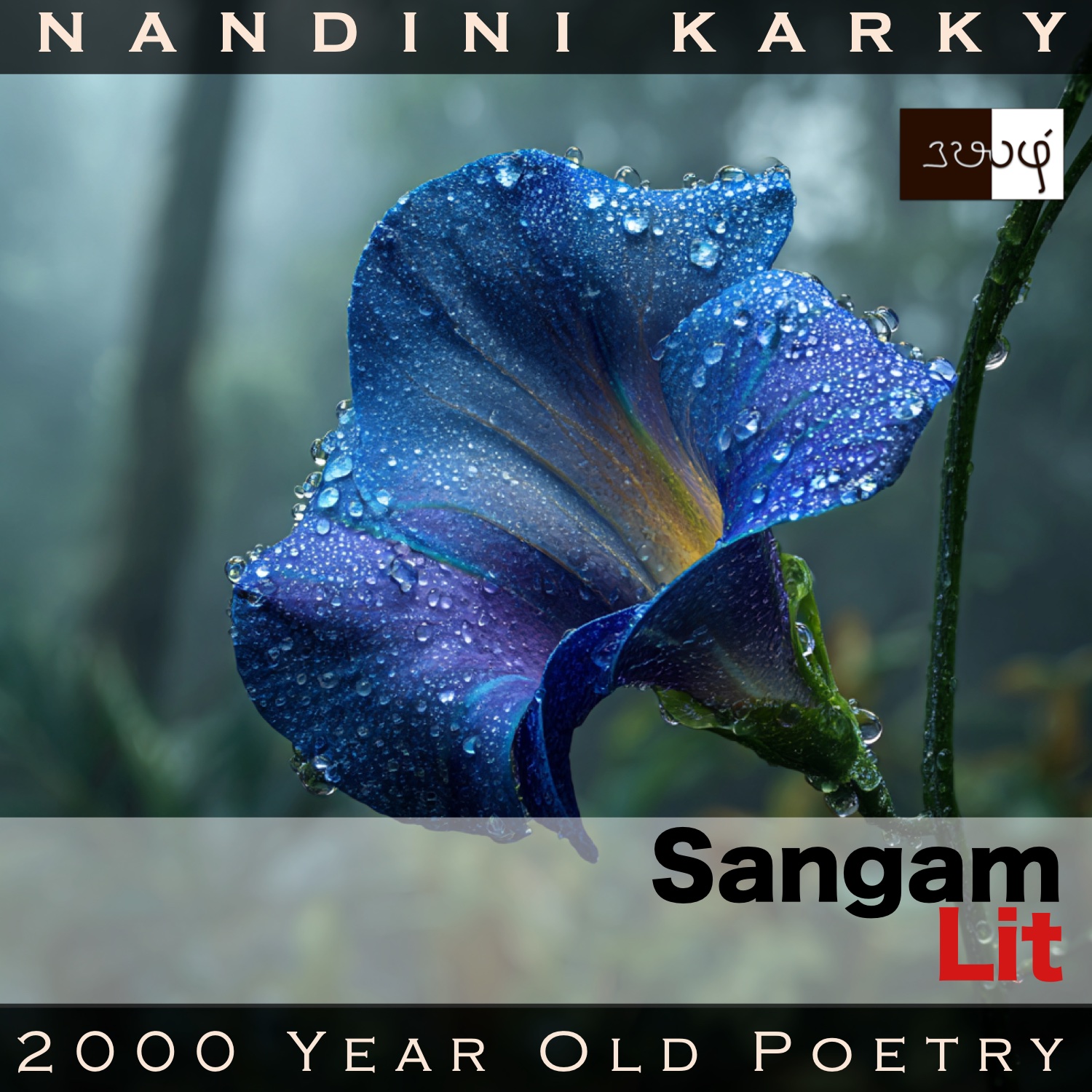
In this episode, we perceive the soaring agony in a maiden, as portrayed in Sangam Literary work, Aganaanooru 294, penned by Kazhaarkeeran Eyitriyaar. The verse is situated amidst the rain-soaked flowers of the ‘Mullai’ or ‘Forest Landscape’ and sketches the changes in the weather and its consequences.

மங்குல் மா மழை விண் அதிர்பு முழங்கி,
துள்ளுப் பெயல் கழிந்த பின்றை, புகைஉறப்
புள்ளி நுண் துவலை பூவகம் நிறைய,
காதலர்ப் பிரிந்த கையறு மகளிர்
நீர் வார் கண்ணின் கருவிளை மலர,
துய்த் தலைப் பூவின் புதல் இவர் ஈங்கை
நெய்த் தோய்த்தன்ன நீர் நனை அம் தளிர்
இரு வகிர் ஈருளின் ஈரிய துயல்வர,
அவரைப் பைம் பூப் பயில, அகல் வயல்
கதிர் வார் காய் நெல் கட்கு இனிது இறைஞ்ச,
சிதர் சினை தூங்கும் அற்சிர அரை நாள்,
”காய் சின வேந்தன் பாசறை நீடி,
நம் நோய் அறியா அறனிலாளர்
இந் நிலை களைய வருகுவர்கொல்?” என
ஆனாது எறிதரும் வாடையொடு
நோனேன், தோழி! என் தனிமையானே.
In this trip to this rainy domain, instead of the usual hoofbeats, we hear a song of sorrow, as we listen to the lady say these words to her confidante, in response to the confidante’s attempts to cheer up the lady, as the man continues to remain parted away:
“Thick clouds thunder aloud, quaking the sky, and then pour down as pouncing rain drops. After this has ceased, the fog’s fine and spotted drops fill the surface of flowers. Akin to tear-filled eyes of helpless maiden, who are separated from their beloved, the dew-covered blue-bellvine blooms. With fuzzy-topped flowers, the touch-me-not vines spread across bushes, and its beautiful sprouts, soaked in water, appearing as if dipped in oil, split into two, akin to a bi-forked branch. Fresh flowers of the bean plant spread around, and the long-speared ripe paddy in the wide fields dance pleasantly, as bees buzz around bent branches in this midnight hour of the cold season. At this time, asking, ‘Will that unjust man, who understands not my affliction and extends his stay in the battle encampment of the furious king, return to weed away this state of mine?’, I suffer in loneliness, even as this northern wind blows incessantly, tormenting me, my friend!”
Let’s soak in the mist of this landscape and learn more! The lady starts by talking about the rainy season and its events of making the sky tremble with thunder and then pour down as rain. But instead of stopping with that, she mentions how that season is done and dusted and now, there’s only the fog that spreads and coats the surface of flowers. She zooms on to a particular bluebell vine flower, which is soaked in this dew, and compares that to the eyes of women, who are separated from their beloved, her clan in short! Her gaze turns to the touch-me-not vines and their leaves, again soaked in mist. She offers two similes here, one, to talk about their moisture, she compares them to objects dipped in oil, and two, she employs the word ‘eerul’ to mention how these leaves split into two. Most of the interpreters have understood this word to mean the ‘liver’. In my opinion, this word does not yield to the logic of the comparison and I have chosen to see this word as representing a branch or object that is bi-forked.
Moving on from the touch-me-nots, the lady sketches the flowers of the bean plants, the swaying wild paddy in the fields and the bees dancing around the branches in that season. Leaving the outer world, she concludes by talking about the way she repeatedly asks if her man, who seems to have no justice, and continues to remain at the battle encampment of the king, would return soon to end her suffering, and continues her fight with the northern winds which seem to pummel her ceaselessly!
In essence, the man’s promised season of return, the rainy season, is long gone and even the next season had arrived and yet the man returned not, complains the lady to the confidante. The usual words of lament transport us to a time when time was not marked by calendars and schedules but by blooming flowers and pouring showers!
