

Podcast: Play in new window | Download
Subscribe: Apple Podcasts | Spotify | Amazon Music | Android | iHeartRadio | TuneIn | RSS | More
In this episode, we perceive words of a warm welcome, as depicted in Sangam Literary work, Aganaanooru 314, penned by Madurai Alakkar Gnaazhaar Makanaar Ammallanaar. The verse is situated amidst the rain-soaked earth of the ‘Mullai’ or ‘Forest Landscape’ and portrays how angst has been routed by a much-awaited arrival.

”நீலத்து அன்ன நீர் பொதி கருவின்,
மா விசும்பு அதிர முழங்கி, ஆலியின்
நிலம் தண்ணென்று கானம் குழைப்ப,
இனம் தேர் உழவர் இன் குரல் இயம்ப,
மறியுடை மடப் பிணை தழீஇ, புறவின்
திரிமருப்பு இரலை பைம் பயிர் உகள,
ஆர் பெயல் உதவிய கார் செய் காலை,
நூல் நெறி நுணங்கிய கால் நவில் புரவி
கல்லெனக் கறங்கு மணி இயம்ப, வல்லோன்
வாச் செல வணக்கிய தாப் பரி நெடுந் தேர்
ஈர்ம் புறவு இயங்கு வழி அறுப்ப, தீம் தொடைப்
பையுள் நல் யாழ் செவ்வழி பிறப்ப,
இந் நிலை வாரார்ஆயின், தம் நிலை
எவன்கொல்? பாண! உரைத்திசின், சிறிது” என,
கடவுட் கற்பின் மடவோள் கூற,
செய் வினை அழிந்த மையல் நெஞ்சின்
துனி கொள் பருவரல் தீர, வந்தோய்!
இனிது செய்தனையால்; வாழ்க, நின் கண்ணி!
வேலி சுற்றிய வால் வீ முல்லைப்
பெருந் தார் கமழும், விருந்து ஒலி கதுப்பின்
இன் நகை இளையோள் கவவ,
மன்னுக, பெரும! நின் மலர்ந்த மார்பே!
The scenes of the lush forest greet us in this trip, as we listen to the confidante say these words to the man, when he returns home, after having parted with the lady a while ago:
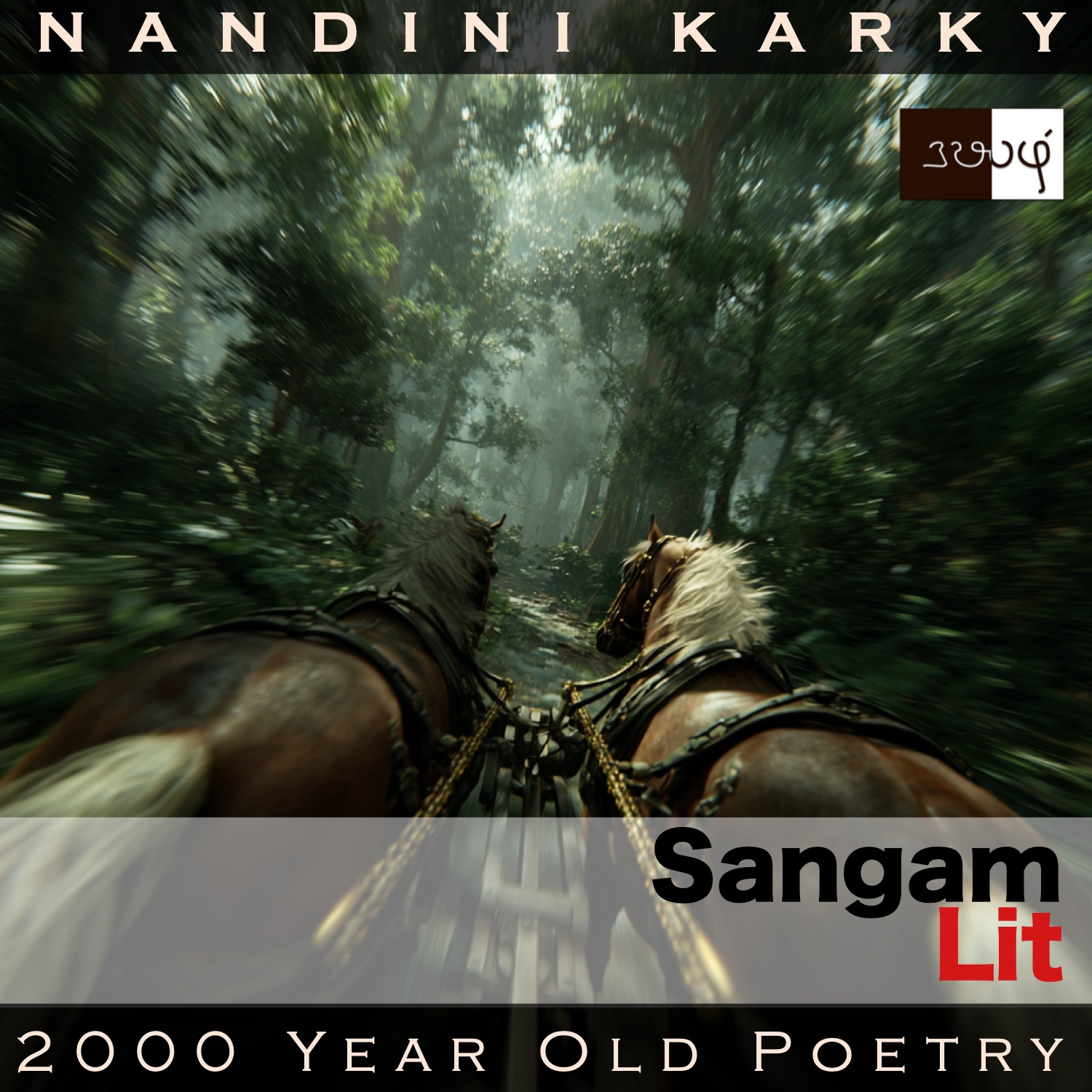
“Saying, ’Carrying a womb, brimming with sapphire-like waters, quaking the dark skies with its roar, clouds have poured down rain, cooling the land and making the forest flourish. Sweet voices of farmers calling their kin resounds aloud, and in the forest, a male deer with twisted antlers, after embracing its pregnant, naive mate, leaps about amidst the green bushes. On this day of rains, when the downpour has descended, wielding those perfect horses, which would be placed in parallel to the wind, in the eyes of books, making those tinkling bells echo aloud, as that tall chariot, which leaps with control in the reins of the charioteer, cuts across its path in the moist-backed forest, as the sweet strings of the melancholic lute sends out the ‘Sevvazhi’ tune, if he does not arrive even now, what is to be said about his nature, O bard? Tell me a little!’, that maiden with a god-like chastity suffered greatly, tormented by her helpless, confused heart. Slaying that hateful sorrow, you have arrived here! You have rendered bliss unto her! Long live, your garland! May your embrace of that sweet-smiling young maiden, with thick, luxuriant tresses, wafting with the scent of a huge garland, woven with white, wild jasmine flowers, encircling the fence, last long upon your wide and blooming chest, O lord!”
Let’s trot along with the man and bask in that resounding reception! The confidante starts by repeating the words the lady had been saying to a bard. The lady had spoken about the rain clouds, imagining them as a mother carrying the womb of sapphire-hued water, and as the time was up, they had delivered their child of rains, which the hands of the land had received as a blessing from the skies, and then spread the green smiles all around the lush forest. The joy the earth and the trees felt were reflected by the trotting male deer and its delighting mate, pregnant, as well. Is the lady trying to convey some ‘good news’ to the man?
Returning, after that rousing rendition of the rains, the lady had asked the bard if the man does not arrive there, wielding his horses, described as the wind in great books, as his charioteer weaved a path through the moist lands, at that evening hour when the ‘Sevvazhi’ tune resounded on the lute, then what only can you say about him. A statement of dejection from the lips of this dame! The confidante after saying that’s how crestfallen the lady had been, turns to the man and celebrates that he has now returned, vanquishing that sorrow and suffering in the lady, and filling her with the sweetness of joy. The confidante concludes by blessing the man’s garland and wishing that he continues to remain in the embrace of his beloved mate for long!
A verse which portrays a moment when the pain of the past is driven into disappearance just by a person’s presence! Coming home to a waiting beloved is the stuff of legends many, which do extend a timeless appeal even, and perhaps, especially, in this modern age of hyper-communication!
