

Podcast: Play in new window | Download
Subscribe: Apple Podcasts | Spotify | Amazon Music | Android | iHeartRadio | TuneIn | RSS | More
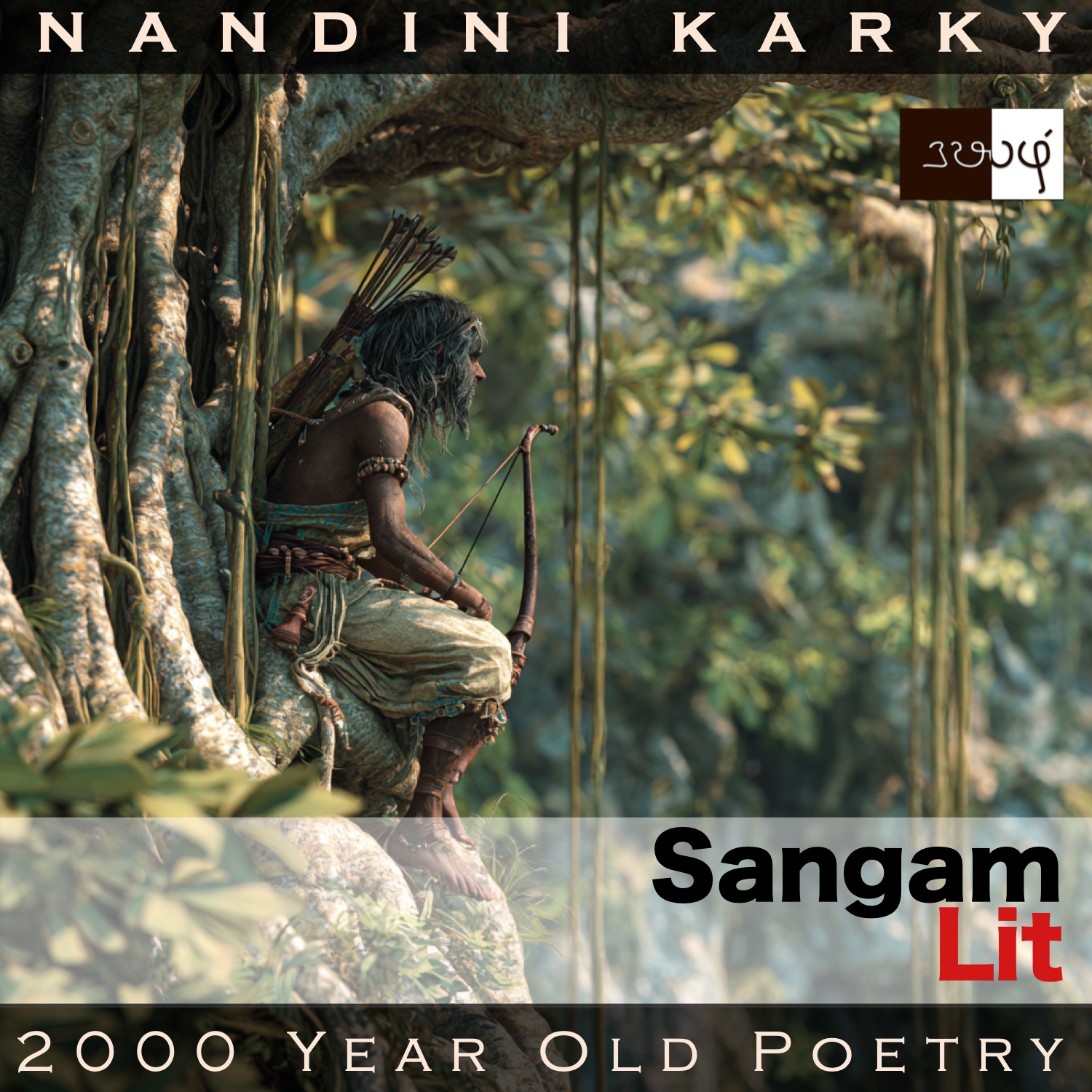
In this episode, we listen to words that attempt to dissuade a person from a course of action, as depicted in Sangam Literary work, Aganaanooru 319, penned by Erukkaattoor Thaayankannanaar. Set in the ‘Paalai’ or ‘Drylands Landscape’, the verse etches the qualities of the lady and the land.

மணி வாய்க் காக்கை மா நிறப் பெருங் கிளை
பிணி வீழ் ஆலத்து அலங்கு சினை ஏறி,
கொடு வில் எயினர் குறும்பிற்கு ஊக்கும்
கடு வினை மறவர் வில்லிடத் தொலைந்தோர்
படு பிணம் கவரும் பாழ் படு நனந்தலை,
அணங்கு என உருத்த நோக்கின், ஐயென
நுணங்கிய நுசுப்பின், நுண் கேழ் மாமை,
பொன் வீ வேங்கைப் புது மலர் புரைய
நல் நிறத்து எழுந்த, சுணங்கு அணி வன முலை,
சுரும்பு ஆர் கூந்தல், பெருந் தோள், இவள்வயின்
பிரிந்தனிர் அகறல் சூழின், அரும் பொருள்
எய்துகமாதோ நுமக்கே; கொய் தழைத்
தளிர் ஏர் அன்ன, தாங்கு அரு மதுகையள்,
மெல்லியள், இளையள், நனி பேர் அன்பினள்,
‘செல்வேம்’ என்னும் நும் எதிர்,
‘ஒழிவேம்’ என்னும் ஒண்மையோ இலளே!
In this trip to this familiar domain, we get to meet its prominent denizens, as we listen to the confidante say these words to the man, when he informs her of his intention to part away with the lady and go in search of wealth:
“The huge, dark-hued flock of the sapphire-beaked bird, feeds on corpses of those, who have fallen to the bows of those robbers with speeding arrows, who rise from their little strongholds, and climb on to the swaying branches of a banyan tree with tasseled aerial roots, and take aim at wayfarers, who traverse those ruined wide spaces. If you are thinking about going thither, parting away from her, who has a form, akin to a female spirit, a waist that is exquisitely slender, many little beauty spots, exquisite bosoms, dotted with pallor spots, in the hue of the fine shade of fresh, golden flowers of the Kino tree, bee-swarming tresses, wide arms, then may you attain that hard-to-obtain wealth that you seek. However, she, who is akin to tender sprouts plucked with care, the one with no strength to bear, the gentle one, the young one, the one with immense love for you, does not have the understanding and wisdom to reply, ‘I shall remain here’ when you tell her, ‘I’m leaving’!”
Let’s take that oft-repeated walk through this landscape. The confidante starts by describing the drylands where the man intends to leave to, and to do that, she zooms on to particular bird, which most interpreters have identified as a ‘crow’ because of the presence of the word ‘Kaakkai’, the contemporary word for this bird. However, let’s look deeply into the description to investigate other possibilities. The confidante describes this bird as one with a sapphire-like radiant beak and the way this bird would feed readily on the corpses of wayfarers, shot down by the drylands robbers, who take their aim, climbing on those sturdy banyan trees, and send out their speeding arrows. Now back to the bird, which feeds on these corpses. Crows are indeed omnivorous but there’s another possible candidate, matching especially the descriptor of a ‘sapphire’ beak and that’s the ‘Black Kite’ found in South India and known to frequent scrub jungles. It’s also one of the birds that feed on corpses laid out in the traditional sky burial of the Zoroastrian tradition. So, the poem could possibly be referring to a ‘Black Kite’ rather than a ‘Crow’.
Returning from our ornithological meanderings, we find the confidante revealing that the man intends to leave to such a forsaken place, parting away from the lady. She wishes the man success but at the same time, emphatically describes how the lady, who is beautiful and perfect in every way, does not have the strength to bear with the man’s loss, and does not have the maturity or clarity to promise that she would stay there and wait for the man’s return!
In short, it’s a ‘Don’t you leave her’ message to the man! The way the confidante describes the lady as someone not strong or bold makes me think how affronted we would be, if one of our friends described us so! Perhaps that was an age when being helpless was considered an attractive quality in a woman. It’s not only in this Sangam verse from two thousand years ago that we see such a representation, but even in movies from many parts of the world, in the previous decades. Truly refreshing to see women and girls of these times giving up those outdated modes of being, just to charm a man, and choosing strength and confidence every day, all the way!
