

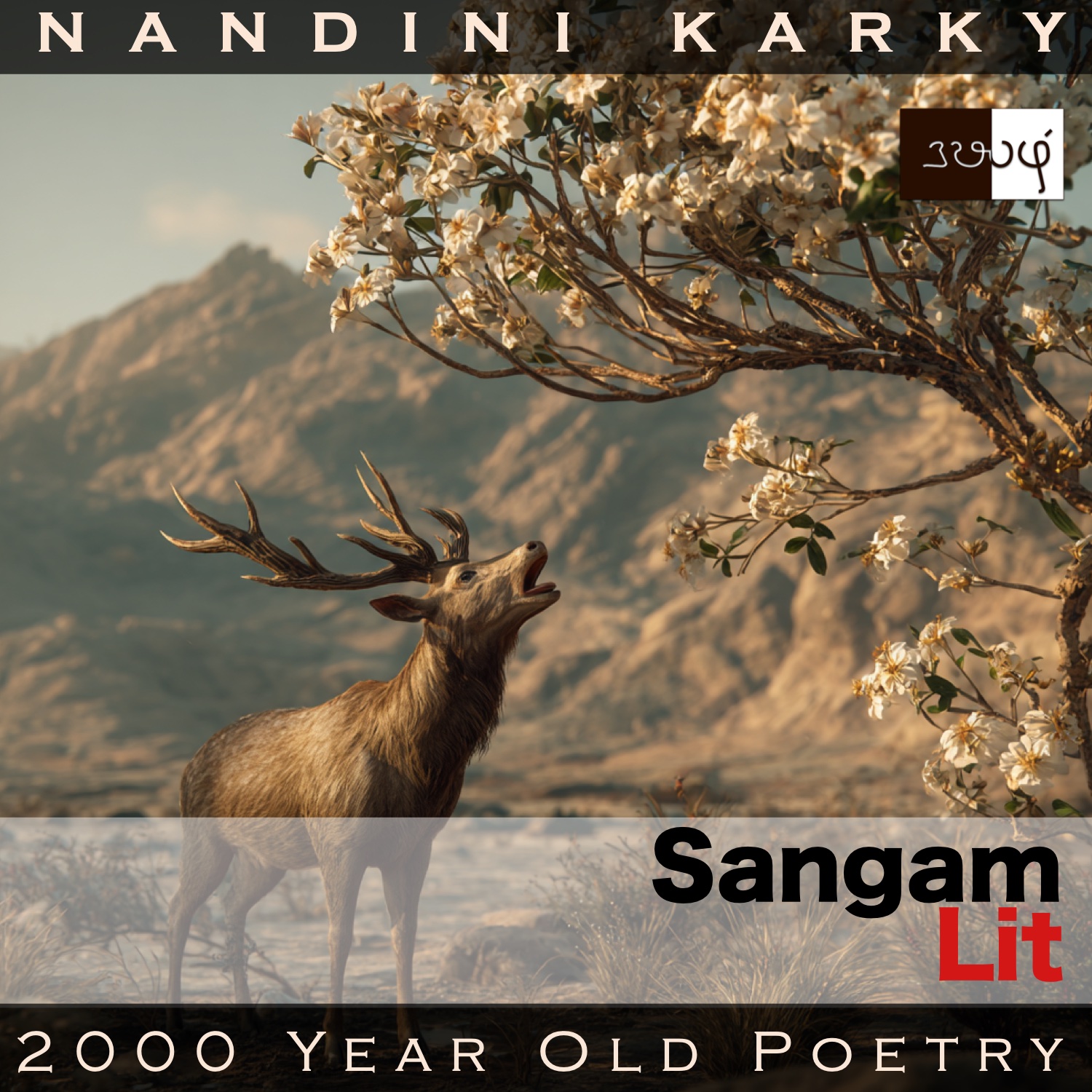
In this episode, we listen to a mother’s lament, as depicted in Sangam Literary work, Aganaanooru 321, penned by Kayamanaar. Set in the ‘Paalai’ or ‘Drylands landscape’, the verse sketches the state of various fauna in this harsh domain.

பசித்த யானைப் பழங்கண் அன்ன
வறுஞ் சுனை முகந்த கோடைத் தெள் விளி
விசித்து வாங்கு பறையின் விடரகத்து இயம்ப,
கதிர்க் கால் அம் பிணை உணீஇய, புகல் ஏறு
குதிர்க் கால் இருப்பை வெண் பூ உண்ணாது,
ஆண் குரல் விளிக்கும் சேண் பால் வியன் சுரைப்
படு மணி இன நிரை உணீஇய, கோவலர்
விடு நிலம் உடைத்த கலுழ் கண் கூவல்,
கன்றுடை மடப் பிடி களிறொடு தடவரும்
புன் தலை மன்றத்து அம் குடிச் சீறூர்,
துணையொடு துச்சில் இருக்கும்கொல்லோ?
கணையோர் அஞ்சாக் கடுங்கண் காளையொடு
எல்லி முன்னுறச் செல்லும்கொல்லோ?
எவ் வினை செயுங்கொல்? நோகோ யானே!
அரி பெய்து பொதிந்த தெரி சிலம்பு கழீஇ,
யாய் அறிவுறுதல் அஞ்சி,
வேய் உயர் பிறங்கல் மலை இறந்தோளே.
In this trip to the drylands, we get to see plenty of sights as we listen to mother say these words, at the juncture of her daughter’s elopement with the man:
“Akin to the listless eye of a hungry elephant appears the dried-up spring. As summer winds brush past the spring, its clear sound resounds across the mountain ranges, akin to a tautly tied ‘Parai’ drum. So that the beautiful female deer, with slender legs, eats, its loving mate, touches not the white flowers of the rough-trunked Mahua tree, and cries aloud with its forceful voice in those distant spaces, where to make sure their herds of cows, tied with bells and having huge udders, do not go thirsty, cowherds break the hard ground and build wells, which trickle with water, akin to tears from an eye. To this spot, a male elephant arrives with its pregnant mate and searches in vain for moisture. Such are the dull centres of those once-beautiful hamlets. Will she stay the night here with her companion? Or would she walk on, following, as that harsh-eyed, bull-like man, who fears not the drylands bowmen, leads on in front? What would she be doing? I suffer so, thinking about the girl who parted away to those rugged mountains, filled with bamboos, fearing that mother might know of her relationship, removing and leaving behind her radiant anklets filled with tinkling pebbles!”
Let’s brave the sweltering heat and enter that formidable domain! Mother starts by describing various aspects of the drylands, starting with how a drying spring looks like the eye of a famished elephant. Next she portrays the roar of the summer wind that echoes in the mountain ranges. Then she zooms on to a deer couple and etches the way the male refuses to eat the white Mahua flowers, right before its eyes, and instead wishing for its mate to eat, calls out emphatically to the female deer. Mother goes to characterise the actions of cowherds, who not wishing to let their cattle go thirsty, take up the hard work of building wells in that hard ground and mentions how that well trickles with meagre water, like how an eye would shed tears. Remembering this well, a male elephant arrives there with its pregnant mate and rubs on the ground, searching for some succour.
From these scenes of wild life, mother turns to the ruined villages in this domain and wonders if her daughter would choose to stay the night there with her companion or would she keep walking as her courageous lover led her on, not minding the fearsome bowmen of the region. Mother concludes by declaring that every moment, some worry or the other about her daughter, the one who removed and left her anklets and went away in the company of that man, keeps tormenting her.
There is a cultural nuance in the last line about the lady removing her anklets before leaving with the man. Apparently, there used to be a major ceremony in a Sangam girl’s life before she gets married. The anklets endowed on her by her parents are removed and changed for the ones her husband gives, some sources indicate. Now mother observes how that ceremony would not take place, now that the girl had left, fearing her love relationship with the man would be discovered.
Another interesting aspect is the way mother focuses on the theme of thirst and hunger repeatedly with those images of a hungry elephant, then the male deer which thinks only about its mate’s hunger, onward to the cattle herders, wanting to ensure their cows don’t go thirsty, and finally to that male elephant, which seeks out the well to provide water for its pregnant mate. These scenes subtly relay to us that mother is anxious about how her delicate daughter would bear the thirst, heat and hunger of this harsh domain and wishes and visualises that the man the lady trusted and left with, takes care of her. The perfect portrait of a mother who thinks only of her daughter’s welfare even in the midst of loss and despair!
