

Podcast: Play in new window | Download
Subscribe: Apple Podcasts | Spotify | Amazon Music | Android | iHeartRadio | TuneIn | RSS | More
In this episode, we perceive the picturesque beauty of spring, as portrayed in Sangam Literary work, Aganaanooru 341, penned by Aavoor Moolankizhaar. Set in the ‘Paalai’ or ‘Drylands landscape’, the verse paints the emotions in the heart of a person, parted from their beloved, on encountering a change in the seasons.

உய் தகை இன்றால் தோழி! பைபய,
கோங்கும் கொய் குழை உற்றன; குயிலும்
தேம் பாய் மாஅத்து ஓங்கு சினை விளிக்கும்;
நாடு ஆர் காவிரிக் கோடு தோய் மலிர் நிறைக்
கழை அழி நீத்தம் சாஅய வழி நாள்,
மழை கழிந்தன்ன மாக் கால் மயங்கு அறல்,
பதவு மேயல் அருந்து துளங்கு இமில் நல் ஏறு,
மதவுடை நாக் கொடு அசை வீடப் பருகி,
குறுங் காற் காஞ்சிக் கோதை மெல் இணர்ப்
பொன் தகை நுண் தாது உறைப்ப, தொக்கு உடன்,
குப்பை வார் மணல் எக்கர்த் துஞ்சும்,
யாணர் வேனில்மன் இது
மாண் நலம் நுகரும் துணை உடையோர்க்கே?
In this trip to this familiar domain, we don’t get to see much of the landscape, and instead witness scenes in nature, as we listen to the lady say these words to her confidante, in response to the confidante’s words of consolation, as the man continues to remain parted away:
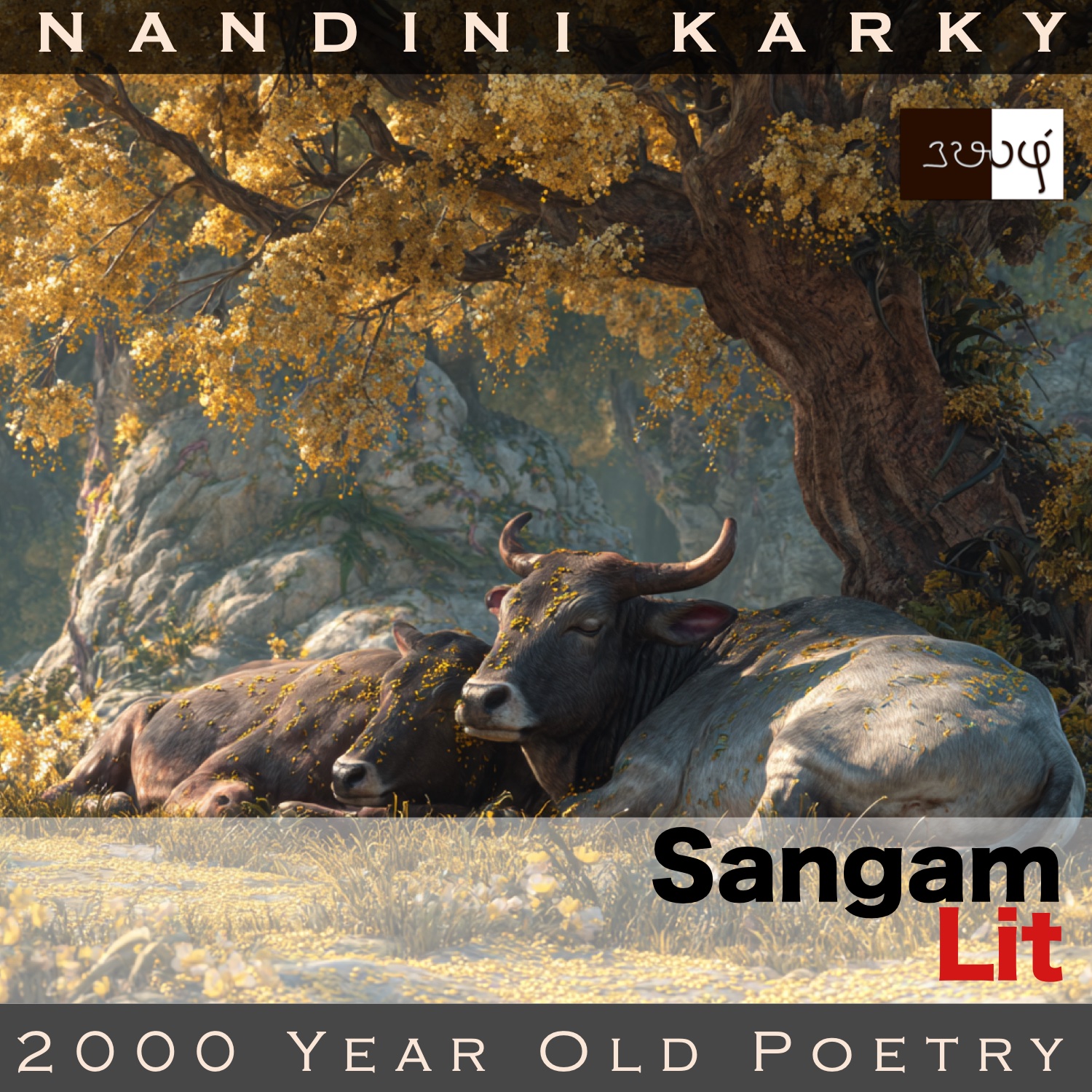
“There’s no redemption, my friend! Slowly, the buttercup is sprouting tender clusters, ready to be plucked; Upon the soaring branch of the nectar-filled mango tree, the cuckoo calls out aloud; Akin to River Kaveri, which waters nations many, and brims over with copious floods, burying bamboo oars, and then recedes as rains cease, appears the muddy waters in the canal. The fine bull with a swaying hump grazes upon the grass, and then, along with its gentle-gaited mate, drinks up the muddy water in the canal, till its thirst abates, and then rests under the short-trunked Portia tree. As soft pollen of the tree’s flowers, appearing akin to gold dust, shower on it, it sleeps on the heaps of sand piled together. Such is this fertile season of spring! Alas, it’s a season, which is delightful only for those who have a companion to relish one’s fine beauty!”
Let’s listen to the lady’s song amidst the calls of a cuckoo! The lady starts by saying that there’s no salvation for her. Then without explaining why, she goes on to talk about the changes around her, pointing to the blooming buttercup flowers and the singing cuckoos sitting on the mango trees. Then, leaving these scenes, the lady talks about River Kaveri, at the time the river is in full spate, and then later as the rains recede, how these waters too become scarce and appear muddy. She equates this image to that of the water’s condition in a canal. After munching on newly sprouted grass, a bull arrives to this spot along with its mate and guzzles the water to its heart’s content, and then sleeps under the portia tree, even as the flowers shower their gold dust on the bull and its mate. The lady concludes by saying such is the season of spring, which is a thing of joy and pleasure only for those who have their companions to celebrate their beauty!
The lady implies that as the man is away, and spring was here, it was impossible for her to bear with the situation. Yet again, an intricate lesson on managing one’s emotions by paying attention to the outer world and one’s own inner world. What better cure can there be other than to ‘Observe and Express’, that too to a caring friend!
