

Podcast: Play in new window | Download
Subscribe: Apple Podcasts | Spotify | Amazon Music | Android | iHeartRadio | TuneIn | RSS | More
In this episode, we perceive a sharp refusal to a request, as portrayed in Sangam Literary work, Aganaanooru 346, penned by Nakeerar. The verse is situated amidst the fertile fields of the ‘Marutham’ or ‘Farmlands landscape’ and elaborates on a person’s past activities and the emotions that evokes.

நகை நன்று அம்ம தானே இறை மிசை
மாரிச் சுதையின் ஈர்ம் புறத்து அன்ன
கூரல் கொக்கின் குறும் பறைச் சேவல்,
வெள்ளி வெண் தோடு அன்ன, கயல் குறித்து,
கள் ஆர் உவகைக் கலி மகிழ் உழவர்
காஞ்சி அம் குறுந் தறி குத்தி, தீம் சுவை
மென் கழைக் கரும்பின் நன் பல மிடைந்து,
பெருஞ் செய் நெல்லின் பாசு அவல் பொத்தி,
வருத்திக் கொண்ட வல் வாய்க் கொடுஞ் சிறை
மீது அழி கடு நீர் நோக்கி, பைப்பயப்
பார்வல் இருக்கும் பயம் கேழ் ஊர!
யாம் அது பேணின்றோ இலமே நீ நின்
பண் அமை நல் யாழ்ப் பாணனொடு, விசி பிணி,
மண் ஆர் முழவின் கண் அதிர்ந்து இயம்ப,
மகிழ் துணைச் சுற்றமொடு மட்டு மாந்தி,
எம் மனை வாராயாகி, முன் நாள்,
நும் மனைச் சேர்ந்த ஞான்றை, அம் மனைக்
குறுந் தொடி மடந்தை உவந்தனள் நெடுந் தேர்,
இழை அணி யானைப் பழையன் மாறன்,
மாட மலி மறுகின் கூடல் ஆங்கண்
வெள்ளத் தானையொடு வேறு புலத்து இறுத்த
கிள்ளி வளவன் நல் அமர் சாஅய்,
கடும் பரிப் புரவியொடு களிறு பல வவ்வி,
ஏதில் மன்னர் ஊர் கொள,
கோதை மார்பன் உவகையின் பெரிதே.
In this trip to this domain of riches, we get to visit prosperous spaces, as we listen to the confidante say these words to the man, when he returns after courting a courtesan and seeks entry into the lady’s house:
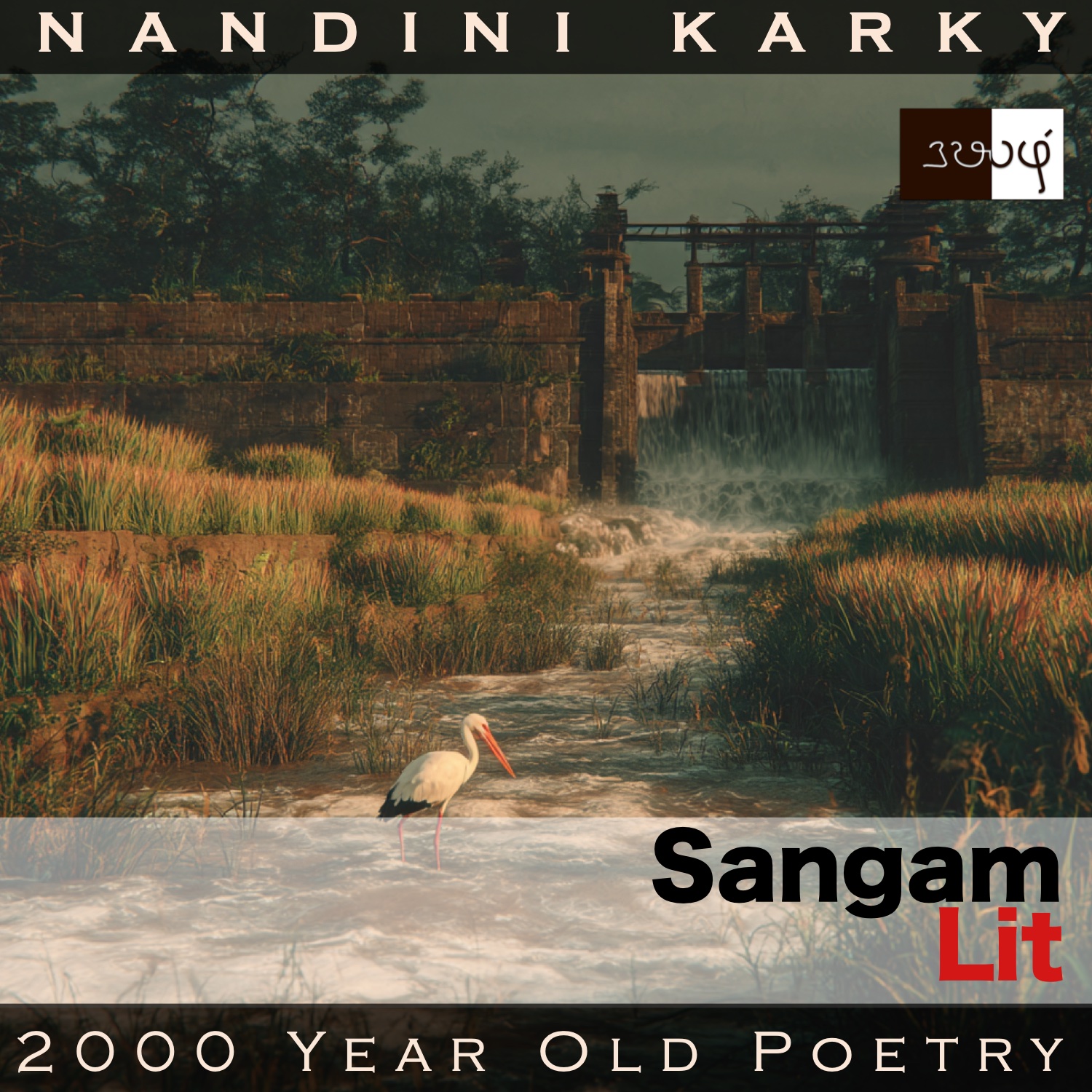
“Hilarious this is! Listen, akin to wet surfaces, atop plastered roofs, in the rainy season, appears the white feathers of the short-winged male stork. This bird aims at a carp fish, appearing akin to a silvery white bloom, amidst gushing waters that pounce on a strong-mouthed, curving dam, raised with much effort by uproarious farmers, who delight in drinking well-filtered toddy, and plant short stems of the portia tree, tying them firmly with soft stalks of sugarcane having a sweet taste. Then, that stork gently takes step after step, intending to nab the fish, in the fertile spaces of your town, O lord!
You, along with your bard, who wields a fine, well-crafted lute, and other delightful companions drank toddy, as well-tied, mud-streaked drums resounded thunderously. After that, instead of coming to our home, on that day, you went to your house, and at that moment, the maiden living there in that beautiful mansion, clad in short bangles, felt so much joy, much greater than that ‘Kothai Marban’ felt, when much to the terror of enemy kings, wielding many speeding horses and attacking elephants, King Killivalavan, who had been attacking with his flood-like army in another battlefield, arrived at the town of Koodal, with soaring mansions, and defeated its ruler, ‘Pazhaiyan Maaran’, who possesses tall chariots and decorated elephants. We don’t care that you went there. But that makes us laugh aloud now!”
Time to listen to the fiery words in this land of plenty! The confidante starts by saying what’s happening is hilarious. Then she goes on to describe the man’s town, and to do that, she paints a portrait of a stork, whose wet, white wings are called in parallel to the white-washed roofs of a house in the rainy season. We find this stork, stalking a fish, which is swimming about in the gushing waters, which dash against a dam, said to be raised by the determined efforts of farmers, who like their drink and who accomplish the work of watering their abundant paddy fields and raise fences of portia stems and sugarcane stalks. The confidante completes this description saying so fertile is the man’s town! Let’s pause for a moment to note this mention of how dams were built by these ancient farmers, which shows their water management and engineering skills. A recent article I read about the discovery of a Sangam-era dam-like structure, emerging from the Kaveri river basin, in a place called Kollidam, comes to my mind. It’s satisfying to see the interplay of vastly different fields such as engineering, agriculture and archaeology in these few lines.
Returning, the confidante then describes how the man had been having fun at the festivities, drinking toddy, and then, after that, instead of returning home to his lady, decided to go to the courtesan’s house, in the company of his bard and other friends. The interesting way the confidante refers to the place the man went is by calling it ‘your house’ to the man. This is one of those rare occasions when the qualifier ‘your’ is used, for in most of Sangam references, we observe the culture of saying ‘our’ house, even when addressing strangers. This particular reference is supposed to underscore the anger in the situation. The confidante then goes on to talk about how when the man went there, the courtesan seemed to be filled with so much joy, even greater than what the Chera King ‘Kothai Marban’ felt when the Chozha king ‘Killivalavan’ defeated the Pandya King ‘Pazhaiyaan’ and seized his town of ‘Koodal’. The confidante concludes by saying that she and the lady did not care about that, but now that the man was standing there, denying all this, and pleading to get inside the lady’s home, was something laughable.
In essence, the confidante is telling the man, ‘You were out with the courtesan. The lady is still angry, and all you can expect from us is a no’! In this usual drama involving domestic conflict, we have that history lesson, in which the joy of that king at the turn of events can only be interpreted as ‘My enemy’s enemy is my friend’! As can be inferred from these lines, the Sangam poets continue their tradition of bringing alive so much of the past, the emotions, the landscapes and the history, in their imaginative works of art!
