

Podcast: Play in new window | Download
Subscribe: Apple Podcasts | Spotify | Amazon Music | Android | iHeartRadio | TuneIn | RSS | More
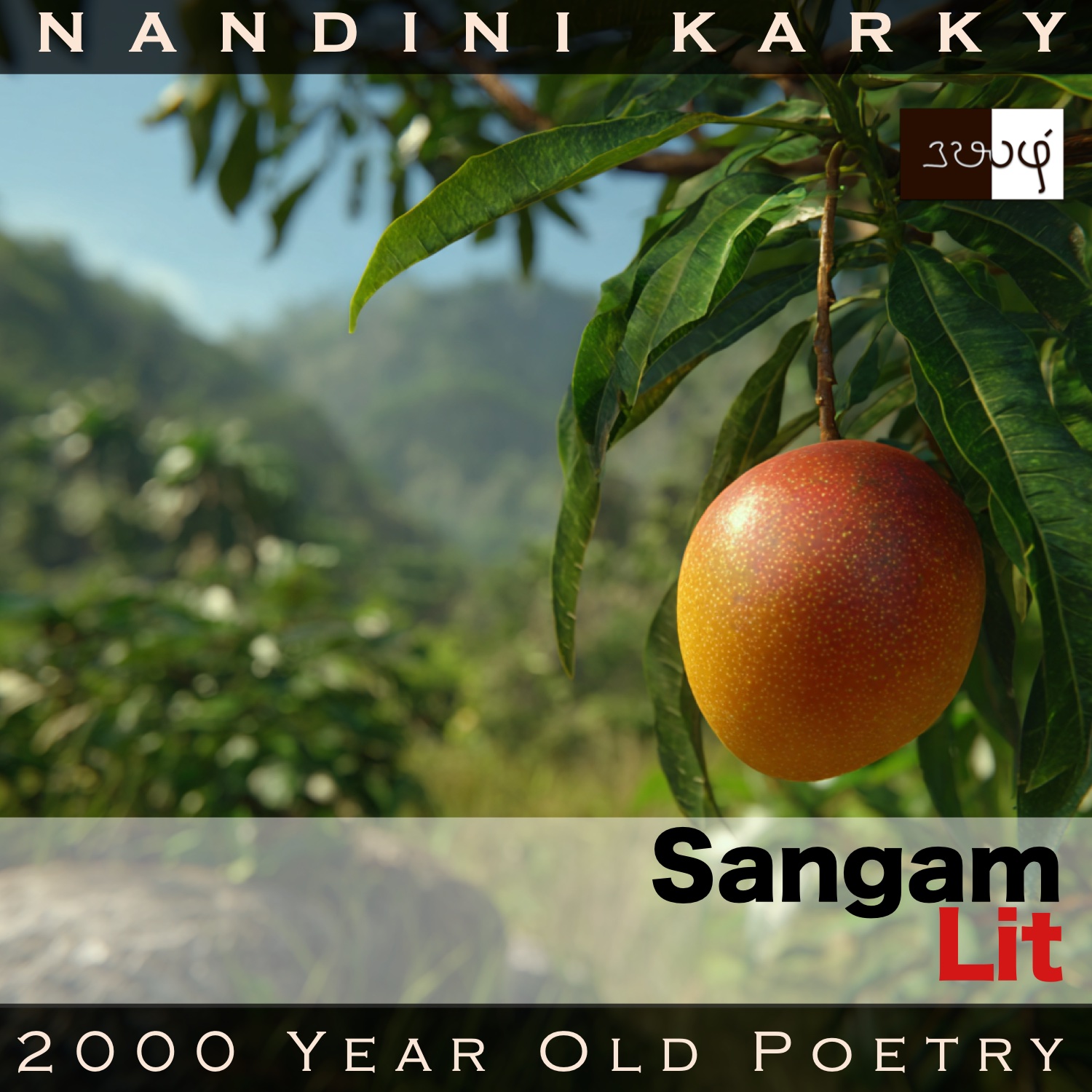
In this episode, we perceive a subtle message of persuasion, as portrayed in Sangam Literary work, Aganaanooru 348, penned by Madurai Ilam Paalaasiriyan Chenthan Koothanaar. The verse is situated amidst the flourishing millet fields of the ‘Kurinji’ or ‘Mountain Landscape’ and details the ingredients and recipe of an ancient fermented beverage.

என் ஆவதுகொல் தானே முன்றில்,
தேன் தேர் சுவைய, திரள் அரை மாஅத்து,
கோடைக்கு ஊழ்த்த, கமழ் நறுந் தீம் கனி,
பயிர்ப்புறப் பலவின் எதிர்ச் சுளை அளைஇ,
இறாலொடு கலந்த, வண்டு மூசு அரியல்
நெடுங் கண் ஆடு அமைப் பழுநி, கடுந் திறல்
பாப்புக் கடுப்பு அன்ன தோப்பி வான் கோட்டுக்
கடவுள் ஓங்கு வரைக்கு ஓக்கி, குறவர்,
முறித் தழை மகளிர் மடுப்ப, மாந்தி,
அடுக்கல் ஏனல் இரும் புனம் மறந்துழி,
‘யானை வவ்வின தினை’ என, நோனாது,
இளையரும் முதியரும் கிளையுடன் குழீஇ,
சிலை ஆய்ந்து திரிதரும் நாடன்
நிலையா நல் மொழி தேறிய நெஞ்சே?
In this short trip to the hills, we get to witness a unique culinary custom, as we listen to the lady say these words to her confidante, pretending not to notice the man listening nearby but making sure he’s in earshot:
“Taking the fragrant, sweet fruit, which has ripened in summer, with a honey-like taste, growing on the thick-trunked mango tree in their front yard, and mashing it with the sticky slices of the jackfruit, adding some honeycomb, they prepare a bee-buzzing nectar, pour it into the hollowed-out stems of tall and swaying bamboos and store it for long. That well-aged, sharp toddy turns out with a sharpness, akin to the bite of a snake. After offering a portion of that drink to the god, who resides in the soaring, sky-high peaks, mountain maiden, wearing garments of tender sprouts and leaves, offer to their men, who drink it up, and forget all about guarding their millet fields in the mountain ranges. Then, realising that elephants have raided those millets, unable to accept that, the young and old group together, and then, selecting their bows and weapons, set out and rove around in the country of the lord. What will happen now to that heart of mine, which had trusted in his wavering words?”
Time to explore the highs and lows of this terrain! The lady starts by describing the man’s mountain country, and to do that, she first zooms on to a mango fruit in the summer, growing on a tree in the front yard of a home. This mango fruit is said to have the sweetness of honey. We see a hand choosing and plucking this mango fruit. Next, some sticky slices of the jackfruit are taken, and both these fruits are mashed well, with a dash of honeycomb too. Beating this mixture well, next they pour the liquid into the hollowed-out bamboo stems, swaying in the wind. Apparently, they leave this bee-buzzing mixture for a while, and then, when they take out the aged, fermented toddy, it has the sharpness of a snake bite, the lady details. Next she talks about how the womenfolk first offer this well-aged toddy to the god in the mountains and then to their men. Those men happily slurp their fruit wine, and lie there, completely sloshed. Consequently, they forget their task of tending to the millet fields, and as can be expected, elephants come to enjoy their bit of delicacy. Hearing about the raid, the men can tolerate no more, and the young and old prepare to go hunt down the elephant, in the man’s country, the lady connects. She concludes by wondering what is going to happen to her, because she had trusted in the man’s words, which did not seem to stand steady and render permanent happiness!
While that long description of a toddy preparation and millet fields may seem like a mere description of place, within lies a sharp and biting metaphor for how the man too had become drunk with the pleasures of trysting with the lady, and had forgotten to protect her from the gossiping mouths, spreading slander in town, and causing her health and beauty to fade. When the man hears that, he will understand the angst in the lady’s situation and take steps to claim her hand.
In this usual theme of ‘Marry me, marry me’, I was intrigued to learn about this specific way of preparing what seems like a fermented fruit wine, and when searching about the same, I came across this research abstract published in 2025, named ‘Investigation of wine fermentation from dual mango (Mangifera indica) and jackfruit (Artocarpus heterophyllus) mash‘, by a scholar from an University in Vietnam, exploring this very same dual fruit fermentation, mentioned in this Tamil poem from more than two thousand years ago. Made me smile to see how these random connections seem to turn up from nowhere, without any constraints of space and time, echoing again and again the core of our oneness!
Reference: Nguyen PM. Investigation of wine fermentation from dual mango (Mangifera indica) and jackfruit (Artocarpus heterophyllus) mash. Plant Sci. Today [Internet]. 2025 Nov. 21 [cited 2026 Aug. 28];12(4). Available from: https://horizonepublishing.com/journals/index.php/PST/article/view/8751
