

Podcast: Play in new window | Download
Subscribe: Apple Podcasts | Spotify | Amazon Music | Android | iHeartRadio | TuneIn | RSS | More
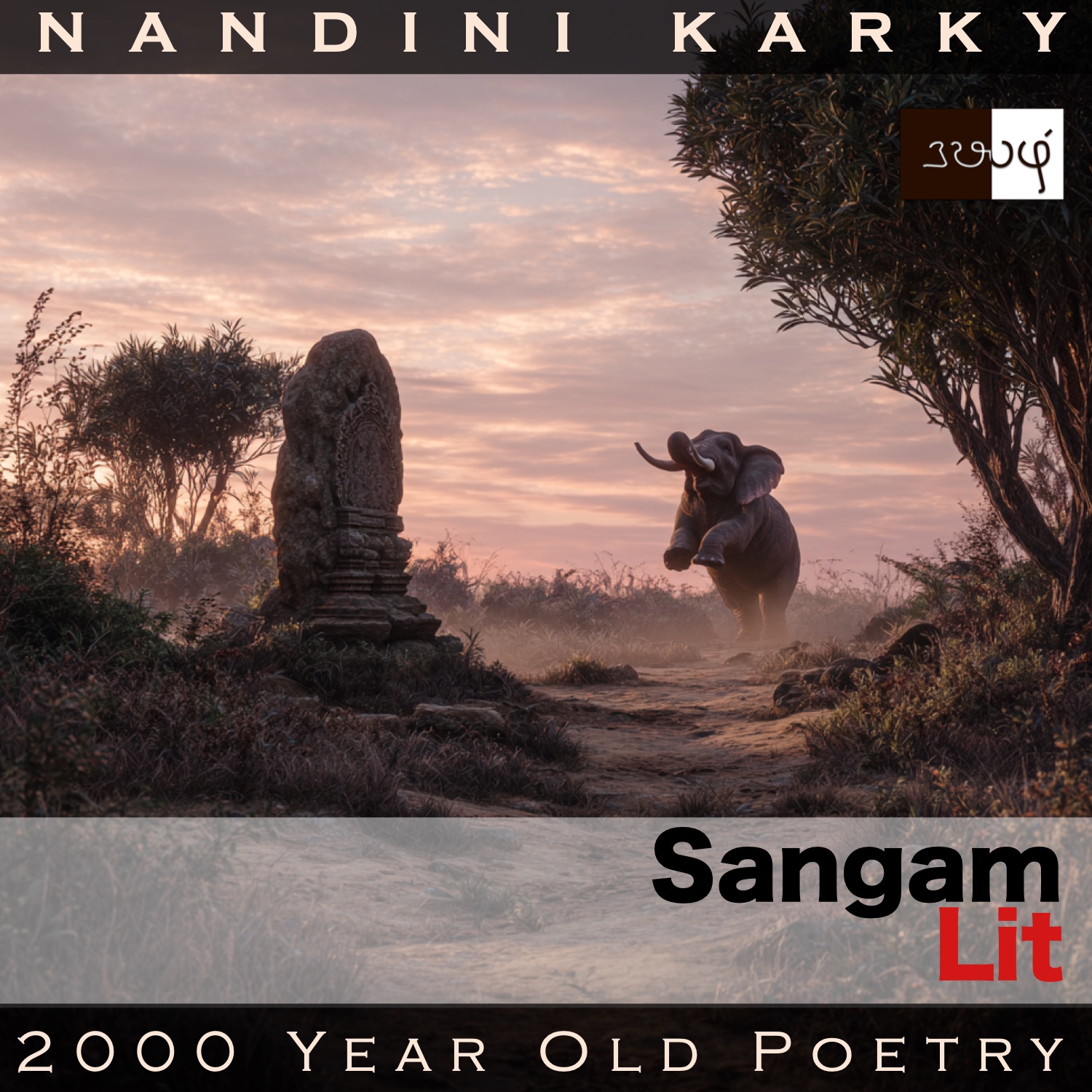
In this episode, we listen to words of admonishment, as portrayed in Sangam Literary work, Aganaanooru 365, penned by Madurai Maruthan Ilanaakanaar. Set in the ‘Paalai’ or ‘Drylands landscape’, the verse presents a study in contrast of barrenness and beauty.

அகல் வாய் வானம் மால் இருள் பரப்ப,
பகல் ஆற்றுப்படுத்த பையென் தோற்றமொடு
சினவல் போகிய புன்கண் மாலை,
அத்த நடுகல் ஆள் என உதைத்த
கான யானைக் கதுவாய் வள் உகிர்,
இரும் பனை இதக்கையின், ஒடியும் ஆங்கண்,
கடுங்கண் ஆடவர் ஏ முயல் கிடக்கை,
வருநர் இன்மையின் களையுநர்க் காணா
என்றூழ் வெஞ் சுரம் தந்த நீயே
துயர் செய்து ஆற்றாயாகி, பெயர்பு, ஆங்கு
உள்ளினை வாழிய, நெஞ்சே! வென் வேல்
மா வண் கழுவுள் காமூர் ஆங்கண்,
பூதம் தந்த பொரி அரை வேங்கைத்
தண் கமழ் புது மலர் நாறும்
அம் சில் ஓதி ஆய் மடத் தகையே.
In this trip to this harsh domain, we get to see familiar sights, as we listen to the man say these words to his heart, in the middle of his journey through the drylands:
“As darkness spreads in the wide sky, the day crosses over, and with a listless appearance, filled with fury, the suffering-filled evening arrives. At this time, thinking that a hero stone in the middle of the drylands is a person, a jungle elephant kicks it, causing its huge toe nail to break, appearing akin to a palm fruit’s shell. In such a place, harsh-eyed men, who wait, intent on showering their arrows, find no wayfarers to end their impoverishment. You have brought me to such a barren, scorching space, and not satisfied with the sorrow you’ve rendered thus far in coming here, now you are also thinking about that naive and noble maiden with beautiful tresses, which have the fragrance of the moist, new flowers blooming upon that Kino tree, with a parched trunk, on which resides a spirit, in the town of Kaamoor, ruled by the strong and courageous Kazhuvul, who wields a victorious spear! Long may you live, my heart!”
Time to brave the formidable paths! The man starts by sketching the time of the day and talks about how a dull evening seems to arrive, pushing aside the daylight in the sky, and at this time, not seeing very clearly, an elephant seems to mistake a memorial stone in the middle of the drylands for a person standing there, and gives it a kick, only to find its nail tearing apart in the impact. This is equated aptly to the torn shell of a palm fruit or ice apple, called as ‘nungu’ in contemporary Tamil.
From the time of the day, the man moves on to talk about the place, and he mentions how the prominent denizens of this domain, the highway robbers, seem to lie in wait for wayfarers, but their wait only ends in disappointment for no one dares to come through those scorching spaces. The man turns to his heart and points out how it has brought him to such a place where even those harsh-eyed robbers are to be pitied, and concludes by saying as if the heart had not caused enough trouble, now it was thinking about the lady, the scent of whose tresses is akin to the flowers of a particular Kino tree, favoured by spirits, in the town of Kaamoor, ruled by Kazhuvul. Indeed, it’s the familiar theme of separating one’s heart from oneself and trying to overcome the despair of the situation.
On a tangent, what struck me in this verse is the way this poet remembers a particular Kino tree, in a specific town, and its features. Doesn’t it seem like these poets had a unique bonding with the trees they encountered in their travels, as if they were on first name basis with them? I conclude that it’s only by living such a life, characterised by a deep awareness of all the elements of nature around, that these poets have attained their extraordinary powers of expression!
