

Podcast: Play in new window | Download
Subscribe: Apple Podcasts | Spotify | Amazon Music | Android | iHeartRadio | TuneIn | RSS | More
In this episode, we perceive a message of pointed persuasion, as portrayed in Sangam Literary work, Aganaanooru 380, penned by Madurai Maruthan Ilanaakanaar. Set amidst the soaring sands of the ‘Neythal’ or ‘Coastal Landscape’, the verse draws romantic inspiration from elements of nature.

தேர் சேண் நீக்கி, தமியன் வந்து, ”நும்
ஊர் யாது?” என்ன, நணி நணி ஒதுங்கி,
முன் நாள் போகிய துறைவன், நெருநை,
அகல் இலை நாவல் உண்துறை உதிர்த்த
கனி கவின் சிதைய வாங்கிக் கொண்டு, தன்,
தாழை வேர் அளை, வீழ் துணைக்கு இடூஉம்
அலவற் காட்டி, ”நற்பாற்று இது” என,
நினைந்த நெஞ்சமொடு, நெடிது பெயர்ந்தோனே;
உதுக் காண் தோன்றும், தேரே இன்றும்;
நாம் எதிர் கொள்ளாம்ஆயின், தான் அது
துணிகுவன் போலாம்; நாணு மிக உடையன்;
வெண் மணல் நெடுங் கோட்டு மறைகோ?
அம்ம, தோழி! கூறுமதி நீயே.
In this quick little trip to the shores, we get to see scenes of love and longing, as we listen to the confidante say these words to the lady, at a time when the man has sought her help to convince the lady to accept him:
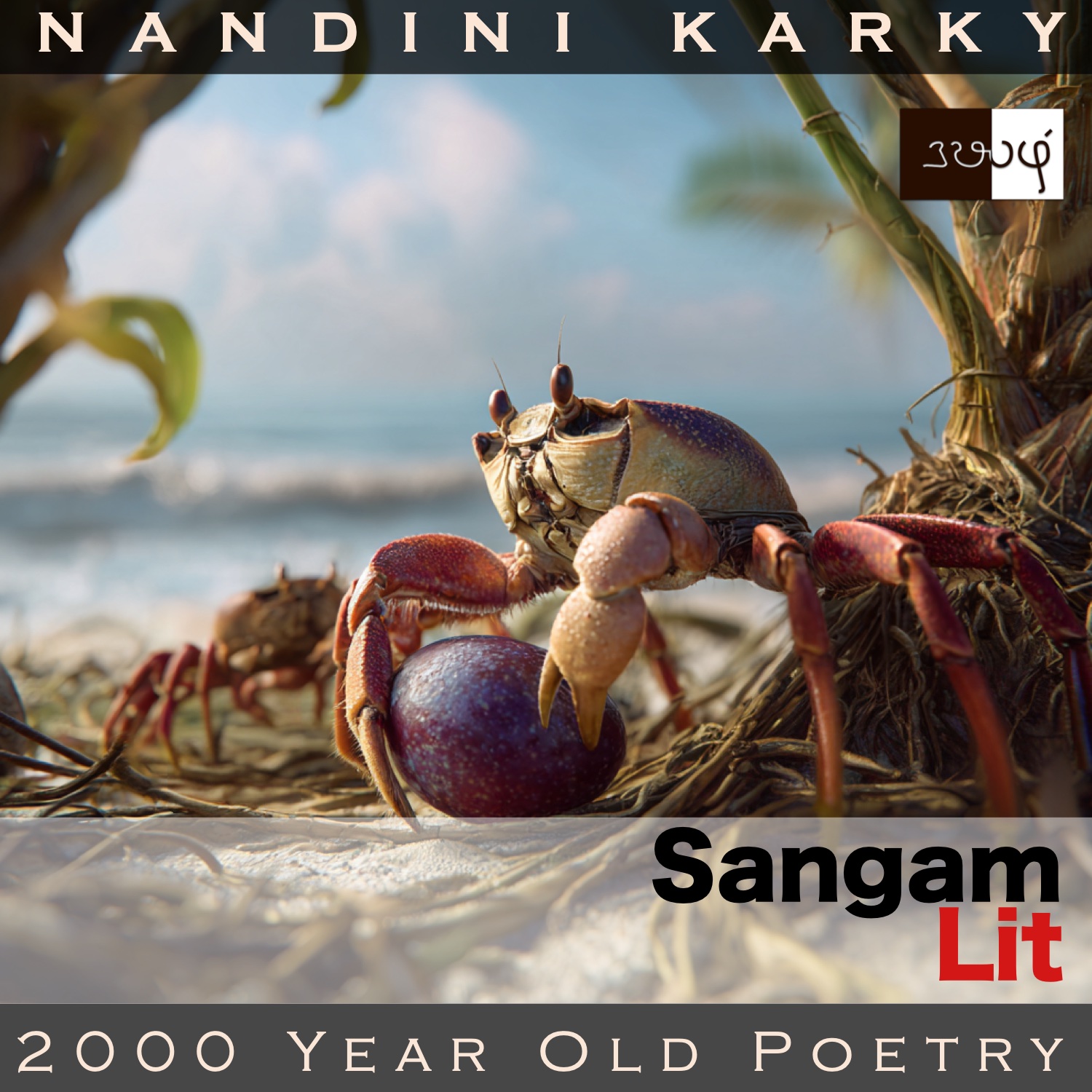
“Listen, my friend! The other day, leaving his chariot afar, coming all alone, he enquired, ‘Where is your town?’, and then walking away with short, hesitant steps, the lord of the shores left from there. Yesterday, pointing to a crab, which had dragged the fruit, shed by the wide-leaved Jamun tree, near the shore for drinking water, spoiling its beauty, and offered to its mate, residing in a hole amidst the pandanus roots, the lord had said, ‘This is an act of goodness’, and with a heavy heart, he parted away with a huge sigh. Look over there, his chariot appears today too. If we walk past and do not heed him, he might dare to do something dreadful; He looks like one, full of much shyness; Shall I go hide amidst the tall mounds of white sands? Tell me what to do, my friend!”
Let’s walk on those pristine shores of yore! The confidante starts by recounting what had happened a few days ago, when the man arrived there, leaving his chariot and helpers, and enquired to them about where they come from, and then hesitantly left from that place. She then continues talking about how just yesterday, he had come there again, and had pointed to a crab, which had dragged a ‘jamun’ or ‘Indian blackberry’ fruit that had fallen on the shore, squishing it in the process, and was about to offer it to its mate, resting amidst the pandanus tree’s roots, and told the confidante with a huge sigh, ‘That was something to be appreciated’ and then left from there, with a heavy heart. The confidante then points to an approaching chariot and says he was right there today too, and if at all they ignored him, he might do something shocking, perhaps referring to that ritual of riding a palmyra horse and declaring unrequited love, known as ‘Madal Eruthal’. She concludes by pleading about the man’s shy nature and asking the lady where she should go hide and what she should do!
All these words and antics of the confidante might be confusing to those unaware of the dynamics of the love relationships then. Apparently, after a man had seen and fallen in love with a lady, he had to first convince the lady’s confidante about his worthiness, and if he succeeds in that, then the confidante would present his case subtly to the lady, and nudge her to accept his relationship. This is what is unfolding in this tale of how the man was much disappointed, and seeing that act of love by the male crab was filled with so much longing to do something like that to the lady. No doubt the lady’s heart would melt with these strong nudges from her friend!
Turning to that scene of a male crab offering a jamun fruit to its female, this sounds like a flight of fancy because there’s no observed behaviour of crabs offering such gifts either during courtship or during pregnancy. Perhaps, in this atmosphere of extreme focus on love and togetherness, do you think there’s a possibility for the existence of such romantic crabs on Sangam shores? Food for thought!
