

Podcast: Play in new window | Download
Subscribe: Apple Podcasts | Spotify | Amazon Music | Android | iHeartRadio | TuneIn | RSS | More
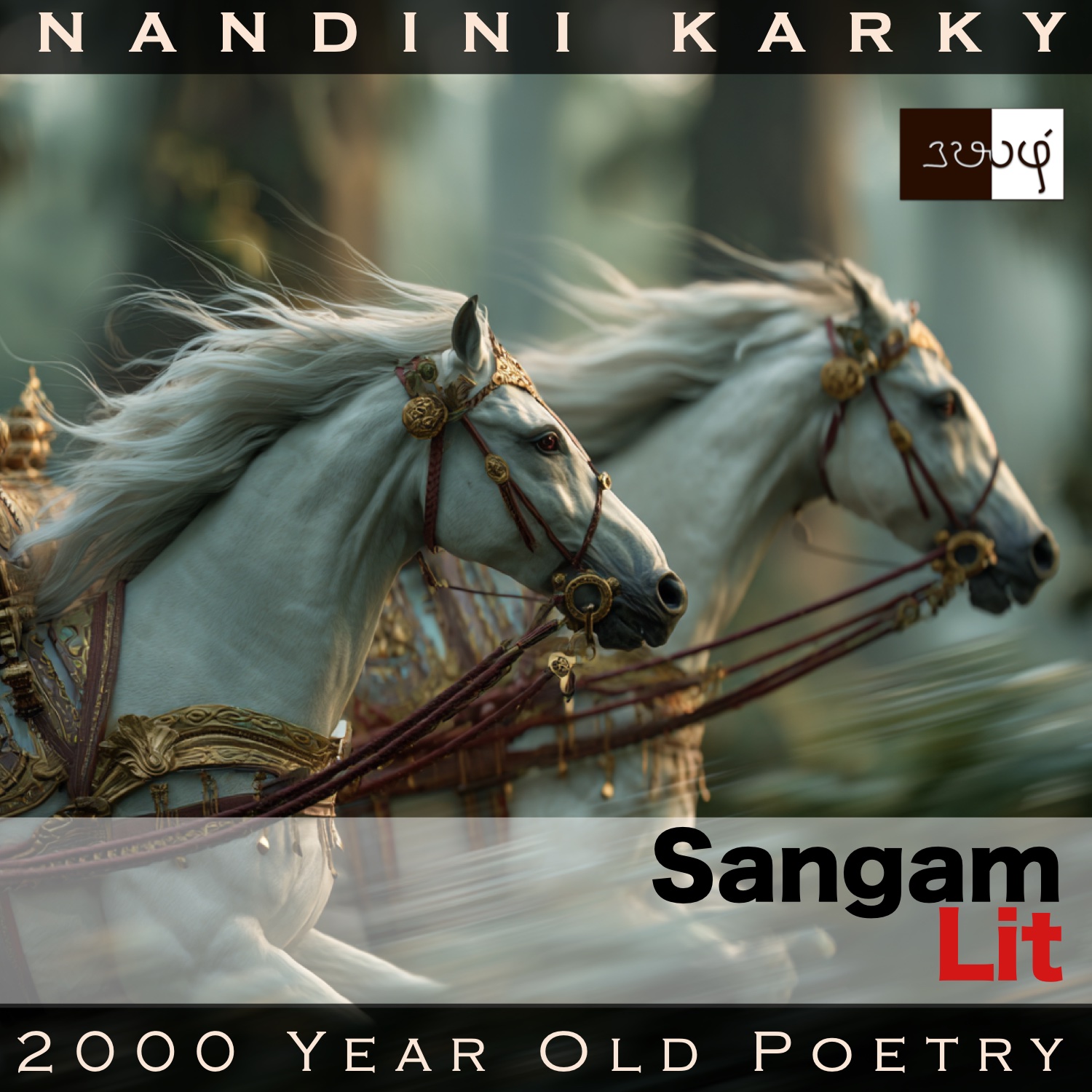
In this episode, we listen to a jubilant narrative about a homecoming, as depicted in Sangam Literary work, Aganaanooru 384, penned by Okkoor Maasaathiyaar. The verse is situated amidst the hopping bunnies of the ‘Mullai’ or ‘Forest Landscape’ and brings out nuanced aspects of an employer-employee relationship.

”இருந்த வேந்தன் அருந் தொழில் முடித்தென,
புரிந்த காதலொடு பெருந் தேர் யானும்
ஏறியது அறிந்தன்று அல்லது, வந்த
ஆறு நனி அறிந்தன்றோஇலெனே; தாஅய்,
முயற் பறழ் உகளும் முல்லை அம் புறவில்,
கவைக் கதிர் வரகின் சீறூர் ஆங்கண்,
மெல் இயல் அரிவை இல்வயின் நிறீஇ,
இழிமின்” என்ற நின் மொழி மருண்டிசினே;
வான் வழங்கு இயற்கை வளி பூட்டினையோ?
மான் உரு ஆக நின் மனம் பூட்டினையோ?
உரைமதி வாழியோ, வலவ!” என, தன்
வரை மருள் மார்பின் அளிப்பனன் முயங்கி,
மனைக் கொண்டு புக்கனன், நெடுந் தகை;
விருந்து ஏர் பெற்றனள், திருந்திழையோளே.
In this trip to this fragrant domain, we speed through the lush landscape, as we listen to the man’s helpers say these words, when he returns home, after having parted from the lady on a mission of war:
“Saying, ‘As the king who had set camp had completed his formidable task, with love brimming over, I remember climbing on to the huge chariot. But I seem to recollect nothing of the path we traversed! Amidst that picturesque forest, filled with jasmines, where kits of rabbits leap about, arriving at this little hamlet, where luxuriant stalks of millets sway, stopping at the home of the maiden with a gentle trait, when you said to me, ‘Get down, sir!’, I was startled. Did you happen to yoke the wind that roves about in the skies? Or, did you yoke your mind in the shape of the horses? Pray tell me, O charioteer, may you live long!’, the great lord hugged the charioteer close to his chest, which are akin to mountain ranges, and took him inside the house, and thus, the maiden, wearing well-etched jewels, attained the honour of showering a fine feast!”
Time to savour the intricacies of these exchanges! The man’s helpers recollect what transpired recently when the man came home. They recall the words said by the man to his charioteer about how he remembered only climbing on the chariot, with a huge sigh of relief that the king, who had summoned him was done with his mission, and had claimed victory, and his heart beating with love for his beloved at home. The man seems to have continued by saying nothing else he remembered of the path they came on, and when suddenly arriving at the lady’s house in the little hamlet, where millets thrive, amidst the forest, where little rabbits run along, the charioteer had asked him to step down, the man was startled at having come there so soon. Turning to his charioteer, the man seems to have asked whether the good man had yoked the wind or his mind, instead of the horses. With that exuberant compliment, the man seemed to have embraced the charioteer and brought him inside the house, and there the maiden, who had been patiently waiting for him, got to spread a lovely feast for all those returning home, the helpers conclude.
Every line of this verse seems to me modern in thought and deed. Let’s see how! Haven’t we all had the same experience of not realising our surroundings countless times? Our chariots may be different, and these days, some of them drive themselves too. But even without these technological advances, how many times we would remember staring to ride at some place and ending up at our destination, lost completely in thought? That’s the feeling this Sangam man first echoes aloud. Here, instead of just saying that his mind was fully with the lady, the man turns it as an appreciation of his beloved charioteer, who has brought home with much speed.
Though the comparison of the horses to the wind, we have seen many times, in the second line, the man asks his charioteer whether the charioteer had tied his own mind in the shape of a horse, and that struck me as an exact equivalent of the expression ‘speed of thought’. Isn’t that a stunning parallel between the past and present? No doubt the charioteer must have been on cloud nine hearing these words, but the best part is yet to come! It’s in the way the man, who happens to be a great lord, summoned by a great king, hugs his worker and welcomes him to share a meal, spread lovingly by his wife! A scene which proclaims aloud the sense of equality and connection between people of different classes in the ancient past of this Tamil land!
