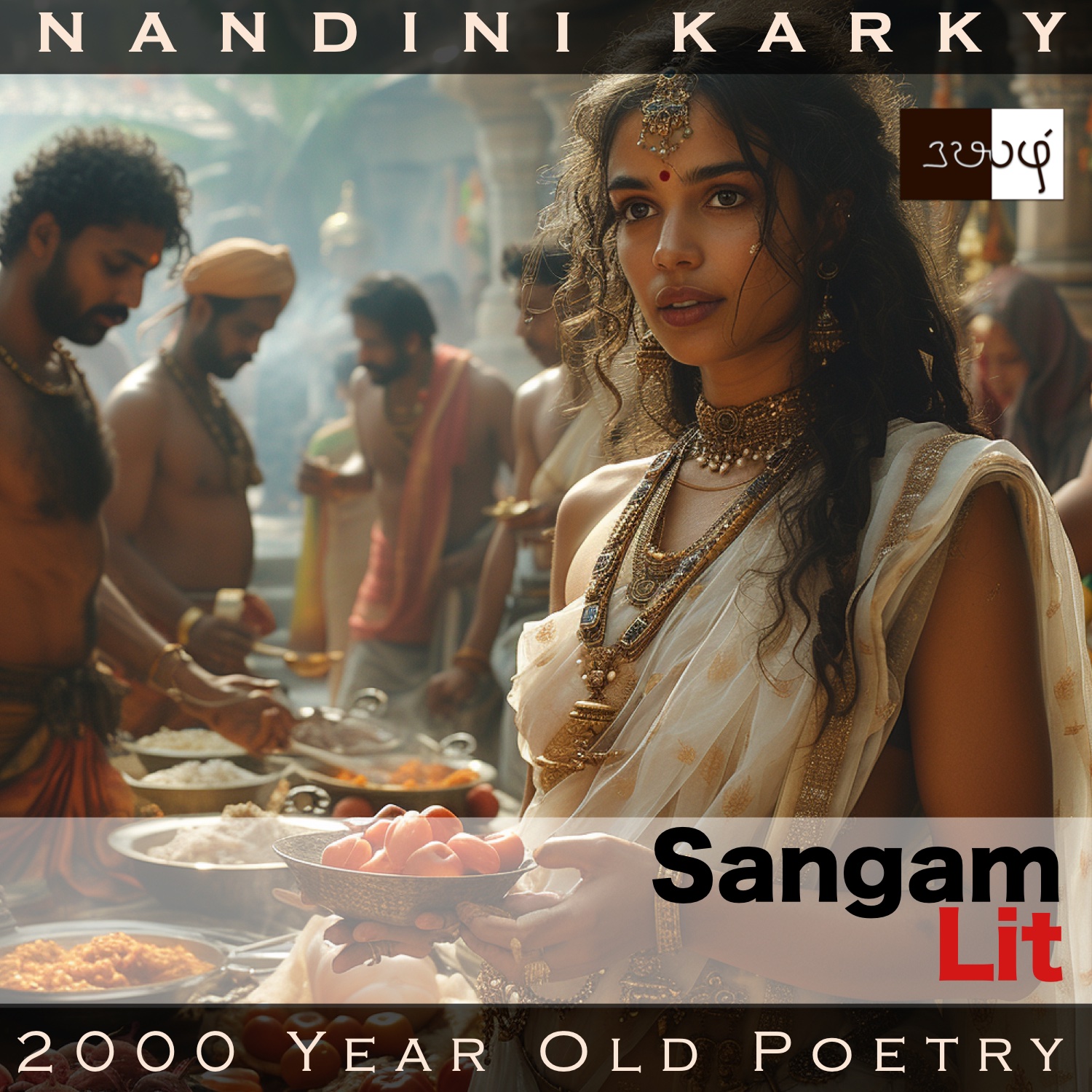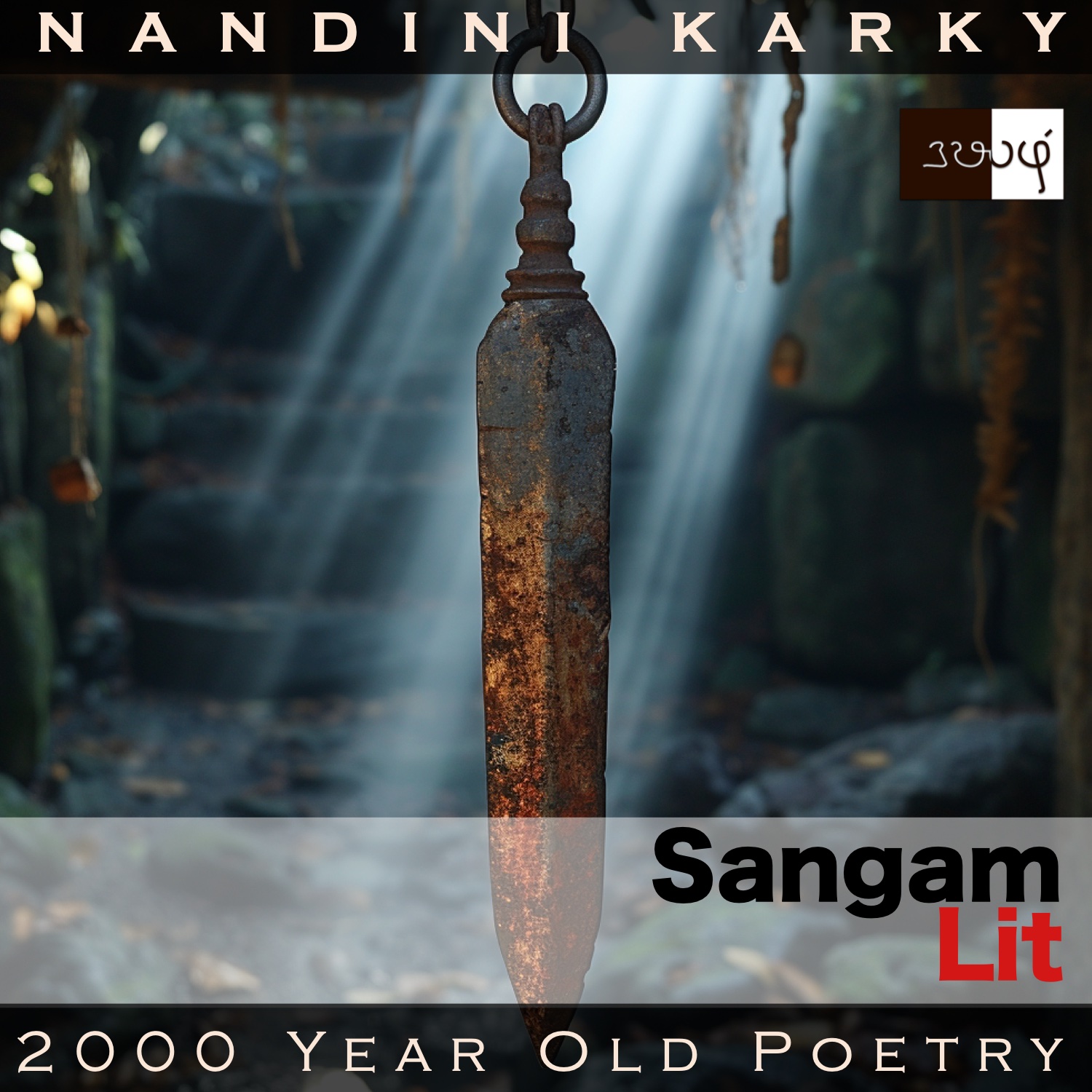

In this episode, we meet with a young maiden and her family, as portrayed in Sangam Literary work, Puranaanooru 337, penned by the poet Kabilar. Set in the category of ‘Kaanji Thinai’ or ‘Defence’, the verse brings to light a precarious situation involving suitors in marriage.
In this episode, we hear a subtle cry against war, as depicted in Sangam Literary work, Puranaanooru 336, penned by the poet Paranar. The verse is situated in the category of ‘Kanchi Thinai’ or ‘Defence’ and reveals the events that have led to an outbreak of hostilities.

in this episode, we listen to powerful statements about worship, as portrayed in Sangam Literary work, Puranaanooru 335, penned by the poet Mangudi Kizhaar. Set in the category of ‘Vaagai Thinai’ or ‘Victory’, the verse talks about the elements of importance in a leader’s town.

In this episode, we learn of the acts of compassion in a household, as depicted in Sangam Literary work, Puranaanooru 334, penned by the poet Madurai Thamizh Koothanaar. The verse is situated in the category of ‘Vaagai Thinai’ or ‘Victory’ and gives a glimpse of the division of labour in Sangam times.

In this episode, we meet with a generous lady, as depicted in Sangam Literary work, Puranaanooru 333, penned by an anonymous poet. Set in the category of ‘Vaagai Thinai’ or ‘Victory’, the verse talks about the sense of compassion and fairness in the midst of an impoverished situation.

In this episode, we listen to the greatness of a leader’s spear, as depicted in Sangam Literary work, Puranaanooru 332, penned by the poet Viriyoor Nakkanaar. The verse is situated in the category of ‘Vaagai Thinai’ or ‘Victory’ and elaborates on the places that a spear can be.

In this episode, we perceive how a leader faces different circumstances, as depicted in Sangam Literary work, Puranaanooru 331, penned by the poet Uraiyoor Muthukoothanaar. Set in the category of ‘Vaagai Thinai’ or ‘Victory’, the verse sketches striking similes to convey the nature of a leader’s generosity.

In this episode, we observe a leader’s courage in the battlefield, as portrayed in Sangam Literary work, Puranaanooru 330, penned by the poet Madurai Kanakkayanaar. The verse is situated in the category of ‘Vaagai Thinai’ or ‘Victory’ and reveals the economic status of a town.

In this episode, we perceive the virtues of a town, as depicted in Sangam Literary work, Puranaanooru 329, penned by the poet Madurai Aruvai Vaanikan Ilavettanaar. Set in the category of ‘Vaagai Thinai’ or ‘Victory’, the verse informs us about ancestor worship in Sangam times.

In this episode, we observe the promise of good food, as portrayed in Sangam Literary work, Puranaanooru 328, penned by an anonymous poet. The verse is situated in the category of ‘Vaagai Thinai’ or ‘Victory’ and talks about a leader’s generosity in the midst of difficult circumstances.

In this episode, we observe the extent of a leader’s generosity, as depicted in Sangam Literary work, Puranaanooru 327, penned by an anonymous poet. The verse is situated in the category of ‘Vaagai Thinai’ or ‘Victory’ and reveals the impoverished state of a courageous leader.

In this episode, we perceive the noble virtues of a couple as depicted in Sangam Literary work, Puranaanooru 326, penned by the poet Thangaal Porkollanaar. The verse is situated in the category of ‘Vaagai Thinai’ or ‘Victory’ and presents a vivid scene around a Sangam home in the woods.

In this episode, we gather intriguing facets in the life of people from a drylands domain, as depicted in Sangam Literary work, Puranaanooru 325, penned by the poet Uraiyoor Muthukannan Saathanaar. Set in the category of ‘Vaagai Thinai’ or ‘Victory’, the verse talks about a leader’s courage and compassion.

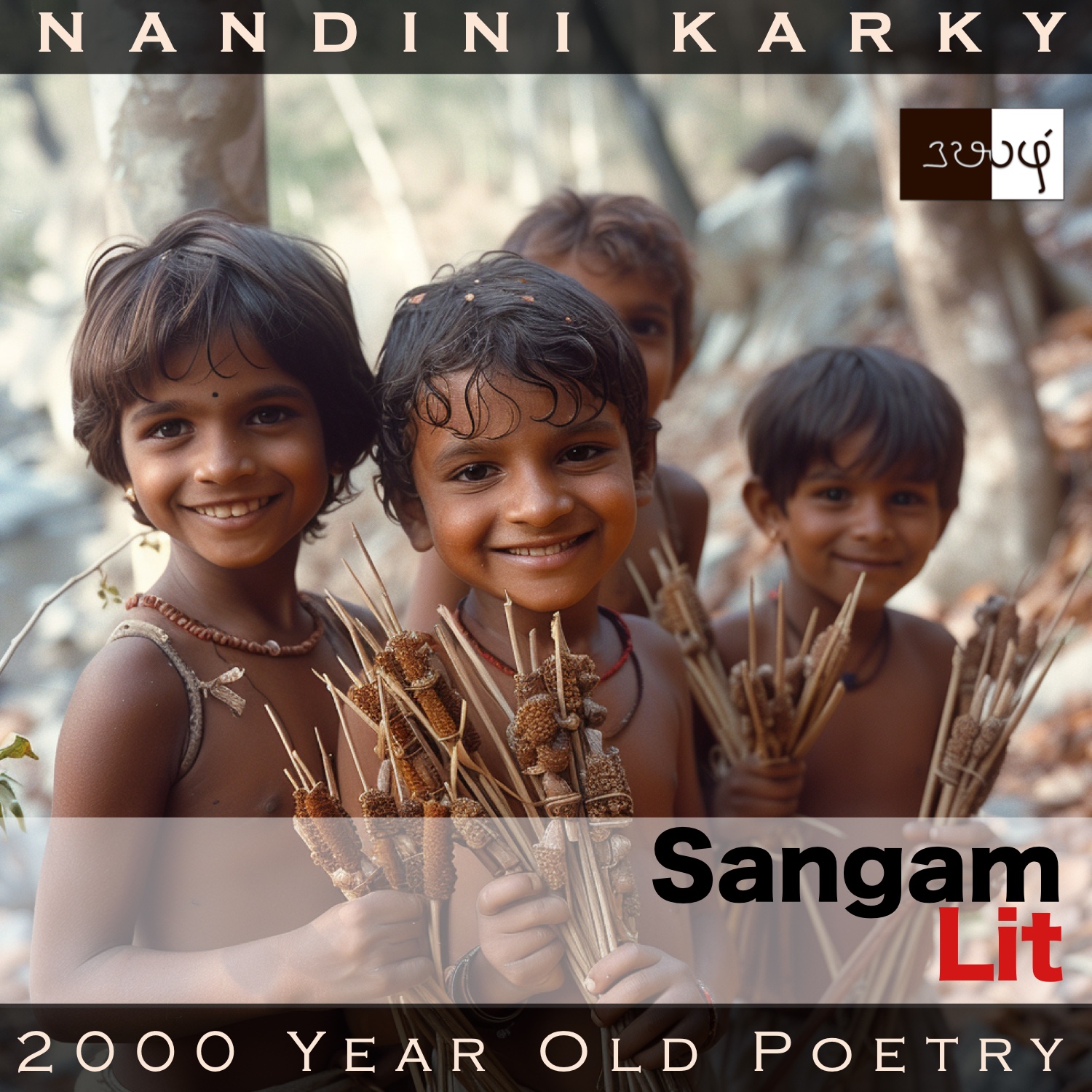
In this episode, we perceive detailed descriptions about the children of hunters, as depicted in Sangam Literary work, Puranaanooru 324, penned by the poet Aalathoor Kizhaar. The verse is situated in the category of ‘Vaagai Thinai’ or ‘Victory’ and speaks about the support a leader extends to his superior king.

In this episode, we perceive compassion both in the wild and in the home, as portrayed in Sangam Literary work, Puranaanooru 323, penned by an anonymous poet. The verse is situated in the category of ‘Vaagai Thinai’ or ‘Victory’ and talks about the unfailing courage of a leader.

In this episode, we observe action-packed moments, as depicted in Sangam Literary work, Puranaanooru 322, penned by the poet Avoor Kizhaar. The verse is situated in the category of ‘Vaagai Thinai’ or ‘Victory’ and etches the terror evoked by the leader of a town.

In this episode, we perceive dynamic scenes in a town as portrayed in Sangam Literary work, Puranaanooru 321, penned by the poet Uraiyoor Maruthuvan Damodaranaar. Set in the category of ‘Vaagai Thinai’ or ‘Victory’, the verse guides a bard in the direction of a leader’s hospitality.

In this episode, we perceive a fascinating scene in a hunter’s home, as depicted in Sangam Literary work, Puranaanooru 320, penned by the poet Veerai Veliyanaar. The verse is situated in the category of ‘Vaagai Thinai’ or ‘Victory’ and talks about the limitless generosity of a leader.

In this episode, we take in domestic scenes of everyday life, as depicted in Sangam Literary work, Puranaanooru 319, penned by the poet Alangudi Vanganaar. Set in the category of ‘Vaagai Thinai’ or ‘Victory’, the verse echoes the trust in the triumphant return of a king.

In this episode, we perceive the present prosperity of a place with a curious illustration, as portrayed in Sangam literary work, Puranaanooru 318, penned by the poet Perunkundroor Kizhaar. The verse is situated in the category of ‘Vaagai Thinai’ or ‘Victory’ and speaks about the consequence of a king’s fall.