

Podcast: Play in new window | Download
Subscribe: Apple Podcasts | Spotify | Amazon Music | Android | iHeartRadio | TuneIn | RSS | More

In this episode, we perceive scenes at dusk in an ancient village and peer into a lady’s heart, as portrayed in Sangam Literary work, Natrinai 343, penned by Karuvoor Kathapillai Saathanaar. Set in the forests of ‘Mullai’, the verse speaks in the voice of the lady to the confidante, conveying her angst at being separated from the man.
முல்லை தாய கல் அதர்ச் சிறு நெறி
அடையாது இருந்த அம் குடிச் சீறூர்த்
தாது எரு மறுகின், ஆ புறம் தீண்டும்
நெடு வீழ் இட்ட கடவுள் ஆலத்து,
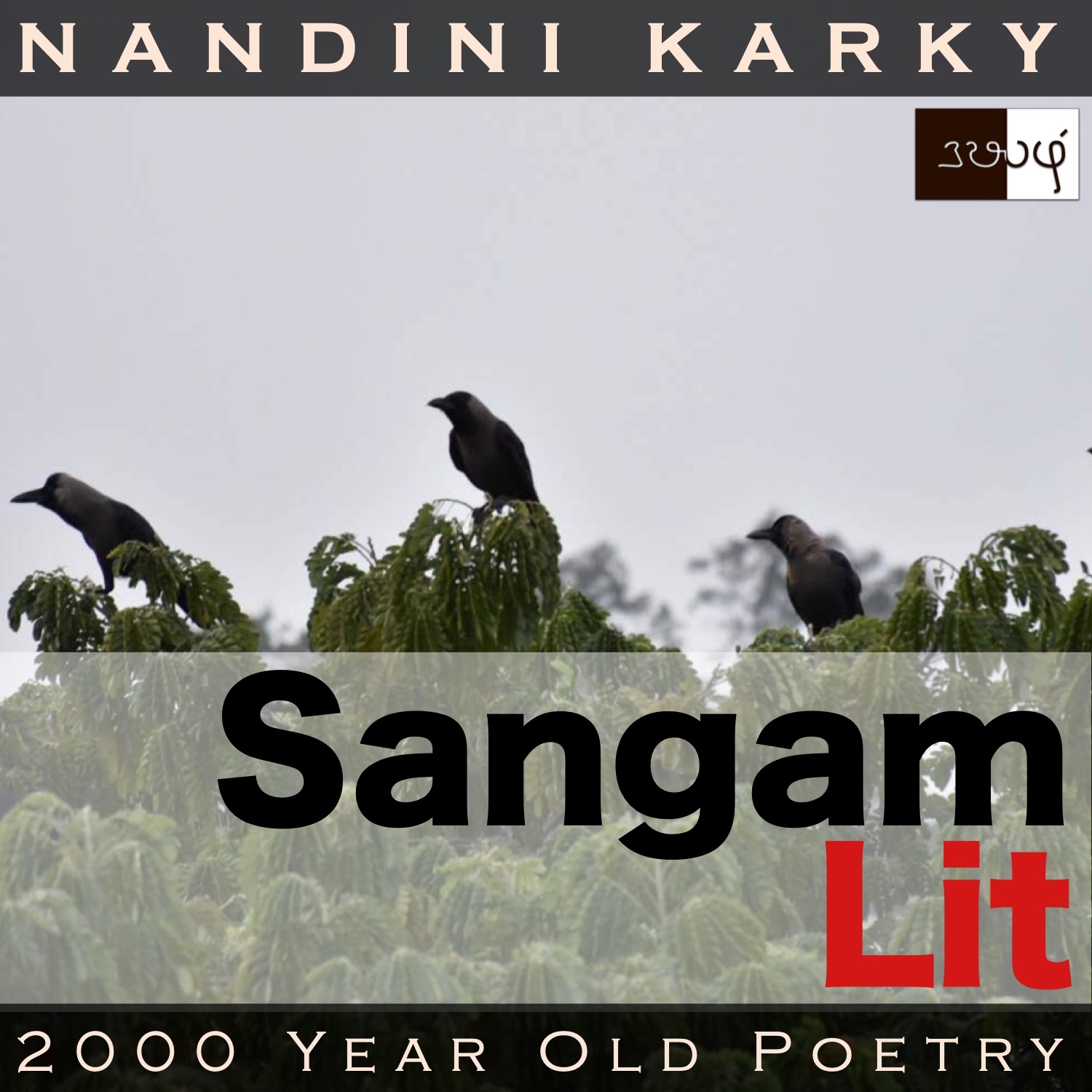
உகு பலி அருந்திய தொகு விரற் காக்கை
புன்கண் அந்திக் கிளைவயின் செறிய,
படையொடு வந்த பையுள் மாலை
இல்லைகொல் வாழி-தோழி!-நத்துறந்து
அரும் பொருட் கூட்டம் வேண்டிப்
பிரிந்து உறை காதலர் சென்ற நாட்டே?
The verse opens with ‘முல்லை தாய’ meaning ‘as wild jasmines spread’ and brings to focus, the floral symbol of the ‘Mullai’ landscape or ‘forest regions’. The phrase ‘அடையாது இருந்த’ means ‘that which was never shut’, the significance of which, we will explore in a while. ‘ஆ புறம் தீண்டும்’, which means ‘stroking the backs of cows’, highlights the prevalence of this domesticated animal in those regions. We also meet with ‘கடவுள் ஆலத்து’ meaning ‘the godly banyan’, illustrating the practice of considering trees to be abodes of gods in ancient times. Looking closely, we find the ‘தொகு விரற் காக்கை’ or ‘crows with close-set toes’ fluttering about. ‘படையொடு வந்த பையுள் மாலை’ talks about ‘an agonising evening that arrives with an army’. Wonder what kind of an army an evening leads? Ending with ‘காதலர் சென்ற நாட்டே’ meaning ‘in the land, to where the lover went’, the verse transports us to the past.
The man and lady had been leading a happy, married life, when the man had to part with the lady to seek wealth. Although the lady bid him adieu in his mission, as days pass by, her yearning increases. One evening, she turns to her confidante and says, “On the narrow paths, built of stone, where spreads wild jasmine vines, stands our beautiful, small village, where the gates remain open. In the streets coated with fine pollen, walk cattle, whose backs are caressed by the low-hanging aerial roots of the godly banyan. Eating the food offered as sacrifice to this god, crows with close-set toes, retire to their flocks during the sadness-drenched dusk. In the land, where walks my lover, who parted with me to tryst with that hard-to-obtain wealth, isn’t there such a suffering-filled evening that arrives with its army of assailants?” With these words, the lady conveys how the disease of pining torments her, as the man remains in that faraway land.
Time to reflect further and savour the nuances! Like an expert cinematographer, the lady focuses her lens on a road leading to their village. It’s a narrow, stone path and along the sides, wild jasmine vines spread extensively. As we walk along with her lens, we see how the gates of the houses in this picturesque town are kept wide open. The significance of this is to be perceived as the generosity of the townsfolk to those, who come seeking food and alms, an attribute which welcomes the wayfarers with open gates and hearts… A marker of the trusting hospitality in ancient Tamil land! Returning to the lady’s viewfinder, she turns to point to the inner streets, where pollen from the various jungle trees lie scattered below. Treading on this slush, walk along cows and the camera freezes on the moment these cows pass under a wide banyan tree, whose aerial roots touch the backs of those cattle. The lady renders more details about this banyan tree, calling it a godly one. Again, this reveals tree worship in ancient times. When there is worship, there is bound to be an offering and sure enough, we see food offered to the god in the tree. But, it’s not god eating these offerings, but crows with close-set toes, the lady says! A moment to meander and wonder if the worship of trees and offering foods to gods within, which ended up being eaten by crows, is the origin of a practice prevalent even today in Indian homes, wherein food is offered to crows every day, as a ritual… A case of by-product becoming the cause, I presume!
Returning to the lady’s lens, she has brought the crows in view only to say that they retire to the branches of a high tree to their flocks as the day winds up. After recording all these events, the lady turns to her confidante and asks whether such an evening time, that fills her with the burning pain of yearning appears not in the land where the man has gone to gather wealth. She further characterises that evening as arriving with an army to attack her and by this, she means the singing of birds, the ringing of cow bells and the assorted sights and sounds that have been worsening parted lovers’ pain for millennia together!
Evenings are to sure to appear everywhere and it’s not an answer that the lady is expecting but simply, an expression of her angst. Also, in that scene of crows feeding on the food sacrifice, she illustrates how the disease of pining feeds on her and seems to find its final resting place on her forehead. Amidst all this pain, there is one consolation akin to the caressing touch of the banyan’s aerial roots on the cattle and that is, the confidante’s words of care and concern to the lady. The verse seems to tell us gently, ‘no matter the trials you may face, always remember those caressing strokes of life’!
