

Podcast: Play in new window | Download
Subscribe: Apple Podcasts | Spotify | Amazon Music | Android | iHeartRadio | TuneIn | RSS | More
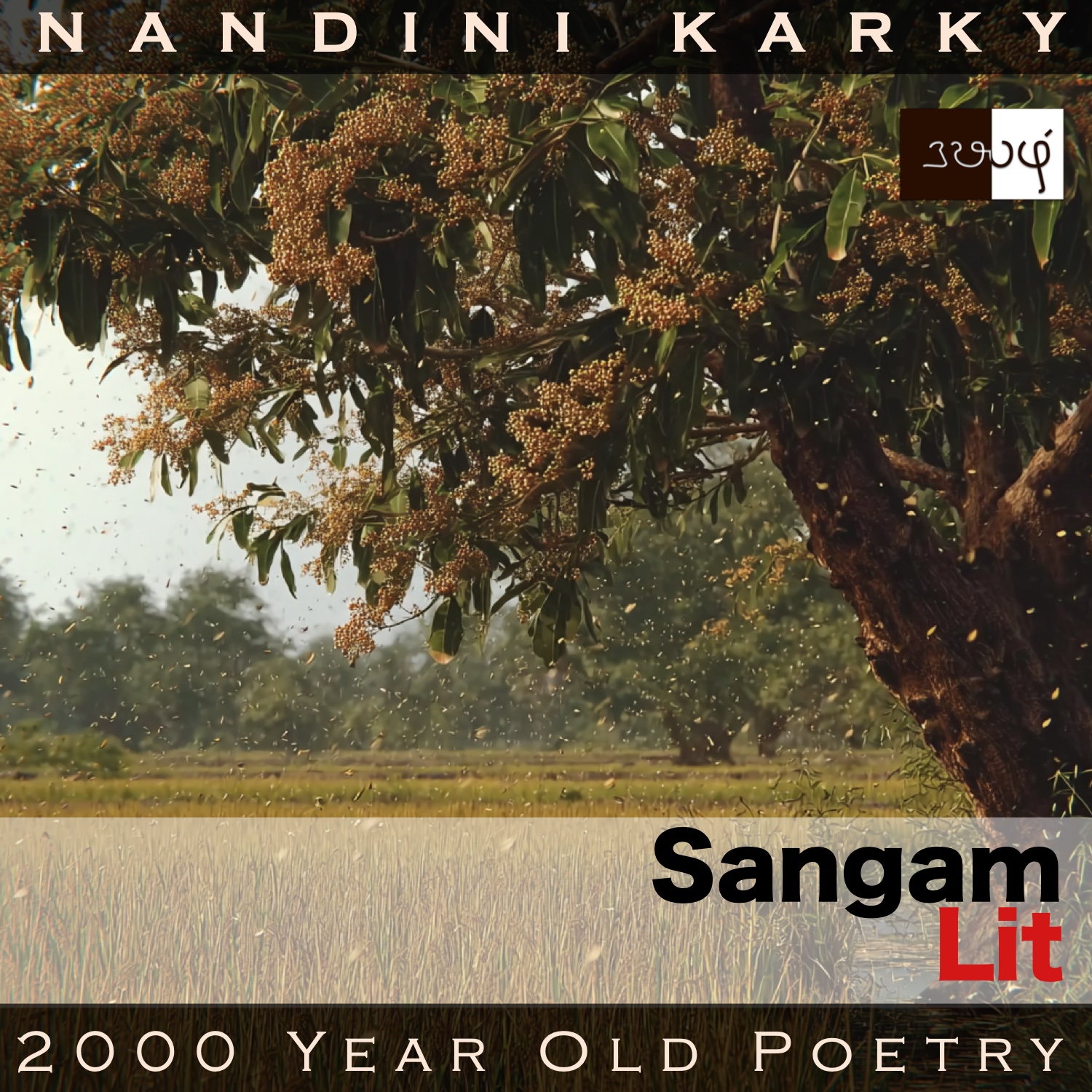
In this episode, we listen to an intricate explanation, as depicted in Sangam Literary work, Aganaanooru 236, penned by Paranar. The verse is situated amidst the flourishing paddy stalks of the ‘Marutham’ or ‘Farmlands landscape’ and refers to a renowned story of loss from those times.

மணி மருள் மலர முள்ளி அமன்ற,
துணி நீர் இலஞ்சிக் கொண்ட பெரு மீன்
அரி நிறக் கொழுங் குறை வௌவினர் மாந்தி
வெண்ணெல் அரிநர் பெயர்நிலைப் பின்றை,
இடை நிலம் நெரிதரு நெடுங் கதிர்ப் பல் சூட்டுப்
பனி படு சாய்ப் புறம் பரிப்ப, கழனிக்
கருங் கோட்டு மாஅத்து அலங்கு சினைப் புதுப் பூ
மயங்கு மழைத் துவலையின் தாஅம் ஊரன்
காமம் பெருமை அறியேன், நன்றும்
உய்ந்தனென் வாழி, தோழி! அல்கல்
அணி கிளர் சாந்தின் அம் பட்டு இமைப்ப,
கொடுங் குழை மகளிரின் ஒடுங்கிய இருக்கை
அறியாமையின் அழிந்த நெஞ்சின்,
‘ஏற்று இயல் எழில் நடைப் பொலிந்த மொய்ம்பின்,
தோட்டு இருஞ் சுரியல் மணந்த பித்தை,
ஆட்டன் அத்தியைக் காணீரோ?’ என
நாட்டின் நாட்டின், ஊரின் ஊரின்,
‘கடல் கொண்டன்று’ என, ‘புனல் ஒளித்தன்று’ என,
கலுழ்ந்த கண்ணள், காதலற் கெடுத்த
ஆதிமந்தி போல,
ஏதம் சொல்லி, பேது பெரிது உறலே.
In this trip to this tricky domain, we get to see the usual scenes of plenty, as we hear the lady say these words to her confidante, at a time when the lady had permitted the man back to her house, after his time away with courtesans:
“Having sapphire-like flowers, the water-thorn flourishes near ponds with crystal clear water. Gathering huge fish from here, harvesters of white paddy cook those striped, fleshy pieces and eat them with relish. Later, they cut tall paddy stalks and heap the stacks so densely that the land in between is invisible to the eyes, hiding the dew-covered low ground beneath in those fields, where the new flowers of a black-trunked mango tree’s swaying branch, drop down and scatter, appearing like the rain’s drizzle, in the town of the lord! For a while, I did not get to appreciate the greatness of his love. But I had a narrow escape, long may you live, my friend!
In the manner of maiden, adorned with curving heavy earrings, those who wear exquisite, radiant sandalwood and gleaming pretty silk, with a subdued, humble stance, he had come in the middle of the night and my heart fell for him, owing to my naivety.
And that’s why, akin to Aathi Manthi, the one who had lost her beloved, and who went around asking in country upon country, town upon town, ‘Has anyone seen the one, who has a bull’s fine gait and radiant shoulders, a fragrant head full of dense, black curls, known by the name ‘Aattan Aththi’?’, as she wondered endlessly ‘Has the ocean snatched him?’ or ‘Has the river hid him?’, I did not have to lament and suffer with great confusion!”
Time to sit back and listen to the love quarrels of this domain! The lady starts by describing the man’s land, and to do that, she brings forth the image of lush ponds, surrounded by water-thorn plants with deep blue flowers. From these ponds, harvesters catch hold of fatty fish, cook and relish them, the lady continues, and talks about how energised, those harvesters come over to the fields and do their hard work of cutting the paddy stalks and heaping the stacks. So fertile is this land that you can’t even glimpse a bit of the ground between these stacks, the lady paints, and then mentions how the blooming mango tree, on the side of the fields, showers down its flowers, confusing those around with the sensation of a drizzle. Such is the beauty and fertility of the man’s town, the lady completes. Then she goes on to talk about how one night the man had come to her in a such a humbled, subdued way that he almost appeared to her like a maiden clad in silk and adorned with sandalwood. Seeing his pleading stance, she had accepted him back, the lady says. She concludes by telling her friend that’s how she had a narrow escape from the state of Aathi Manthi, who had roamed high and low, searching for her lost husband, the handsome Aattan Aththi, wondering whether the sea had swallowed him or the river had buried him.
Most probably the confidante has asked a simple question, ‘How come you have accepted the man back?’, to which the lady has rendered this explanation of how her ignorance and compassion let her take the man back, and thus prevented her from going about searching for him, wondering where he was! It could also be a sarcastic take on the man’s meandering ways! While such tussles will come and go in the life of these townsfolk, what’s interesting here is how the story of Aathi Manthi keeps coming back to us, over and over again. She must have made a huge impression on the minds of Sangam poets, if such a person truly lived. In many ways, she seems to be the inspiration for the stellar character of ‘Kannagi’ in the Post-Sangam era epic ‘Silapathikaaram’, standing as the epitome of devotion to one’s partner!
