

Podcast: Play in new window | Download
Subscribe: Apple Podcasts | Spotify | Amazon Music | Android | iHeartRadio | TuneIn | RSS | More
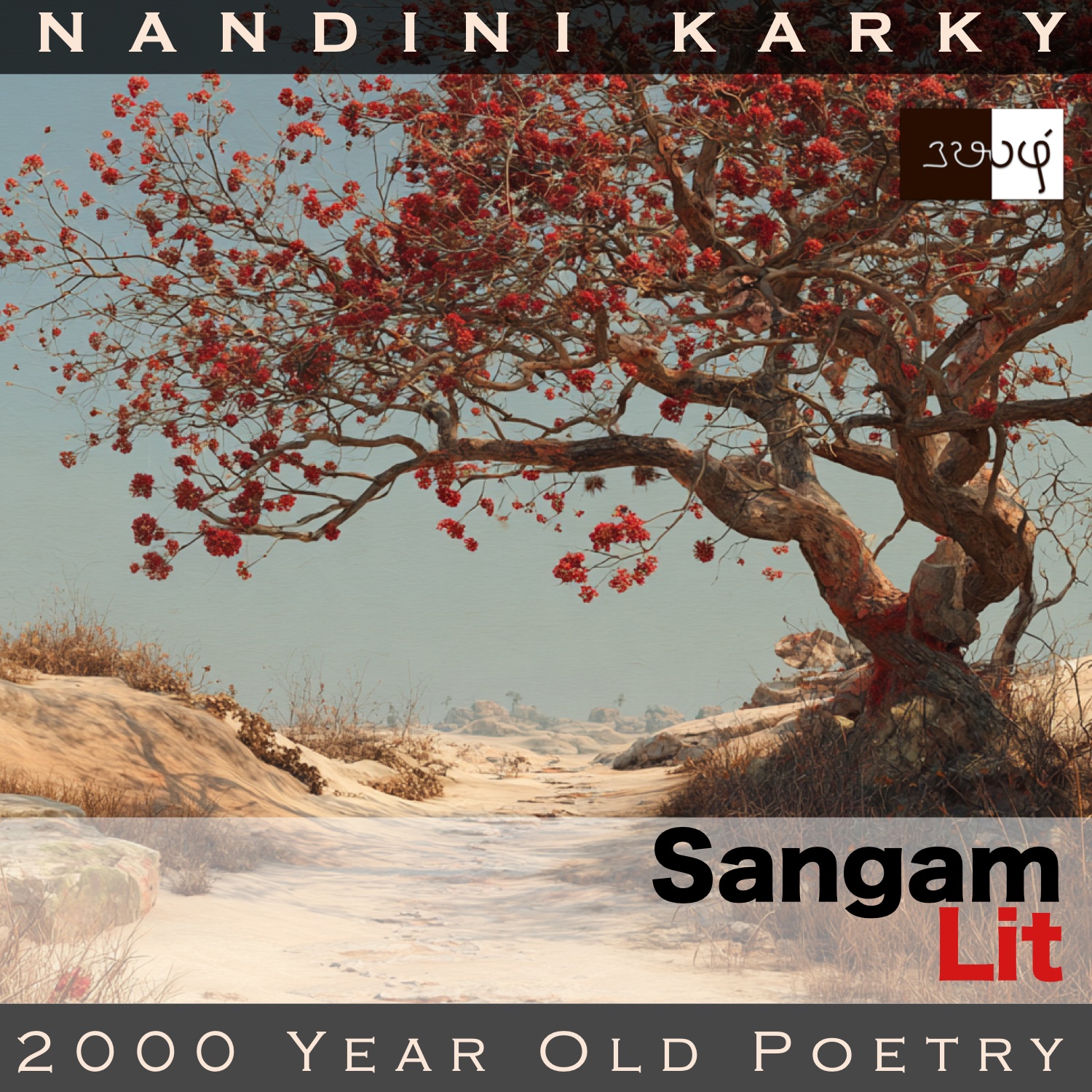
In this episode, we perceive a moment of clarity at the end of a dilemma, as depicted in Sangam Literary work, Aganaanooru 245, penned by Madurai Maruthan Ilanaakanaar. Set in the ‘Paalai’ or ‘Drylands landscape’, the verse presents surprising details about a particular animal in this domain.

‘உயிரினும் சிறந்த ஒண் பொருள் தருமார்
நன்று புரி காட்சியர் சென்றனர், அவர்’ என
மனை வலித்து ஒழியும் மதுகையள் ஆதல்
நீ நற்கு அறிந்தனைஆயின், நீங்கி,
மழை பெயல் மறந்த கழை திரங்கு இயவில்,
செல் சாத்து எறியும் பண்பு இல் வாழ்க்கை
வல் வில் இளையர் தலைவர், எல் உற,
வரி கிளர் பணைத் தோள், வயிறு அணி திதலை,
அரியலாட்டியர் அல்கு மனை வரைப்பில்,
மகிழ் நொடை பெறாஅராகி, நனை கவுள்
கான யானை வெண் கோடு சுட்டி,
மன்று ஓடு புதல்வன் புன் தலை நீவும்
அரு முனைப் பாக்கத்து அல்கி, வைகுற,
நிழல் படக் கவின்ற நீள்அரை இலவத்து
அழல் அகைந்தன்ன அலங்குசினை ஒண் பூக்
குழல் இசைத் தும்பி ஆர்க்கும் ஆங்கண்,
குறும் பொறை உணங்கும் ததர் வெள் என்பு
கடுங் கால் ஒட்டகத்து அல்கு பசி தீர்க்கும்
கல் நெடுங் கவலைய கானம் நீந்தி,
அம் மா அரிவை ஒழிய,
சென்மோ நெஞ்சம்! வாரலென் யானே.
In this trip to this harsh domain, we get to glimpse at many unique sights, as we listen to the man say these words to his heart:
“If you know very well that she has the strength to say, ‘Wishing to bring back that radiant thing, which has more worth than life, having the wisdom to do the right things, he has left’, and remain at home, then, parting away, you may go, O heart, to those spaces, which the rains have forsaken and where dried bamboos abound. And here, attacking merchants, who tread these paths, those men with sturdy bows live a life lacking culture. When night falls, their leader reaches the gates of homes, which belong to maiden, with thick bamboo-like arms having radiant lines, and bellies with beauty spots many, who sell filtered toddy. Not finding that drink of ecstasy, he would return home, and pointing to the white tusk, which had come from a wild elephant with moistened cheeks, he would caress the coarse-haired head of his son, playing around the house. In such a wild community, stay the night, and leave by morning, to those places, where upon the swaying branches of the silk-cotton tree, with a thick trunk, one which renders an exquisite shade, radiant flowers bloom, akin to flames fluttering, and bees buzz around like flutes. Nearby upon a short boulder, lies drying white bones, which satisfies the deep hunger of camels with fast legs. Traversing these stony, long paths in the scrub jungle, leaving that beautiful, dark-skinned maiden here, you may go, O heart! I shan’t come!”
Let’s walk on and explore those barren spaces! The man starts with an ‘if clause’ to his heart. He tells his heart, ‘If you know one thing for sure, you may leave, and that is if you know the lady has the ability to remain at home and understand the logic and importance of the journey to be taken in search of wealth’. Then, he launches into a description of the place where he is asking his heart to leave, and to do that, he focuses on the denizens of the said place. First, we catch a glimpse of merchants walking here and then robbers attacking them. The man decides to zoom on the leader of this rowdy gang and follows him as he walks in the late evening hour, towards the home of toddy sellers, who happen to be women with bamboo-like arms and beautiful bellies. Here’s a subtle indicator that women had a hand in handling trade in those times.
Returning, we learn that all that toddy is sold out and the man returns home, and he points to the white tusk, which he had taken for the barter, which had come from an elephant in musth, and caresses the head of his young son, as a way of inspiring the lad to aim for great things in life, like hunting down an elephant. Leaving aside the animal rights implications, let’s just appreciate this moment of bonding between a robber father and his son. The man had been telling this story only to predict that the heart would end up staying in such a community, and then in the morning, it would leave to a place, where silk-cotton trees were in full bloom, and their flowers would appear like spots of flames atop the branches. When we are delighting, ‘Oh! What a pretty sight!’, the man turns our attention to some white bones lying scattered on nearby rocks. Remember how some merchants got attacked in the beginning of this tale? Perhaps all the scavengers have had their fill and only the drying, white bones of those dead merchants are left. Now the man talks about something fascinating. He says a camel would come that way and feed on those bones to allay its burning hunger. Here lies not one but two things that stunned me no end! My first question was, ‘What is a camel doing in South India?’. Next question, okay maybe there’s some reason that there are camels, but aren’t they herbivores and why is this verse saying they are eating bones? Surely the Sangam folk must have got their animals mixed up!
Turns out they have not! Though it’s true that camels are not native to Tamil land, it shows evidence of trade with other regions, and it seems like a sound idea of those merchants to bring this animal with steady legs for their journeys through the drylands. Next, coming to the bones, I learnt that camels do eat bones and assorted other things like leather and skin, whenever their calcium and phosphorus levels dip down. Apparently, it’s a phenomenon called ‘osteophagia’. As it is these animals are wandering about desert landscapes and guess it makes sense that these animals have to make do with what they get and not be strict about their vegan diets!
Back from our consorting with camels, we see that the man has been talking to his heart, asking it to leave to such arid landscapes, leaving the lady, and concluding that he was not planning on accompanying his heart. In essence, a clear decision in favour of staying at home, against the nudge of his heart, which was pushing him to part with the lady. This is yet another case of the man separating his heart from himself! What is the heart if not a part in the man’s mind, which was provoking him to choose a different path? This demarcation of the man and his heart in two thousand year old poem makes me connect the same principle to modern psychological techniques like ‘Internal Family Systems’, which ask the ‘Self’ in the mind to separate from the emotional parts to truly understand what’s going on in the psyche! A valuable lesson in dealing with dilemmas, as sensed intuitively by our ancestors with their deep understanding of the human mind!
