

Podcast: Play in new window | Download
Subscribe: Apple Podcasts | Spotify | Amazon Music | Android | iHeartRadio | TuneIn | RSS | More
In this episode, we perceive a lady’s anguish, as portrayed in Sangam Literary work, Aganaanooru 247, penned by Madurai Maruthankizhaar Maganaar Perunkannanaar. Set in the ‘Paalai’ or ‘Drylands landscape’, the verse relays the dangers of traversing this domain.

மண்ணா முத்தம் ஒழுக்கிய வன முலை
நல் மாண் ஆகம் புலம்பத் துறந்தோர்
அருள் இலர் வாழி, தோழி! பொருள் புரிந்து,
இருங் கிளை எண்கின் அழல் வாய் ஏற்றை,
கருங் கோட்டு இருப்பை வெண் பூ முனையின்,
பெருஞ் செம் புற்றின் இருந் தலை இடக்கும்
அரிய கானம் என்னார், பகை பட
முனை பாழ்பட்ட ஆங்கண், ஆள் பார்த்துக்
கொலை வல் யானை சுரம் கடி கொள்ளும்
ஊறு படு கவலைய ஆறு பல நீந்தி,
படு முடை நசைஇய பறை நெடுங் கழுத்தின்
பாறு கிளை சேக்கும் சேண் சிமைக்
கோடு உயர் பிறங்கல் மலை இறந்தோரே.
In this trip to the drylands, we take in many sights, as we listen to the lady say these words to her confidante, when the confidante was upset about the lady’s state, at a time when the man remains parted away, having left in search of wealth:
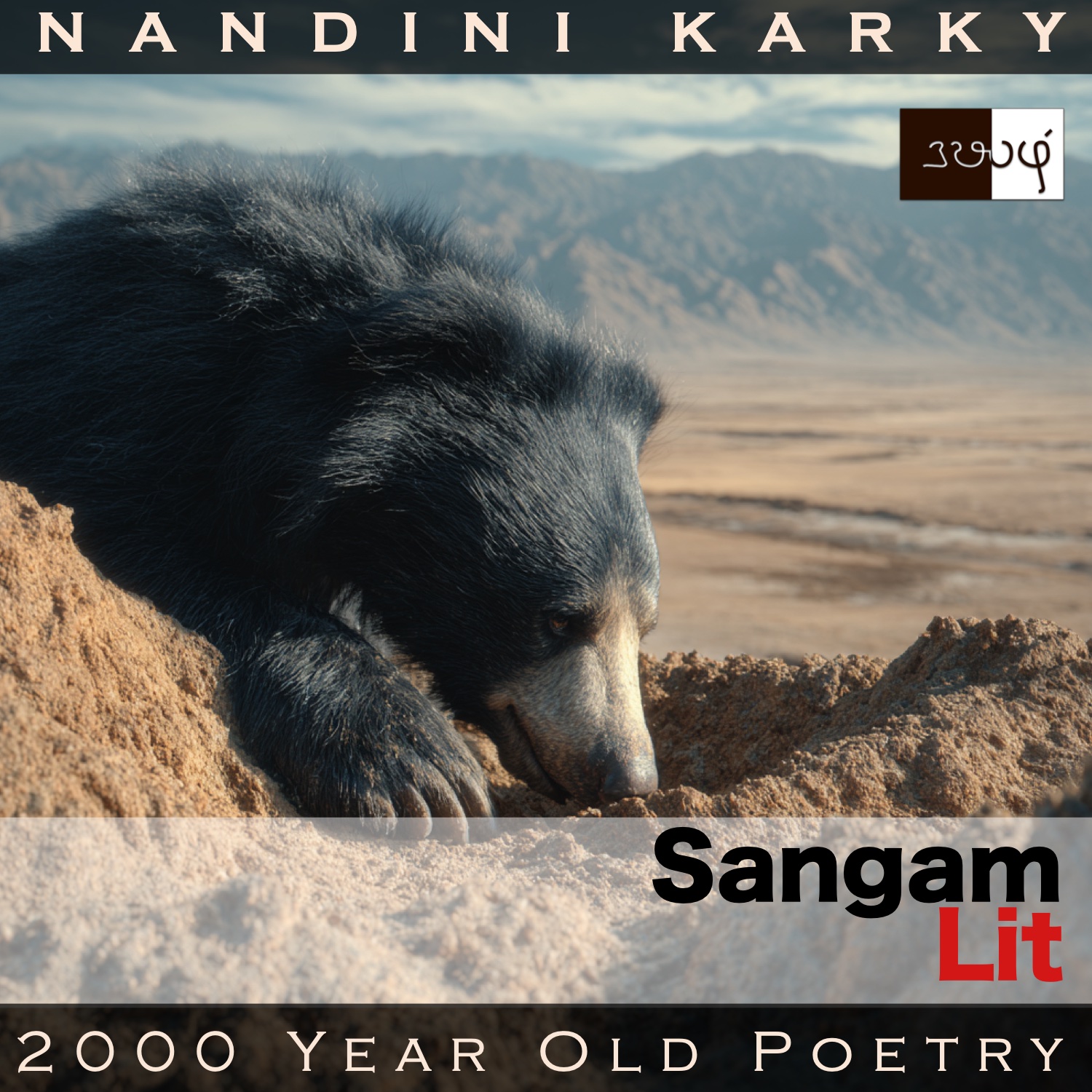
“Making those unwashed pearls drop down on the beautiful bosoms, leaving this fine and noble chest in loneliness, he has parted away. He lacks kindness, my friend! May you live long! In those spaces, a male bear, with a fuming, fire-like mouth, having many kin, after having its fill of the white flowers of the dark-trunked Mahua tree, dislikes any more, and moves to break open the top of a huge termite mound. Not considering that this is a formidable space, which has been ruined in a battle, and where a murderous elephant stands guarding the drylands, looking out for wayfarers, he has crossed these troublesome paths many, where wishing to feed on the reeking flesh, vultures with long necks fly about and return to perch on the branches in the tall peaks of the faraway mountains, and has left thither with a desire for wealth!”
Let’s brave the dreariness of this domain and learn more! The lady starts by talking about her tears and she compares these to unwashed pearls. A unique simile indeed! She then talks about how those drops fall down on her bosom and all this is because the man had left her in loneliness and parted away. She declares that the man seems to have no compassion for her. Then she goes on to describe the place he has left to, and brings in the image of a male sloth bear, which after filling its tummy with the white Mahua flowers, did not seem to want anymore of that, and had turned its attention to breaking a termite mound, looking for something else to feed on. Then, she talks about how these spaces are ruined as a result of some battle some time, and it’s wild and isolated, where killer elephants seem to be on the lookout to attack any wandering humans. The final creature the lady zooms on to happens to be a roving vulture with a long neck, characterising it for its desire to feed on flesh. After painting vivid portraits of these rugged beings, the lady concludes by talking about how the man, without worrying that this is such a dangerous place, had left wishing only to embrace wealth!
In the scene of the male bear having had its fill of the Mahua flowers and seeking termite mud, the lady places a metaphor for how the man had feasted on her beauty to his content and now had abandoned her, in his quest of something else. The theme seems to remain the same, ‘He’s gone leaving me in pain’. Wonder if these verses are simply telling us to express our pain to let the rain of calm fall on the dreary drylands of anxiety!
