

Podcast: Play in new window | Download
Subscribe: Apple Podcasts | Spotify | Amazon Music | Android | iHeartRadio | TuneIn | RSS | More
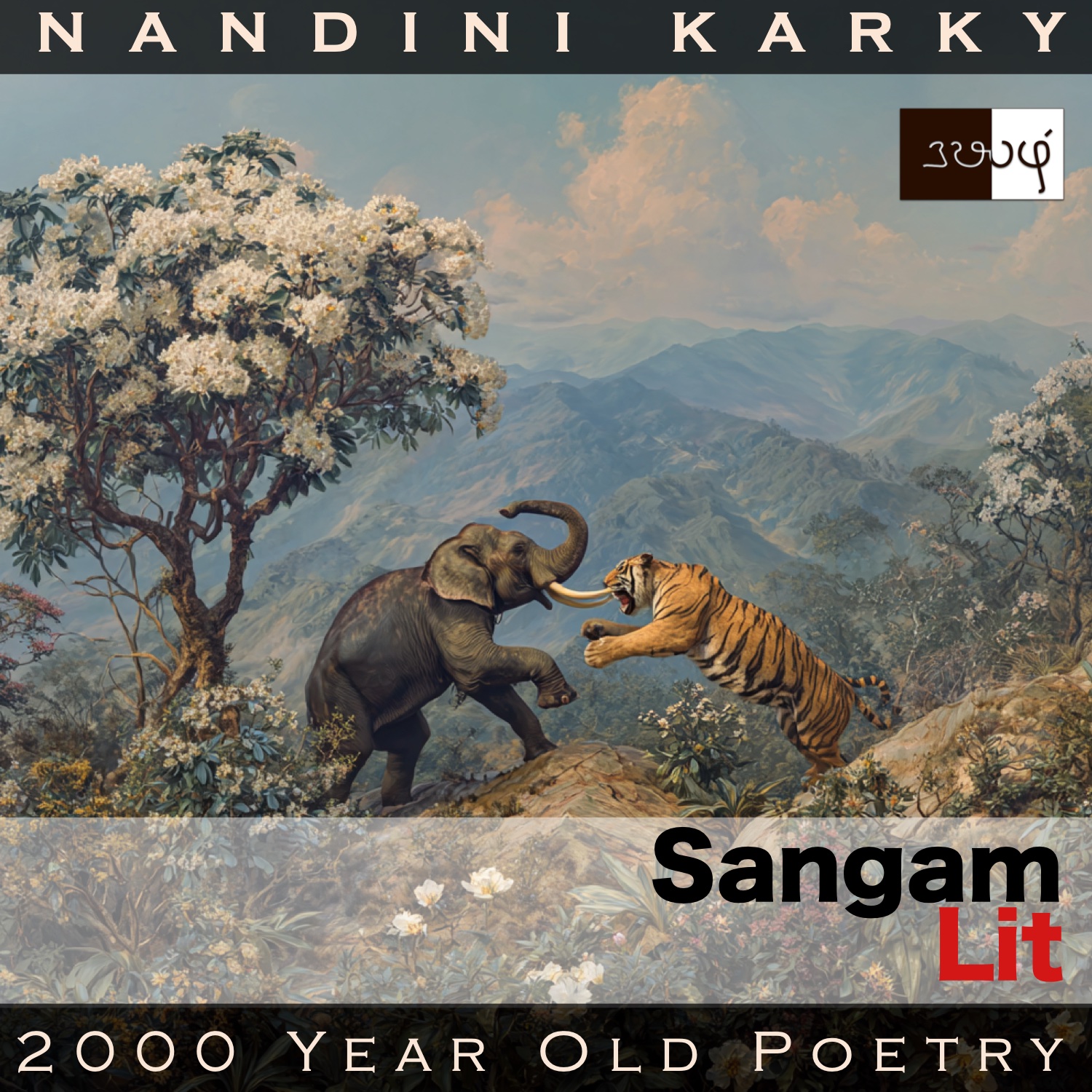
In this episode, we listen to a subtle attempt at persuasion, as depicted in Sangam Literary work, Aganaanooru 268, penned by Vadama Vannakkan Peri Saathanaar. The verse is situated amidst the fragrant flowers of the ‘Kurinji’ or ‘Mountain landscape’ and presents a portrait of the delicate state of affairs.

அறியாய் வாழி, தோழி! பொறி வரிப்
பூ நுதல் யானையொடு புலி பொரக் குழைந்த
குருதிச் செங் களம் புலவு அற, வேங்கை
உரு கெழு நாற்றம் குளவியொடு விலங்கும்
மா மலை நாடனொடு மறு இன்று ஆகிய
காமம் கலந்த காதல் உண்டுஎனின்,
நன்றுமன்; அது நீ நாடாய், கூறுதி;
நாணும் நட்பும் இல்லோர்த் தேரின்,
யான் அலது இல்லை இவ் உலகத்தானே
இன் உயிர் அன்ன நின்னொடும் சூழாது,
முளை அணி மூங்கிலின் கிளையொடு பொலிந்த
பெரும் பெயர் எந்தை அருங் கடி நீவி,
செய்து பின் இரங்கா வினையொடு
மெய் அல் பெரும் பழி எய்தினென் யானே!
In this trip to the hills, there’s more of abstract feelings, as we listen to the confidante say these words to the lady, in an attempt to further the man’s relationship with the lady:
“You should ponder on what I say, my friend, may you live long! As a tiger attacked an elephant, having a flower-like head, filled with lines and spots, the blood that spilled paints the mushy field red. To wipe away the stench of that flesh, the fragrance of the formidable Kino flowers, along with wild jasmines, wafts in the huge mountains of the lord. If there is a faultless love, fused with passion for him, that would be good. But if you don’t seek that, pray tell me. If one were to search for the person who doesn’t have any shame or the virtue of friendship, there can be no better candidate than me, in this world. Without consulting with you, who is akin to my own sweet life, and also not caring about the strict guard of our famous father, who dwells with kith and kin, abundant like the sprouts of a bamboo, I have done something which I do not regret, and I seem to have attained an unjustified blame for that!”
Let’s understand the nuances here! The confidante starts with a request to her friend to reflect on what she was about to say. Then she describes the man’s mountain country as a place where the fragrance of the Kino and wild jasmine flowers removes the stench of the blood that has spilled in the attack of a tiger and elephant and mushed up the red earth beneath. Then she asks her friend if the lady feels a deep love for the man. And when the confidante sees no response from the lady, the confidante declares that she must be the only person on earth not having any sense of shame or the true feeling of friendship. She concludes by explaining that she has done a deed, without checking with the lady and not minding the strict guard of the lady’s father, but one for which she feels no regret and one she doesn’t mind the blame endowed on her without cause.
To understand this complicated expression, we have to reflect on certain cultural practices. Apparently, in this era, it was the custom of the man to seek out the lady’s confidante to further his relationship with the lady, by means of arranging trysts. Some sense of modesty perhaps prevented him from approaching the lady directly. So, the confidante, understanding the lady’s interest in the man, is presenting the man’s case before the lady. She then tries to convince the lady by pretending to take responsibility for all the blame and censure in her delicate situation. In the scene of the mountain flowers removing the stench of flesh, the confidante places a metaphor for the man’s future action of marrying the lady and wiping away the slander of their secret love relationship. A verse that illustrates the influence a friend can exert in one’s life, something that is true not just two thousand years ago, in this particular culture, but even today, and mostly everywhere!
