

Podcast: Play in new window | Download
Subscribe: Apple Podcasts | Spotify | Amazon Music | Android | iHeartRadio | TuneIn | RSS | More
In this episode, we listen to words of lament, as depicted in Sangam Literary work, Aganaanooru 275, penned by Kayamanaar. Set in the ‘Paalai’ or ‘Drylands landscape’, the verse etches the emotions of a Sangam mother at the juncture of her daughter’s elopement.

ஓங்கு நிலைத் தாழி மல்கச் சார்த்தி,
குடை அடை நீரின் மடையினள் எடுத்த
பந்தர் வயலை, பந்து எறிந்து ஆடி,
‘இளமைத் தகைமையை வள மனைக் கிழத்தி!
பிதிர்வை நீரை வெண் நீறு ஆக’ என,
யாம் தற் கழறுங் காலை, தான் தன்
மழலை இன் சொல், கழறல் இன்றி,
இன் உயிர் கலப்பக் கூறி, நன்னுதல்
பெருஞ் சோற்று இல்லத்து ஒருங்கு இவண் இராஅள்,
ஏதிலாளன் காதல் நம்பி,
திரள் அரை இருப்பைத் தொள்ளை வான் பூக்
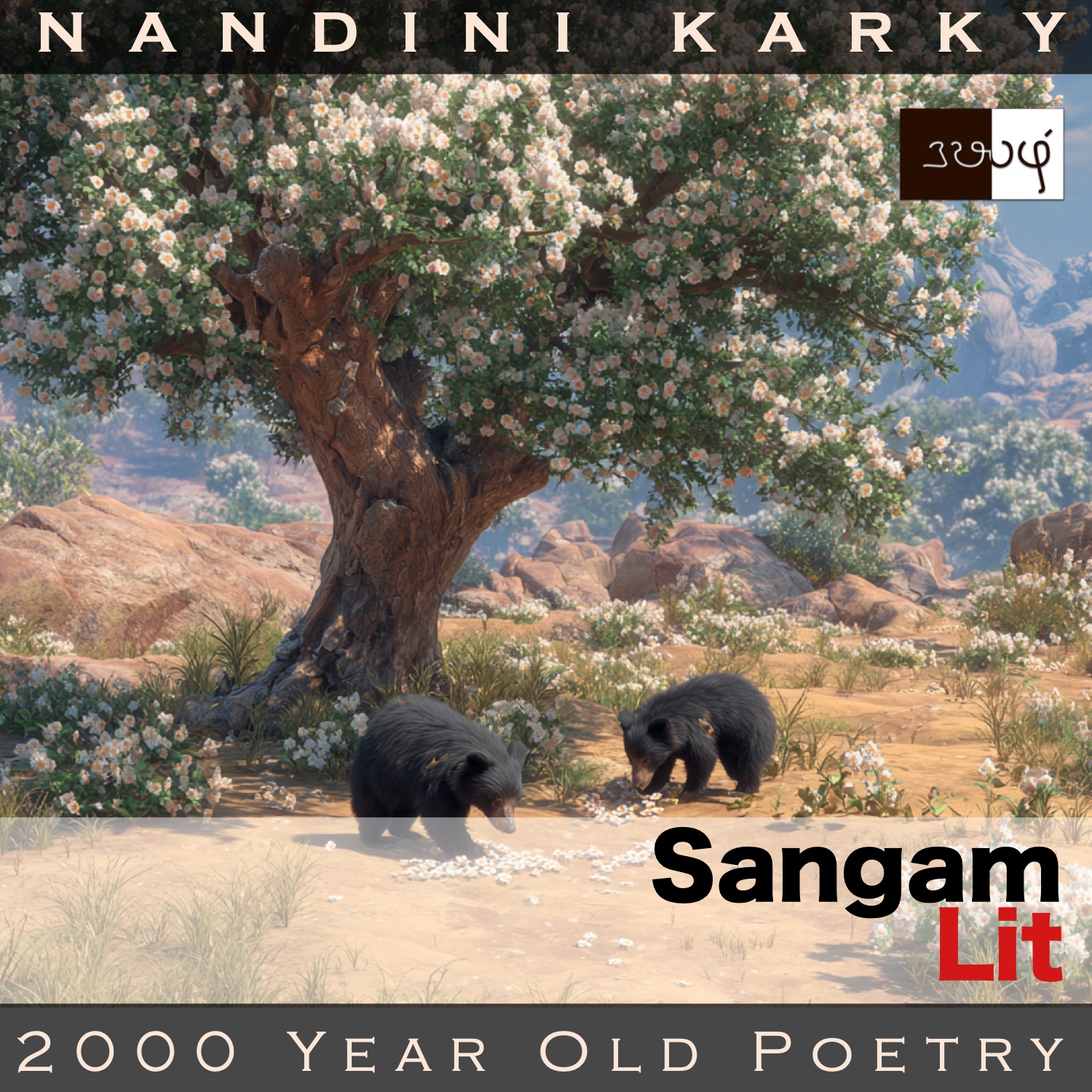
குருளை எண்கின் இருங் கிளை கவரும்
வெம் மலை அருஞ் சுரம், நம் இவண் ஒழிய,
இரு நிலன் உயிர்க்கும் இன்னாக் கானம்,
நெருநைப் போகிய பெரு மடத் தகுவி
ஐது அகல் அல்குல் தழை அணிக் கூட்டும்
கூழை நொச்சிக் கீழது, என் மகள்
செம் புடைச் சிறு விரல் வரித்த
வண்டலும் காண்டிரோ, கண் உடையீரே?
In this trip to the drylands, we take in a few familiar sights and listen to the outpouring of sorrow from the mother, at a time when her daughter had eloped away with the man:
“Amidst the bushes of vayalai vines that she had reared by pouring water, collected with a tightly woven palmyra bowl from a tall and brimming urn, seeing her playing with a ball, I had scolded her saying, ‘O young and naive maiden of this prosperous mansion! You seem to be roaming around without a care. You are sure to be doomed!’. At this time, without any anger, she rendered her child-like, sweet words that made my sweet life melt away with joy. But that maiden with a fine forehead, without choosing to remain in this mansion, with copious food to share, has trusted in the love of a stranger, and leaving me to languish here, has left to a formidable drylands in the scorching mountains, where clusters of white flowers from the thick-trunked Mahua tree are stolen by huge sleuths of bear cubs. That maiden with great naivety, who has left yesterday to the terrible scrub jungle around which the huge land sighs in suffering, using her reddened little fingers, had built a sand house under the chaste tree, which used to render fine leaves to adorn her wide and uplifted loins. Those who have eyes, won’t you see this work of art left behind by that daughter of mine!”
Time to listen to this expression of grief! Mother starts like mothers often do, recollecting a past moment with their beloved offspring. She remembers how one day the lady had been playing near the vayalai bushes that the lady herself had reared with much love, pouring water for it every day using a palmyra bowl. A moment to note the use of biodegradable material of palm leaves to stitch baskets with such skill that they seem to even hold water! Something we should perhaps learn from the descendants of these basket weavers in the remote villages of Tamil Nadu.
Returning, Mother talks about how her girl had been playing with a ball amidst these bushes and this seems to have angered Mother, who had admonished her for roaming around without a care. There seems to be a hidden implication in mother’s tone that the girl had matured and she had no business to be playing around in this manner. In any case, mother remembers how her daughter showed no anger for that scolding and spoke so sweetly in a child-like tone, which made mother’s heart melt away. But that same girl, believing in some stranger’s promise of love, had left to the drylands, where bear cubs roam about gathering white Mahua flowers, Mother says. She concludes by asking all around her to take a look at the sand house her daughter had made under the chaste tree, near the house, and perceive the pain that throbs in her heart!
A verse that talks about the poignant feelings, which arise when one glimpses at the places and things, resounding with memories of a parted one. A desk, a pair of spectacles, a ‘Bullet’ motorbike, a letter that arrives late… The objects may change in different spaces and different times, but they all proclaim the indelible presence of a person, even in that moment of their absence!
