

Podcast: Play in new window | Download
Subscribe: Apple Podcasts | Spotify | Amazon Music | Android | iHeartRadio | TuneIn | RSS | More
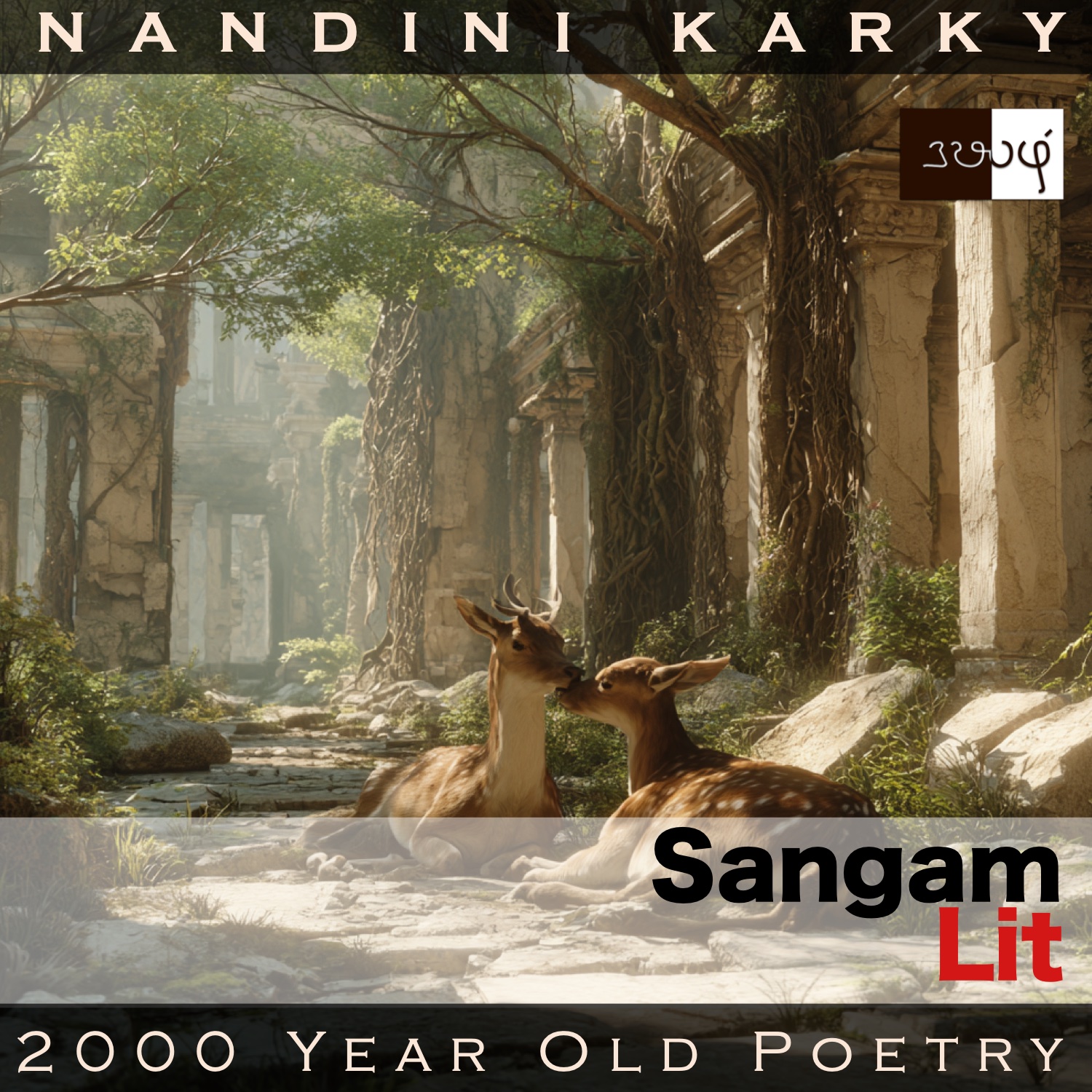
In this episode, we listen to the lament of a lonely heart, as depicted in Sangam Literary work, Aganaanooru 287, penned by Kudavayil Keerathanaar. Set in the ‘Paalai’ or ‘Drylands landscape’, the verse presents a vivid portrait of the pain in parting.

தொடி அணி முன்கைத் தொகு விரல் குவைஇ,
படிவ நெஞ்சமொடு பகல் துணை ஆக,
நோம்கொல்? அளியள் தானே! தூங்கு நிலை,
மரை ஏறு சொறிந்த, மாத் தாட் கந்தின்
சுரை இவர் பொதியில் அம் குடிச் சீறூர்
நாட் பலி மறந்த நரைக் கண் இட்டிகை,
புரிசை மூழ்கிய பொரி அரை ஆலத்து
ஒரு தனி நெடு வீழ் உதைத்த கோடை
துணைப் புறா இரிக்கும் தூய் மழை நனந்தலை,
கணைக் கால் அம் பிணை ஏறு புறம் நக்க,
ஒல்கு நிலை யாஅத்து ஓங்கு சினை பயந்த
அல்குறு வரி நிழல் அசையினம் நோக்க,
அரம்பு வந்து அலைக்கும் மாலை,
நிரம்பா நீள் இடை வருந்துதும் யாமே.
In this trip to this familiar domain, we perceive scenes of emptiness, as we listen to the man say these words to his heart, in the middle of his journey through the drylands, in search of wealth:
“Bringing together the fingers of her bangle-clad arms, with fasting rituals on her mind, and only the day as her company, won’t she be languishing? She is to be pitied indeed! There stands a dark, thick post, where a swaying male black buck has rubbed its back, amidst the blooming bottle gourd vines, in that beautiful hamlet, where a sacrificial offering was forgotten, and empty, stands the altar. A rough-trunked banyan has buried the walls and the hot northern winds kick a lone, long aerial root, which shoos away a mating pigeon couple beneath, in those rainless, wide spaces. A male deer licks the back of its beautiful, thick-legged mate, in the shade of the soaring branches of the Yaa tree, and as I stay in this suffering-filled, spotted shade and look on, misery arrives to torment in this evening hour and makes me lament in this endless, long drylands path!”
Let’s walk along with the man and listen to his song of melancholy! The man starts by thinking about what his beloved would be doing right then, and the image of her praying and fasting, worrying about him, comes to his mind and he feels much pity for her. Then, he looks at the world around him. He sees a broken column, where a black buck has rubbed on; a forgotten, empty altar; a banyan burying the once-sturdy walls, and a gush of northern winds, shaking the banyan’s aerial root and making the cooing pigeons beneath to flutter away. His eyes finally rest on the way a male deer is licking the back of its female to cool it down, in the spotted, not-enough shade of a ‘Yaa tree’. Amidst all this desolation, this scene of tenderness makes the man break down and cry about his lonely state to his heart.
The montage of images tells us this is a ruined town, once prosperous and bustling, but now abandoned, perhaps due to some war or famine. As he finds this empty, forsaken space around him reflect his own state of mind, the man gives expression to the sorrow within. The aspect to be celebrated about Sangam Literature is the equality it endows on both men and women when it comes to expressing their emotions. The man feels no qualms in talking about his pain and missing his beloved, in songs many, many, and this echoes in the culture of Tamils even today, where unlike a common notion in many other cultures, which say, ‘Boys shouldn’t cry’, here we can find grown men giving way to their emotions and breaking down in sorrow. An instance of the memory of culture extending beyond the centuries!
