

Podcast: Play in new window | Download
Subscribe: Apple Podcasts | Spotify | Amazon Music | Android | iHeartRadio | TuneIn | RSS | More
In this episode, we listen to the worry of a person about another, as depicted in Sangam Literary work, Aganaanooru 297, penned by Madurai Maruthan Ilanaakanaar. Set in the ‘Paalai’ or ‘Drylands Landscape’, the verse sketches scenes of human life and wildlife in this domain.

பானாட் கங்குலும், பெரும் புன் மாலையும்,
ஆனா நோயொடு அழி படர்க் கலங்கி,
நம்வயின் இனையும் இடும்பை கைம்மிக,
என்னை ஆகுமோ, நெஞ்சே! நம் வயின்
இருங் கவின் இல்லாப் பெரும் புன் தாடி,
கடுங்கண் மறவர் பகழி மாய்த்தென,
மருங்குல் நுணுகிய பேஎம் முதிர் நடுகல்,
பெயர் பயம் படரத் தோன்று குயில் எழுத்து
இயைபுடன் நோக்கல்செல்லாது, அசைவுடன்
ஆறு செல் வம்பலர் விட்டனர் கழியும்
சூர் முதல் இருந்த ஓமை அம் புறவின்,
ஈர் முள் வேலிப் புலவு நாறு முன்றில்,
எழுதியன்ன கொடி படு வெருகின்
பூளை அன்ன பொங்கு மயிர்ப் பிள்ளை,
மதி சூழ் மீனின், தாய் வழிப்படூஉம்
சிறுகுடி மறவர் சேக் கோள் தண்ணுமைக்கு
எருவைச் சேவல் இருஞ் சிறை பெயர்க்கும்
வெரு வரு கானம், நம்மொடு,
”வருவல்” என்றோள் மகிழ் மட நோக்கே?
Plenty of intricate images as we listen to the man say these words to his heart, in the middle of his journey through the drylands:
“In the middle of the night and in the long, dull evenings, with an unceasing affliction, filled with suffering and sorrow, as the pain that arises in worrying about me gets out of bounds, what will become of her, O heart?
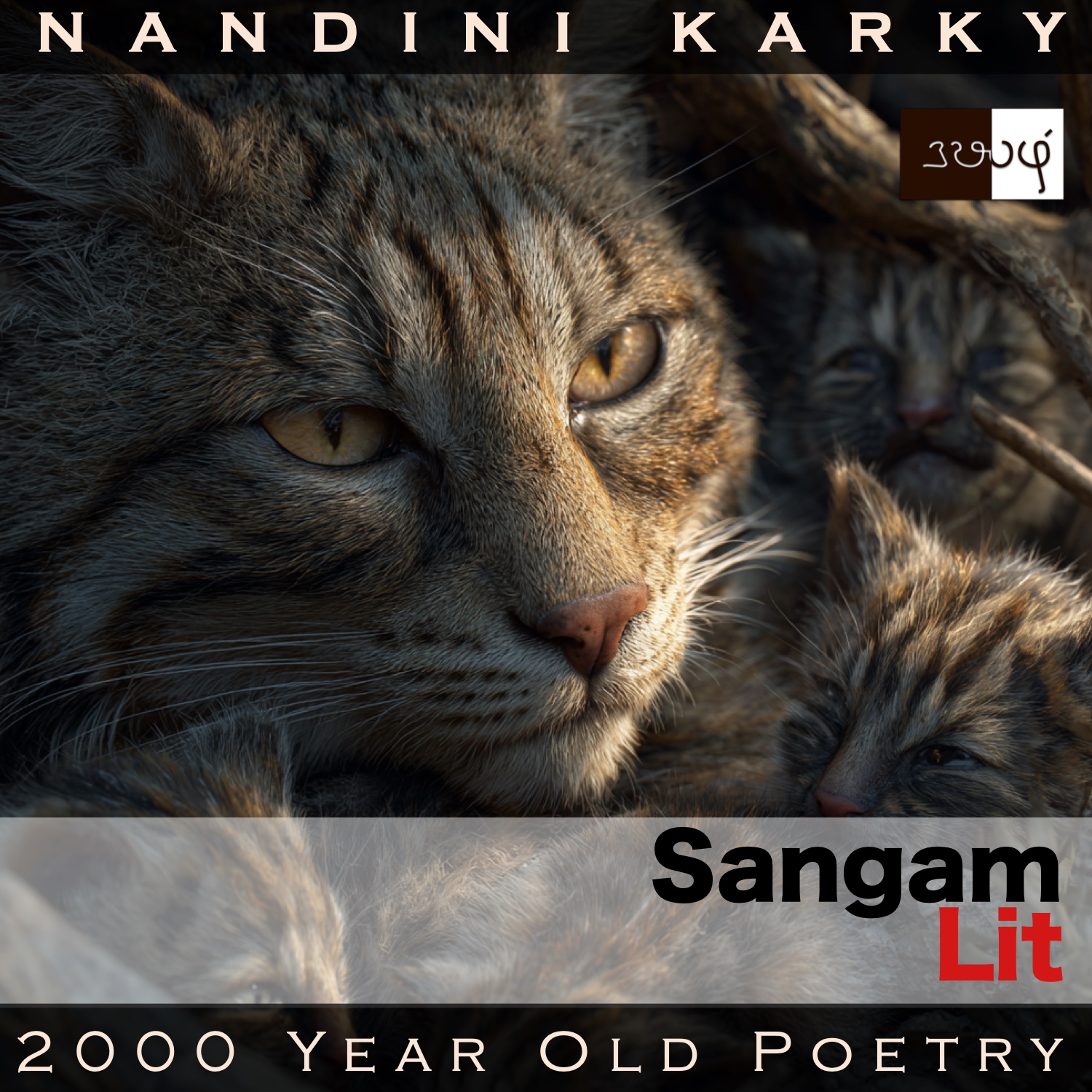
As those harsh-eyed robbers, with long, coarse beards, lacking in any great beauty, sharpened their arrows, edges have chipped on those fearsome, ancient hero stones, and those words of praise etched on them, which celebrate the name and fame, had become indecipherable. Ignoring the stones, without looking closely, with much fatigue, wayfarers hastily cross these paths, in those scrub jungles filled with toothbrush trees, atop which spirits reside. Here in the front yard of a hut that reeks of flesh, surrounded by a fence of moist thorns, lies a litter of a painting-like wild cat’s kittens, having bushy hair, akin to mountain knotgrass, around their mother, akin to stars that encircle the moon, in that small hamlet, where hearing the cattle-raiding drum beats of robbers, a male vulture spreads its huge wings and flutters away. Such are those formidable, fear-evoking jungles, and it’s to such spaces, that maiden, with a joyous, naive appearance had said, ‘I shall come with you!’”
Let’s tread the paths of this difficult domain and learn more! The man starts by expressing his anxiety about the lady’s state, who he sees as worrying about him in the night and in the lonely evenings. Then, he goes on to describe the drylands space, and to do that, he zooms on to an ancient hero stone, and how it has become somewhat mutilated because the robbers of the land seemed to use that as the whetstone to sharpen their arrows, and because of this, the words that describe the name and fame of those buried there had become broken, and owing to this state of affairs, wayfarers seemed to rush past these stones, without even reading closely and paying their respects. A lot of culture lies embedded in this description and we’ll delve into that shortly. The man continues by talking about these spaces and now he shifts his attention to a bunch of wild cat kittens lying around their mother, like stars around the moon, and also paints an image of a vulture, spreading its wings and scattering away, upon hearing the drumbeats of the said robbers, announcing a cattle raid. The man concludes by remarking with astonishment that it’s to such a fearsome space that the lady had wanted to accompany him!
This implies that the lady thought all that danger in the world outside was far better than the loneliness of lamenting without the man’s presence. Together, you can conquer anything, is it not? Wonder why the man still refused to bring along his beloved! Maybe his culture forbade him. Speaking of culture, the mention of those ancient hero stones in this ancient verse tells us this practice extended to a time long before this record, and particularly, the mention of words and letters speaking of the glory of that buried person echoes aloud that this was a literate society that had mastered language centuries in the past! And so we find how a few lines about a familiar terrain reveal to us the depth of culture and learning in this ancient society!
