

Podcast: Play in new window | Download
Subscribe: Apple Podcasts | Spotify | Amazon Music | Android | iHeartRadio | TuneIn | RSS | More
In this episode, we perceive persuasive words to change a person’s path, as portrayed in Sangam Literary work, Aganaanooru 307, penned by Madurai Eezhathu Poothan Thevanaar. Set in the ‘Paalai’ or ‘Drylands Landscape’, the verse sketches the consequences of the man’s parting away.

”சிறு நுதல் பசந்து, பெருந் தோள் சாஅய்,
அகல் எழில் அல்குல் அவ் வரி வாட,
பகலும் கங்குலும் மயங்கி, பையென,
பெயல் உறு மலரின் கண் பனி வார,
ஈங்கு இவள் உழக்கும்” என்னாது, வினை நயந்து,
நீங்கல் ஒல்லுமோ ஐய! வேங்கை
அடு முரண் தொலைத்த நெடு நல் யானை
மையல் அம் கடாஅம் செருக்கி, மதம் சிறந்து,
இயங்குநர்ச் செகுக்கும் எய் படு நனந்தலை,
பெருங் கை எண்கினம் குரும்பி தேரும்
புற்றுடைச் சுவர புதல் இவர் பொதியில்,
கடவுள் போகிய கருந் தாட் கந்தத்து
உடன் உறை பழமையின் துறத்தல்செல்லாது,
இரும் புறாப் பெடையொடு பயிரும்
பெருங் கல் வைப்பின் மலைமுதல் ஆறே?
We encounter a lot of wildlife in this trip through the drylands, as we listen to the confidante say these words to the man, when he conveys his decision to part with the lady and go in search of wealth:
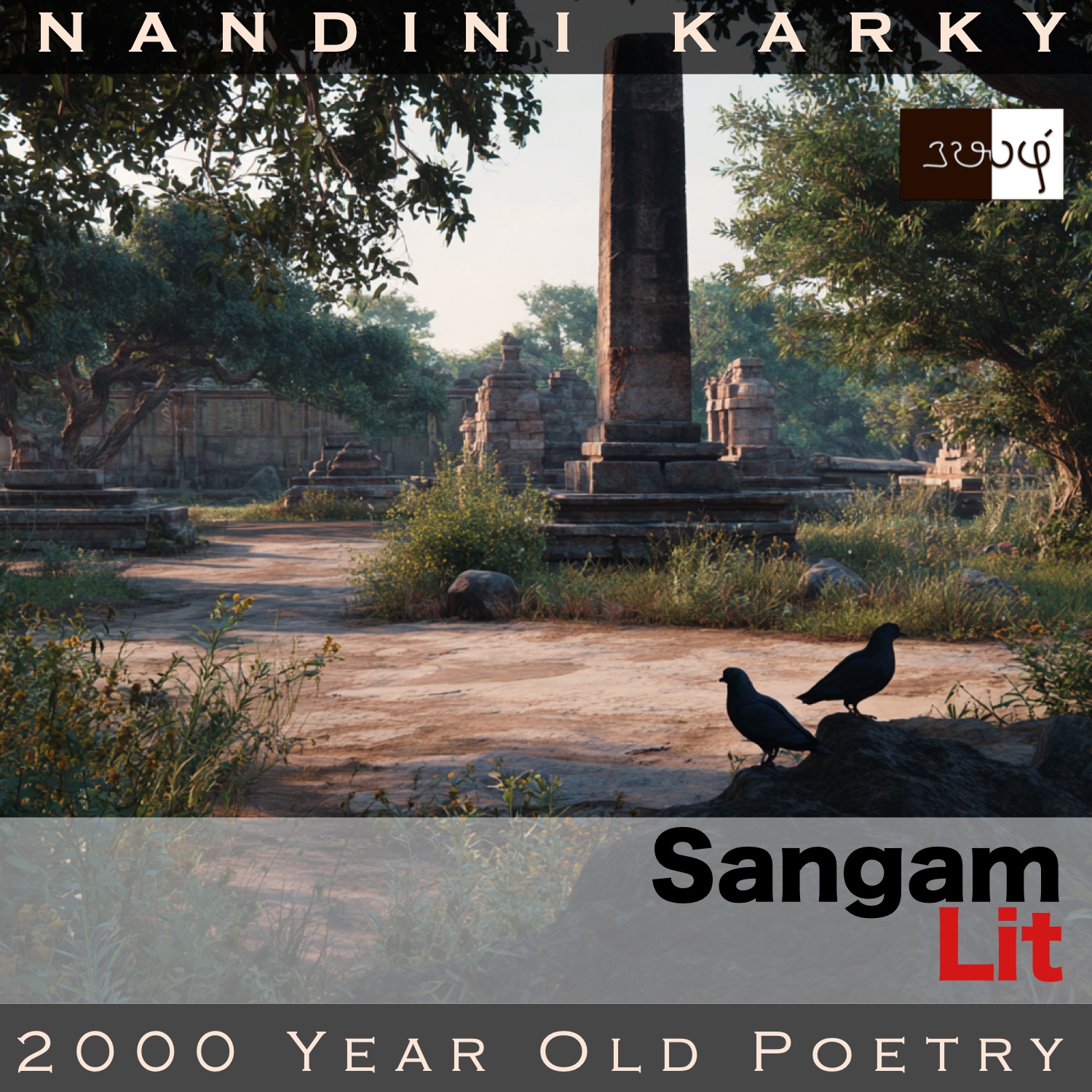
“Without considering that her little forehead will be coated in pallor, her thick arms will waste away, the beautiful lines on her wide and beautiful loins will fade, she will be in utter confusion, knowing not if it’s day or night, and akin to a flower in a rain shower, her eyes will shed the dew of tears, as she suffers with angst here, you wish to part away, desiring wealth, O lord! Do you think this is right? After vanquishing an attacking tiger with strength, the tall and handsome elephant, blinded by its maddening musth, attacks those who traverse those weary spaces, where long-armed bears in search of termite combs, dig up tall mounds, amidst overgrown bushes, in what was once a town centre, where the residing god had parted away from the sturdy, black pillar, and where owing to the habit of living there for long, without forsaking the space, a huge pigeon coos along with its mate. Such are those rocky spaces amidst the hills, where the path you wish to tread winds through!”
Time to tread these familiar but fearsome spaces! The confidante starts by accusing the man that he doesn’t seem to care about what would happen to the lady when he parts away. She elaborates that pallor will come to coat her friend’s forehead, the lady’s arms would thin away, her health and beauty would fade, and all day, all night, the lady would be languishing, with her eyes shedding tears like a bloom in the rain.
The confidante asks the man if what he intends to do is right and goes on to describe where he would be travelling. First she brings in the image of a mad elephant in musth that has just killed a tiger and with its rage still not diminished, it comes to attack wayfarers who dare to walk that path. Next, from the elephants, the confidante turns to portrays bears on the prowl, looking out for termite combs and topping ant hills to find their tasty meal. She explains that this space has not always been a scrub jungle but was once a town centre, and people worshipped a god, who was said to live in a huge pillar, constructed therein. Intricately, she mentions how that god had left the premises and all that remained were overgrown bushes, and yet because they had lived for long in those spaces, a pigeon and its mate did not want to give up their residence there and continued to make their calls resound in those uninhabited spaces. The confidante concludes by telling the man that his path through the hills would take him faraway to such spaces and asks him whether it was right on his part to let the lady suffer and take on that tiresome journey himself!
Though it’s the usual message of ‘Don’t go there, leaving her here’, what flashed so brightly in the lines was that statement about how God had left the pillar when the people no longer worshipped there, but the pigeons and other wild life continue to remain. What flows is a tangential reading indeed, but to me, it appears as if God vanishes when the people do, but nature, which was there before people, continues to be there, an entity of permanence. As these lines say if God were to leave, when people don’t pray anymore, was God truly there? Are people following God or is the God following the people and their prayers? These are the questions that this particular journey through the drylands have brought forth in my mind!
