

Podcast: Play in new window | Download
Subscribe: Apple Podcasts | Spotify | Amazon Music | Android | iHeartRadio | TuneIn | RSS | More
In this episode, we perceive the angst-filled voice of a lady, as depicted in Sangam Literary work, Aganaanooru 331, penned by Maamoolanaar. Set in the ‘Paalai’ or ‘Drylands Landscape’, the verse presents an instance of the dynamics between the flora, fauna and human life in this domain.

நீடு நிலை அரைய செங் குழை இருப்பை,
கோடு கடைந்தன்ன, கொள்ளை வான் பூ,
ஆடு பரந்தன்ன, ஈனல் எண்கின்
சேடு சினை உரீஇ உண்ட மிச்சில்
பைங் குழைத் தழையர் பழையர் மகளிர்
கண் திரள் நீள் அமைக் கடிப்பின் தொகுத்து,
குன்றகச் சிறுகுடி மறுகுதொறும் மறுகும்
சீறூர் நாடு பல பிறக்கு ஒழிய
சென்றோர் அன்பு இலர் தோழி! என்றும்,
அருந் துறை முற்றிய கருங் கோட்டுச் சீறியாழ்ப்
பாணர் ஆர்ப்ப, பல் கலம் உதவி,
நாளவை இருந்த நனை மகிழ்த் திதியன்,
வேளிரொடு பொரீஇய கழித்த
வாள் வாய் அன்ன வறுஞ் சுரம் இறந்தே!
In this trip to the drylands, we get to see familiar characters, and also encounter a historic one on a detour, as we listen to the lady say these words to the confidante, when the man has parted with the lady, to go in search of wealth:
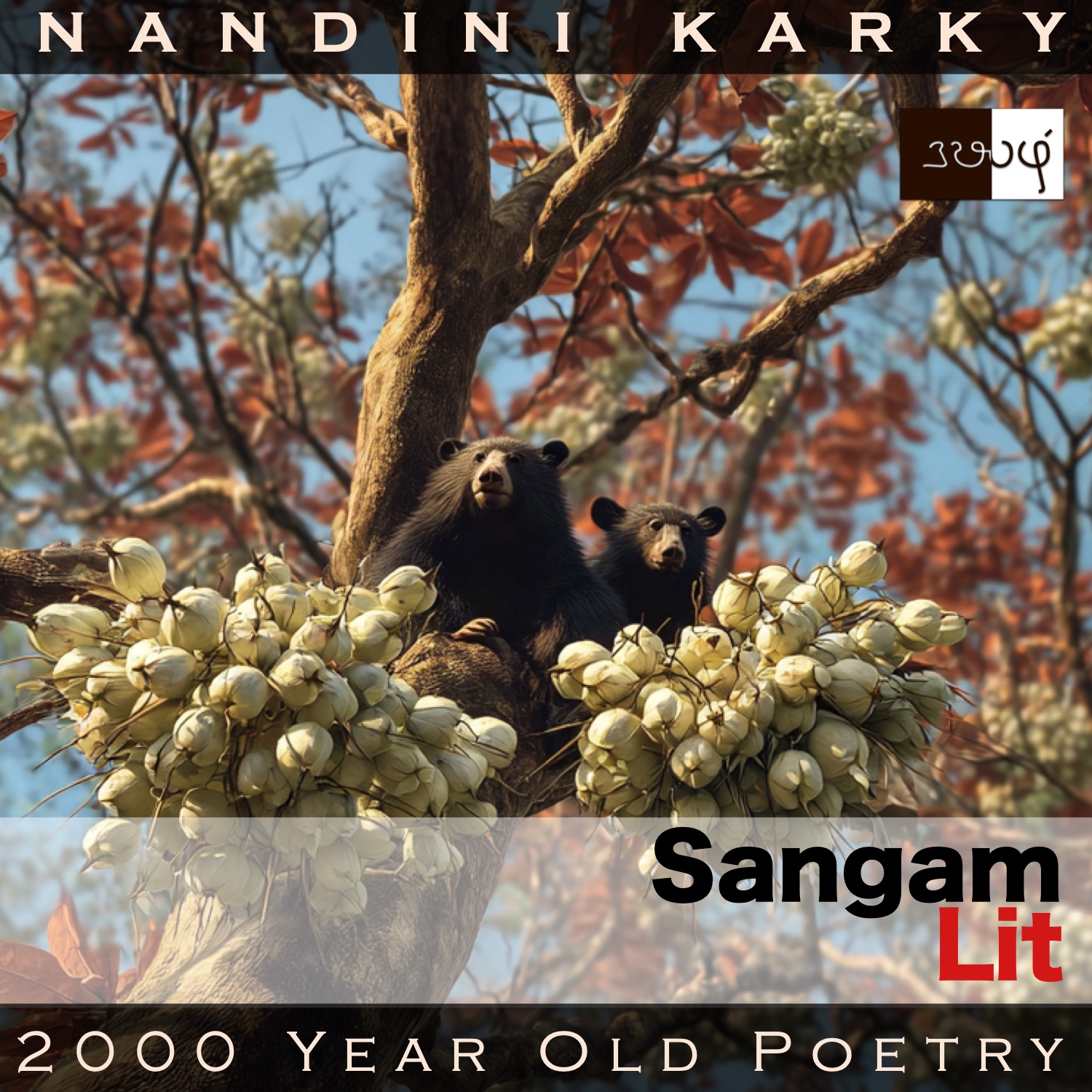
“Upon tall-trunked Mahua trees, with red leaf clusters, bloom numerous white flowers, appearing in the hue of powdered tusks. Grazing around in the manner of herds of sheep, female bears with their cubs feed on these white flowers. Maiden, wearing garments made of fresh green leaves, daughters of drylands folks, collect what’s left of those Mahua flowers, inside long bamboo poles with many nodes, and sell these amidst the many streets of those mountain hamlets. Crossing many such villages in many different countries, the one who left is bereft of love, my friend. As bards, experts in their field, play on their dark-stemmed small lutes ceaselessly, rendering many gifts unto them, Thithiyan delights in his court, amidst the flowing toddy. Akin to the edge of the sword that this king unsheathed and raised in his battle with the Velirs, are those barren drylands he has left to!”
Time to brave the dangers of this domain! The lady starts by zooming onto a Mahua tree, and describes them as having tall trunks and red leaves. When I saw that mention of red clusters, I was intrigued because I had assumed that this Indian trees was a vivid green. After searching to ascertain this truth, found that indeed the new leaves of the Mahua tree, when sprouting in the middle of summer, specifically in the months of April and May, start out in reddish-brown hue, and in just a couple of weeks, they turn into their characteristic velvet green. That’s the time frame the lady has captured these trees in!
Returning, we find that the lady has turned her attention from the leaves to the unique white flowers of the tree, whose colour she places in parallel to powdered tusks. Then, she talks about how female bears and their newborns feed on these flowers and whatever’s left is then collected by daughters of drylands folk, who take these flowers, stuff them inside bamboo pipes, and sell them in the many streets of mountain hamlets. The lady explains that she has mentioned these scenes only to say that the man has crossed many such villages and left to the drylands, which she then compares to the battle sword, raised against the Velirs, by King Thithiyan, who is known for his immense generosity to bards and others in his day court, where he delights and shares the pleasures of fine toddy. The lady concludes by declaring that the man seems to have no love in his heart!
The essence of the verse lies in the scene of King Thithiyan, who is pleasing and generous, but at the same time, he’s formidable and unforgiving in the battlefield, and here, the lady places a metaphor for how the man had been kind and loving in courtship to her and had now rendered the cruelty of parting away from her. Fascinating how the verse weaves in the special patterns of nature, commerce and history amidst the familiar threads of a lady’s lament for her parted beloved!
