

Podcast: Play in new window | Download
Subscribe: Apple Podcasts | Spotify | Amazon Music | Android | iHeartRadio | TuneIn | RSS | More
In this episode, we perceive words uttered to hold back a person, as portrayed in Sangam Literary work, Aganaanooru 376, penned by Paranar. The verse is situated amidst the curving paddy and leaping shrimps of the ‘Marutham’ or ‘Farmlands landscape’ and narrates historical incidents to depict a domestic situation.

செல்லல், மகிழ்ந! நிற் செய் கடன் உடையென்மன்
கல்லா யானை கடி புனல் கற்றென,
மலி புனல் பொருத மருது ஓங்கு படப்பை,
ஒலி கதிர்க் கழனி, கழாஅர் முன்துறை,
கலி கொள் சுற்றமொடு கரிகால் காண,
தண் பதம் கொண்டு, தவிர்ந்த இன் இசை
ஒண் பொறிப் புனை கழல் சேவடிப் புரள,
கருங் கச்சு யாத்த காண்பின் அவ் வயிற்று,
இரும் பொலம் பாண்டில், மணியொடு தெளிர்ப்ப,
புனல் நயந்து ஆடும் அத்தி அணி நயந்து,
காவிரி கொண்டு ஒளித்தாங்கும் அன்னோ!
நும்வயின் புலத்தல் செல்லேம்; எம்வயின்
பசந்தன்று, காண்டிசின் நுதலே; அசும்பின்
அம் தூம்பு வள்ளை அழற் கொடி மயக்கி,
வண் தோட்டு நெல்லின் வாங்கு பீள் விரிய,
துய்த் தலை முடங்கு இறாத் தெறிக்கும், பொற்புடைக்
குரங்குஉளைப் புரவிக் குட்டுவன்
மரந்தை அன்ன, என் நலம் தந்து சென்மே!
In this trip to the farmlands, we encounter many historic detours, as we listen to a courtesan say these words to the man, when he is about to leave her for another courtesan:
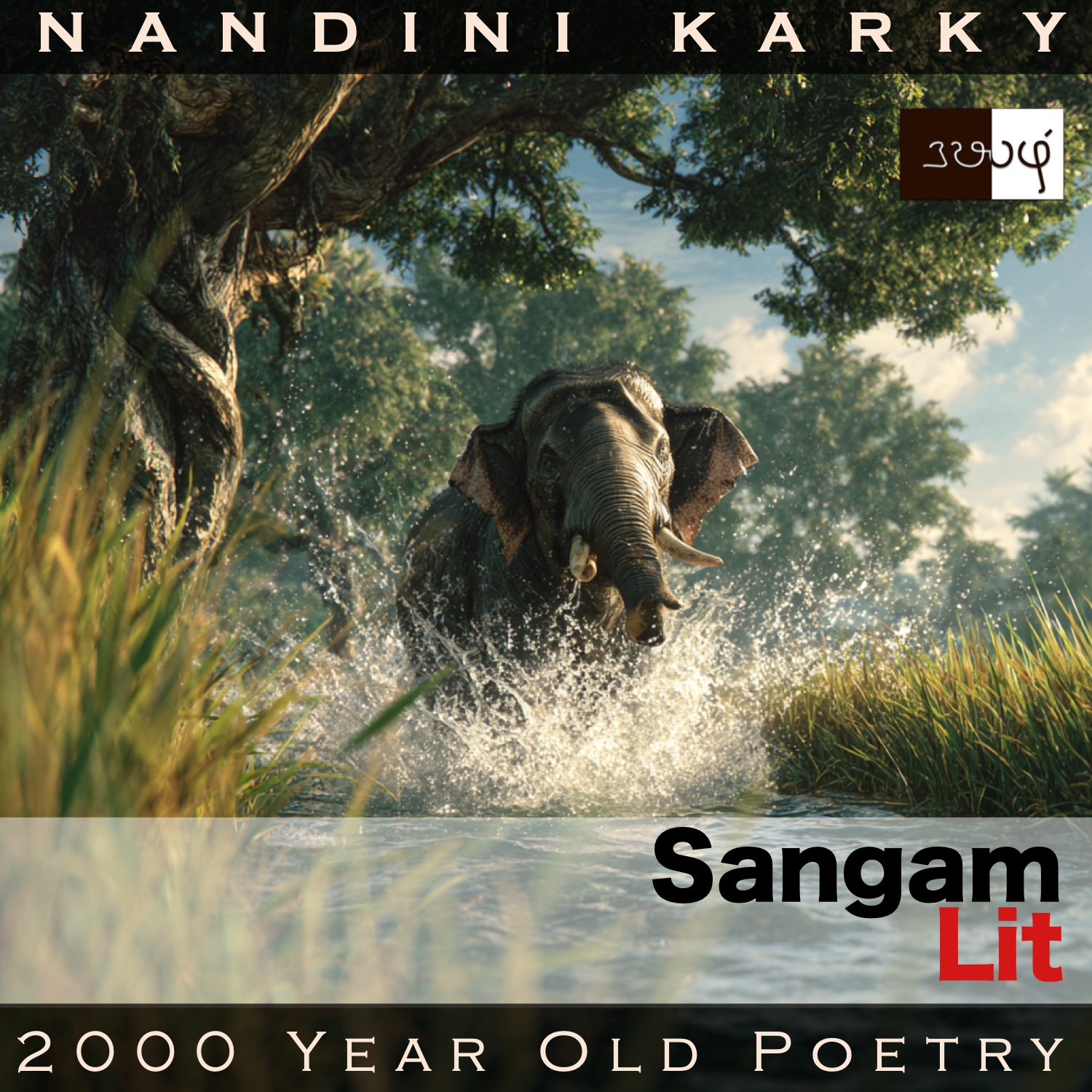
“Leave not, O lord! I’m indebted to you. An untrained elephant was learning to play in the flooding river stream, and the waters that brimmed over splashed against the Arjuna trees in that little hamlet, filled with fields of luxuriant crops, known by the name of Kazhaar. Here, by the river shore, as the great king ‘Karikaal’ watched along with his uproarious kith and kin, amidst the cool festive adornments and the swirling sweet music, wearing radiant, well-etched anklets on his red feet, and a black band around his waist, making those attached musical instruments and other bells resound, Aththi danced in celebration of the river flood. Alas, enamoured by this beauteous sight, the River Kaveri stole and hid him! Your state is just like that. Still, I won’t quarrel with you, but do take a look at this forehead of mine, coated with pallor. The town of Maranthai, ruled by Kuttuvan, who wields horses, crowned with curving tufts, is a place, wherein from the slush, ‘Vallai’ shoots with beautiful stems spread out their vines and entangle with the thick-leaved paddy stalks, and as the curved stalks bend down, coarse-haired shrimps leap about! If you have to leave, please return my beauty, akin to this city of Maranthai, and then go!”
Time to witness the sparks in the land of plenty! The courtesan starts by asking the man not to leave her, saying that there’s much she must do for him. Then she goes on to describe the Chozha town of ‘Kazhaar’, where elephants are seen playing in the gushing river stream and splashing water on the Marutham trees nearby. In the river shore of this town, the famous king Karikaalan had been taking part in the river festival, along with his relatives, and was about to witness a performance by the dancer Aththi, who was wearing exquisite anklets, and a black band attached to various musical instruments and bells. As this dancer celebrated the river and performed his art, the river Kaveri was allured by his beauty and stole him away, says the courtesan. This is a popular story in Sangam circles we have encountered often, wherein Aththi is taken away by the River Kaveri, much to the angst of his beloved wife Aathi Manthi. The courtesan has mentioned this story only to say that’s the way the man has been stolen by the new courtesan. Even so, the courtesan says she will not quarrel with the man, perhaps out of her good heart or maybe she does not have the right to quarrel with the man, like his wife, the lady does!
The courtesan points to the pallor spreading on her forehead on account of these developments and asks the man to leave only if he could return the beauty of hers, akin to the town of Maranthai ruled by Kuttuvan, adorned with Vallai vines, fertile paddy crops and frisky shrimps. Just one of those tiffs over claiming a man’s love and attention in this land, where, no doubt, power and wealth accumulated in the hands of a few men.
In that last line, doesn’t it sound as if the courtesan is boasting about her beauty? You can never take the poets’ word for such things but it makes you wonder about the how the people then, saw themselves! Was it with such pride and confidence? Would such expressions be accepted in a day to day conversation? These are questions that can never be answered for no archaeological evidence will speak about this, and perhaps that’s the allure of the past, where some things will always remain a mystery!
