

Podcast: Play in new window | Download
Subscribe: Apple Podcasts | Spotify | Amazon Music | Android | iHeartRadio | TuneIn | RSS | More
In this episode, we perceive the ecstasy of a man in love, as depicted in Sangam Literary work, Aganaanooru 208, penned by Paranar. The verse is situated amidst the flower-filled spaces of the ‘Kurinji’ or ‘Mountain landscape’ and relays historical references many.

யாம இரவின் நெடுங் கடை நின்று,
தேம் முதிர் சிமையக் குன்றம் பாடும்
நுண் கோல் அகவுநர் வேண்டின், வெண் கோட்டு
அண்ணல் யானை ஈயும் வண் மகிழ்
வெளியன் வேண்மான் ஆஅய் எயினன்,
அளி இயல் வாழ்க்கைப் பாழிப் பறந்தலை,
இழை அணி யானை இயல் தேர் மிஞிலியொடு
நண்பகல் உற்ற செருவில் புண் கூர்ந்து,
ஒள் வாள் மயங்கு அமர் வீழ்ந்தென, ‘புள் ஒருங்கு
அம் கண் விசும்பின் விளங்கு ஞாயிற்று
ஒண் கதிர் தெறாமை, சிறகரின் கோலி,
நிழல் செய்து உழறல் காணேன், யான்’ எனப்
படுகளம் காண்டல்செல்லான், சினம் சிறந்து,
உரு வினை நன்னன், அருளான், கரப்ப,
பெரு விதுப்புற்ற பல் வேள் மகளிர்
குரூஉப் பூம் பைந் தார் அருக்கிய பூசல்,
வசை விடக் கடக்கும் வயங்கு பெருந் தானை
அகுதை கிளைதந்தாங்கு, மிகு பெயல்
உப்புச் சிறை நில்லா வெள்ளம் போல,
நாணு வரை நில்லாக் காமம் நண்ணி,
நல்கினள், வாழியர், வந்தே ஓரி
பல் பழப் பலவின் பயம் கெழு கொல்லிக்
கார் மலர் கடுப்ப நாறும்,
ஏர் நுண், ஓதி மாஅயோளே!
In this trip to this domain, we hardly get to see the mountains, for we are busy visiting a battlefield, as we listen to these words said by the man, when the lady had met him and just parted away:
“For standing at his tall gates in the middle of the night and singing about his honey-soaked mountain peaks, Veliyan Veynmaan AaAy Eyinan would render esteemed, white-tusked elephants with joyous generosity to those singers, who hold fine divining rods, if they sought that from him. Such was the life of grace that this lord lead.
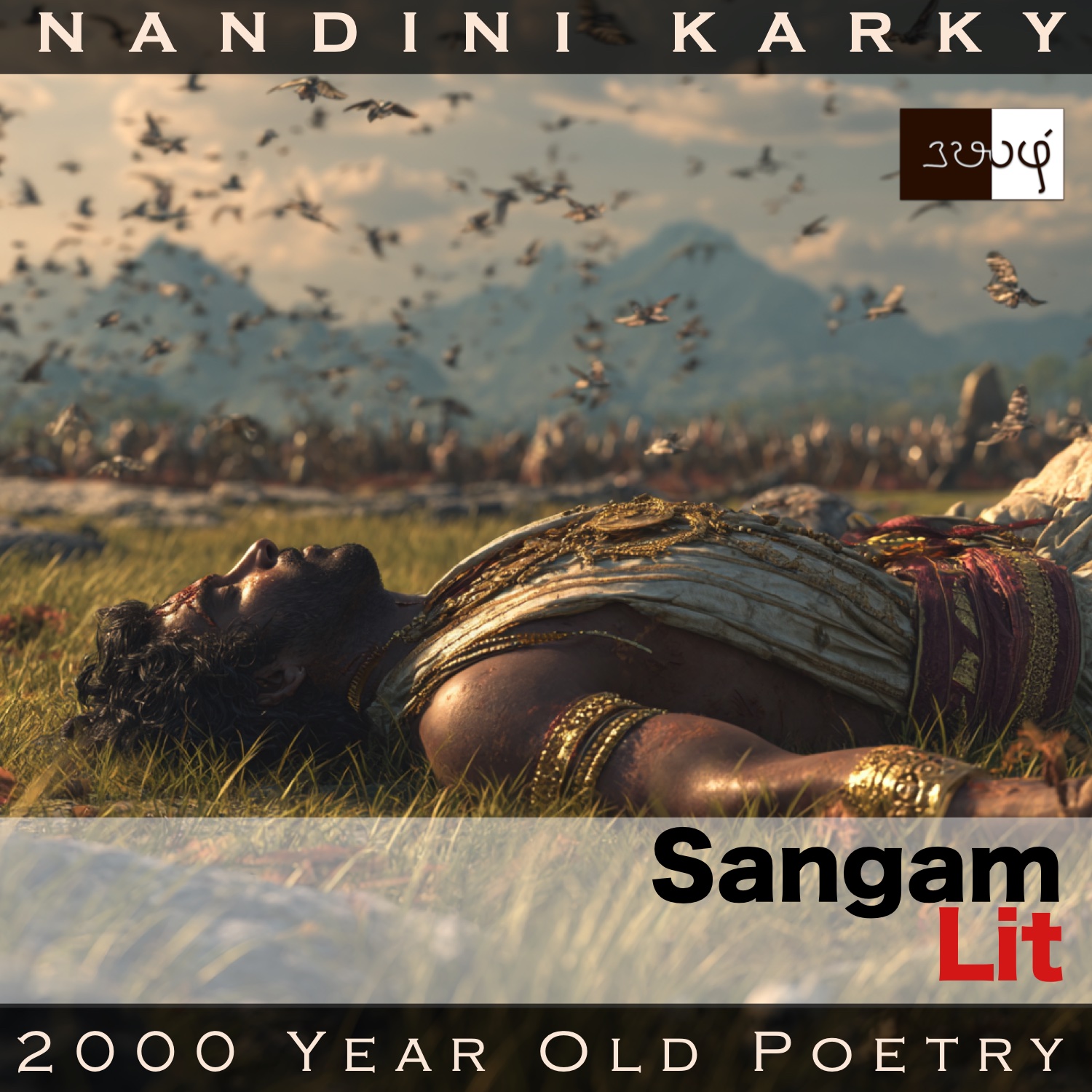
In the Pazhi battlefield, where radiant swords clashed, when confronting Mignili, who owns ornamented elephants and adorned chariots, filled with wounds, Eyinan fell in the middle of the day. Just then, birds joining together, wishing to prevent the rays of the sun, scorching above in the sky, from touching this king’s fallen form, spread their wings to form a canopy and render shade unto him.
Saying, ‘I shall not go and see this sight’, filled with fury, the battle-worthy Nannan refused to go to the battlefield and pay his respects. Since without any grace, he avoided coming there, the many women of the Velir clan, filled with immense anguish, tore at their fresh new flower garlands and created an uproar. At that time, Akuthai, with his mighty army, capable of winning over enmity, came there and ended their sorrow.
Akin to that, in the manner of a huge flood, caused by a heavy downpour that breaks a bank of salt and gushes over, breaking the bounds of her modesty, which was restraining her, she had come here and rendered her grace unto me. May she live long, that dark-skinned maiden, having delicate, exquisite tresses that waft with the scent of flowers in the rain that bloom in the fertile Kolli hills, adorned with many jackfruit trees, ruled by King Ori!”
True to his title of historian poet, Paranar stitches a series of significant events from the Sangam era. The man starts by talking about the nature of a Velir chieftain called Eyinan, describing how he would render elephants to bards, who sang about his peaks. Epitome of generosity indeed. Next, he takes us to another incident in this chief’s life, to the Paazhi battlefield, where Eyinan is waging war against a King named Mignili. Unfortunately, Eyinan is covered in wounds and falls dead on that battlefield. Now a curious thing happens! It appears as if this chief was not only kind to those bards but also to birds! For when he falls dead in the middle of the day, as the sun scorches above, the birds wishing to protect his form from the harsh rays join together and spread their wings, forming a canopy high above. What a moving sight! A testimony to the man’s greatness, no doubt! Anyone would celebrate this, however there was a Velir King named Nannan, who refused to come to the battlefield, possibly, out of envy, and see this rare sight and honour his clansman.
Heartbroken because of this attitude of one of their own, the women of the clan beat their chests, tore their garlands and cried out in pain. At that moment, another clansman Akuthai rose to their aid and ended their sorrow, the man describes. Like how Akuthai ended the misery of those anguished Velir women, the lady, who has tresses as fragrant as the flowers in another king Ori’s domain of Kolli hills, had come to the man, breaking the bounds of her modesty, like how a flood would shatter and overcome a wall of salt, and she had ended the anguish of yearning with her grace, the man connects and concludes.
At the core, it’s just a man in the throes of young love, exulting in the knowledge that his love was reciprocated. How seamlessly the verse stitches together this subtle, intimate moment and an uproarious, historic event, and weaves a tapestry, rich in both inner and outer life!
