

Podcast: Play in new window | Download
Subscribe: Apple Podcasts | Spotify | Amazon Music | Android | iHeartRadio | TuneIn | RSS | More
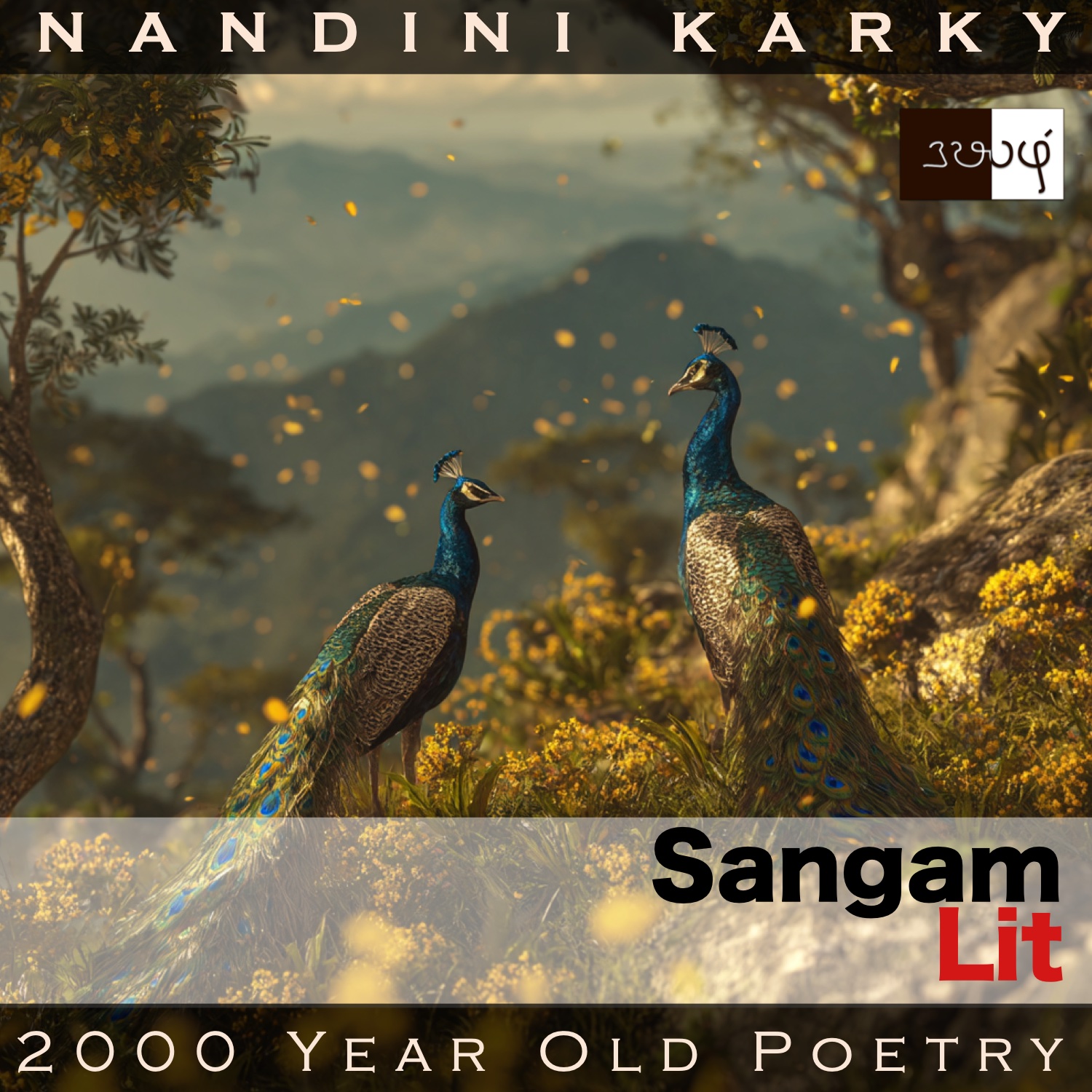
In this episode, we perceive a tender message of persuasion, as portrayed in Sangam Literary work, Aganaanooru 378, penned by Kaavattanaar. The verse is situated amidst the soaring peaks of the ‘Kurinji’ or ‘Mountain Landscape’ and presents scenic images from this picturesque domain.

‘நிதியம் துஞ்சும் நிவந்து ஓங்கு வரைப்பின்,
வதுவை மகளிர் கூந்தல் கமழ் கொள,
வங்கூழ் ஆட்டிய அம் குழை வேங்கை
நன் பொன் அன்ன நறுந் தாது உதிர,
காமர் பீலி ஆய் மயில் தோகை
வேறு வேறு இனத்த வரை வாழ் வருடைக்
கோடு முற்று இளந் தகர்ப் பாடு விறந்து, அயல
ஆடு கள வயிரின் இனிய ஆலி,
பசும் புற மென் சீர் ஒசிய, விசும்பு உகந்து,
இருங் கண் ஆடு அமைத் தயங்க இருக்கும்
பெருங் கல் நாடன் பிரிந்த புலம்பும்,
உடன்ற அன்னை அமரா நோக்கமும்,
வடந்தை தூக்கும் வரு பனி அற்சிரச்
சுடர் கெழு மண்டிலம் அழுங்க, ஞாயிறு
குட கடல் சேரும் படர் கூர் மாலையும்,
அனைத்தும், அடூஉ நின்று நலிய, நீ மற்று,
யாங்ஙனம் வாழ்தி?’ என்றி தோழி!
நீங்கா வஞ்சினம் செய்து; நத் துறந்தோர்
உள்ளார்ஆயினும், உளெனே அவர் நாட்டு
அள் இலைப் பலவின் கனி கவர் கைய
கல்லா மந்தி கடுவனோடு உகளும்
கடுந் திறல் அணங்கின் நெடும் பெருங் குன்றத்து,
பாடு இன் அருவி சூடி,
வான் தோய் சிமையம் தோன்றலானே.
In this trip to the highlands, we receive our usual treat of alluring visuals, as we listen to the lady say these words to her confidante, as the man stands on the hedge-side, pretending not to notice him but making sure he’s in earshot:
“In the soaring ranges, where prosperity resides, taking on the fragrance of a bride’s tresses, beautiful clusters of the Kino tree, shaken by the wind, scatter fine, gold-like, fragrant pollen. Here, upon hearing the clashing of horns by young mountain goats, belonging to different herds that live in the ranges, a picturesque pride of peacocks, having exquisite feathers, cry in fear, resounding like the ‘vayir’ instruments in the festival arena, and curving their delicate, green backs, take to the skies, and descend down to rest upon the swaying bamboos with huge nodes, in the mountains of the lord. You are asking me, my friend, ‘As the loneliness of his parting away, unsettling glances of our troubled mother, the cold season, swirling with the northern winds, and the suffering-filled evening hour, when the glowing orb diminishes, and the sun sets in the western seas, all join together and torment you, how can you bear with it and live?’. Even though the one, who swore an oath of never parting away and still left me, does not think about me, I live on, only because the sky-soaring mountains of his country, where plucking the fruit from the dense-leaved jackfruit trees, the unskilled female monkey leaps about with the male monkey, having huge and tall peaks, where fearsome spirits reside, and crowned by singing cascades, appear before my eyes!”
Let’s get going on that mountain trek! The lady starts with a description of the man’s mountain country, by talking about the wealth that seems to sleep in those spaces, and then, she zooms on to a particular Kino tree, and equates its fragrance to that of a bride’s hair, and the way winds nudge it to shed a golden shower of pollen. Amidst such a pleasant scene, peacocks seemed to be roving about, and then, hearing the clash of horns by some mountain goats, frightened, cry out with the sound of ‘vayir’ musical instruments and fly to rest in the bamboos, the confidante etches.
After that location drop of the man’s abode, the lady repeats a question that the confidante had asked her, when she had listed the loneliness of remaining without the man, mother’s pointed glances, arrival of the cold season with its tormenting winds, and the evening hour, filled with suffering, and she had asked the lady how she could bear the united assault of all these elements and still live on. Let’s take a moment to note that nuanced expression about the setting sun. In many Sangam verses, we have heard about the sun setting in the western mountains, but in this one, the sun sets in the western seas. This is a clue that the song is situated on the western slopes of the Western Ghats, most probably in present day Kerala, to the west of which is the Arabian sea.
Returning from our geographic meanderings, we observe how the lady concludes by saying she was able to bear with all that the confidante had pointed out only because the mountains of the lord, filled with singing cascades, frolicking monkeys and soaring peaks, happened to be visible to her! The lady intends to pierce the man’s heart saying your mountains are the only solace amidst the cruelty of your parting away. This is intended to make the man realise the angst he causes in the lady’s heart because of his temporary trysting and the love that soars in her, in spite of all the man has done, and pushing him to the conclusion that the only way forward was to seek the lady’s hand.
When we look out from any mountainside, don’t all the hills seem the same to us? Imagine how well the people should have known the land around to associate a particular hill with a particular person! Another highlight in this verse is the way it dwells on that relatable feeling of how we take comfort from something which belongs to a beloved in their absence!
